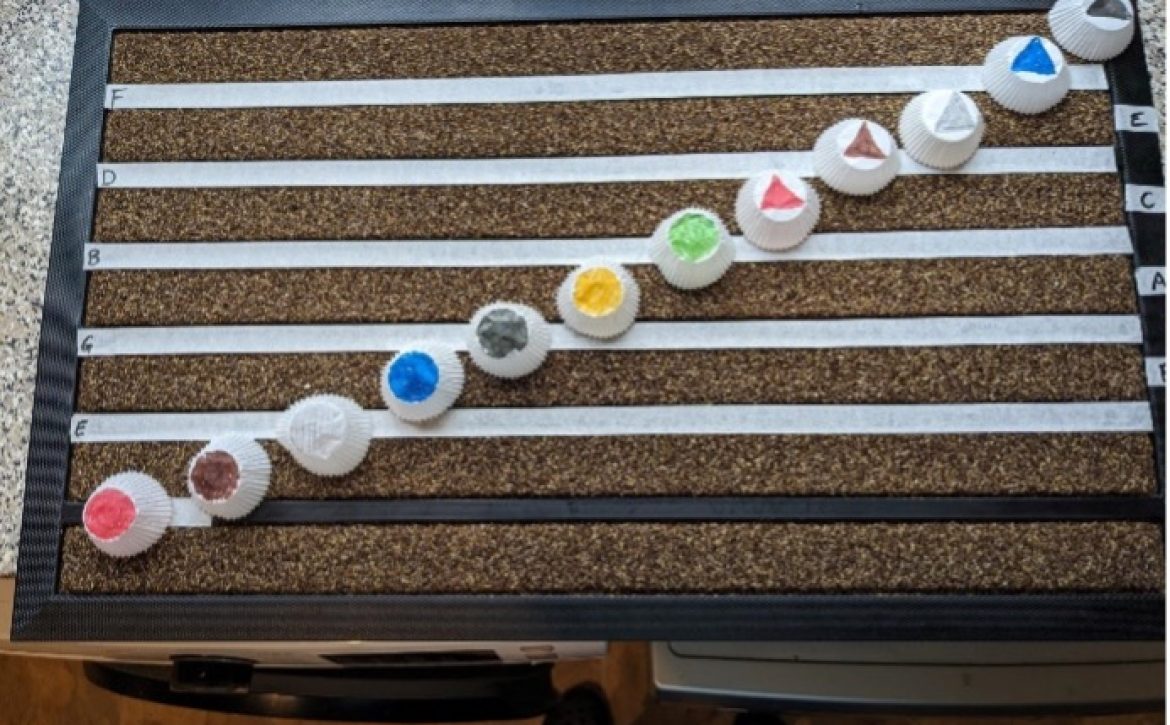
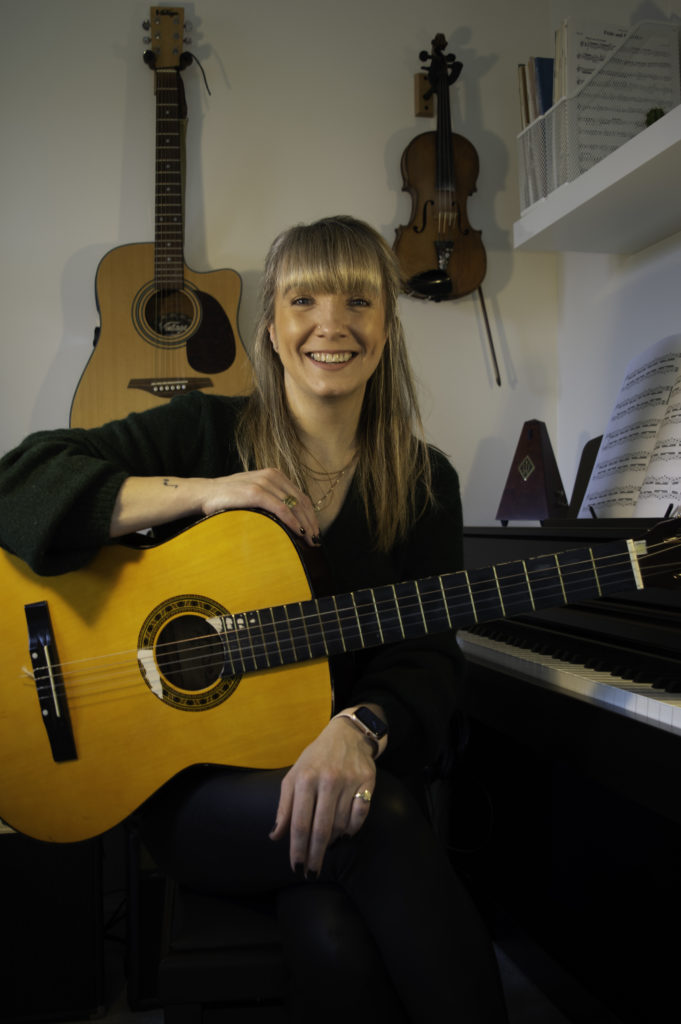
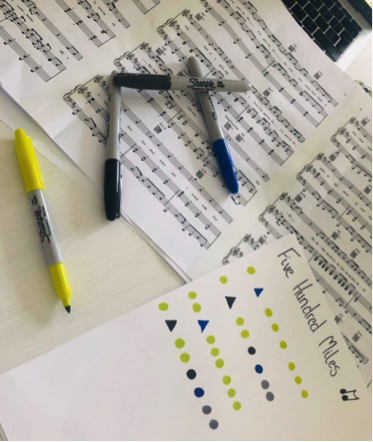
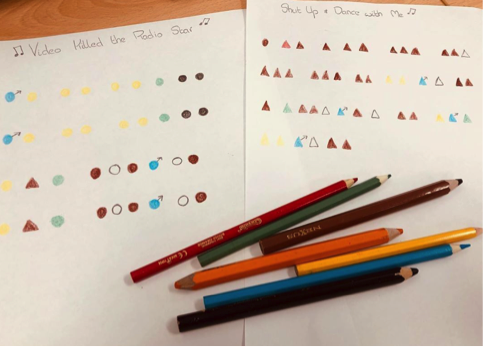
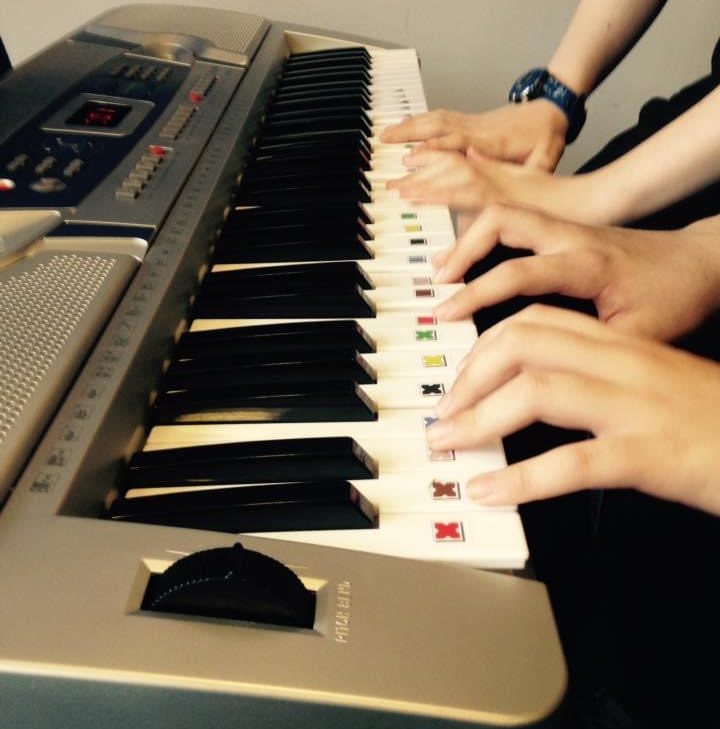
I have been developing my use of Figurenotes for mainstream children of various ages through 1-1 keyboard tuition.
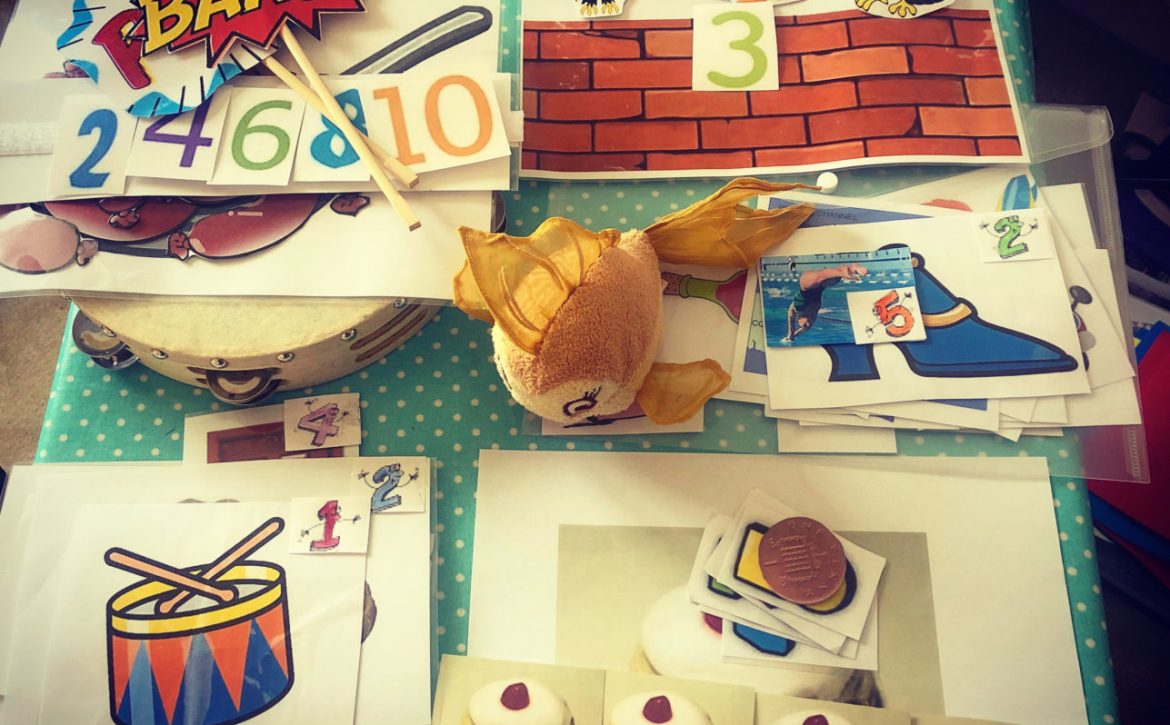
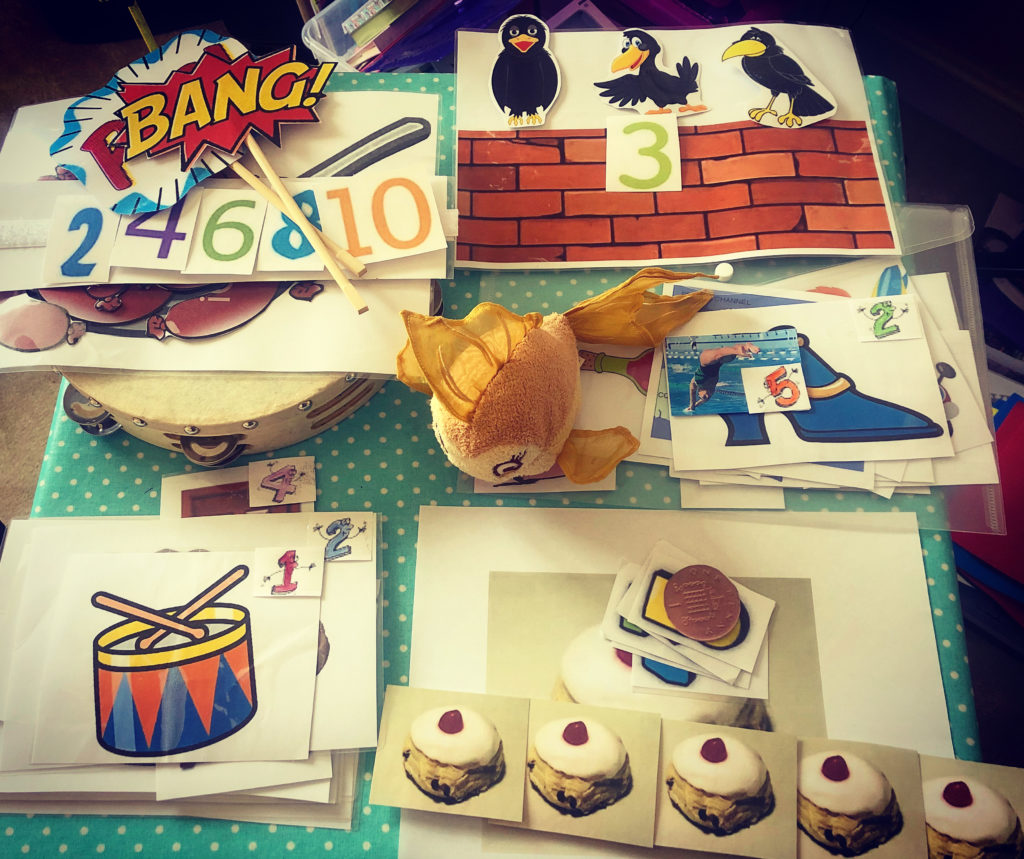
I’d like to share a DIY transition resource I created after inspiration from the Developing Your Practice course, as well as my takeaways from working with Figurenotes over the last few years.
In today’s guest blog we look at why Figurenotes has been so successful in additional needs settings. Iain Macleod works in Kaimes School, a wonderful specialist school in Edinburgh. They have had projects from Drake Music Scotland for many years, alongside their regular music lessons. Iain explains his reasoning for using Figurenotes in the classroom.
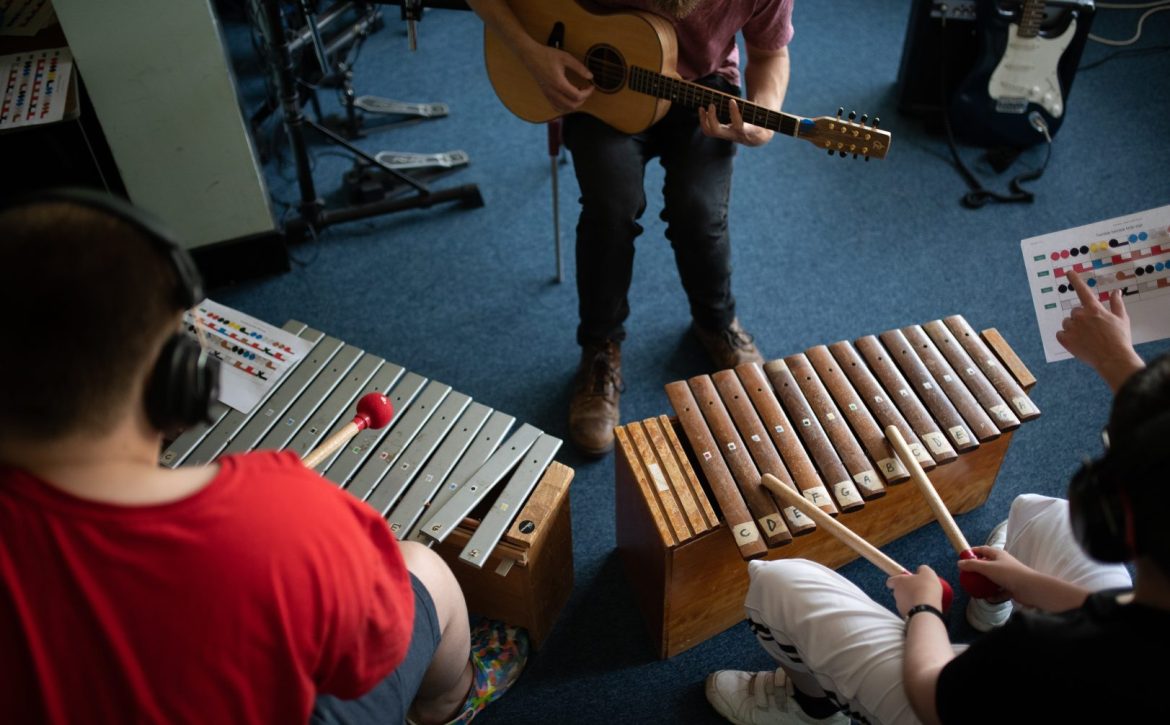
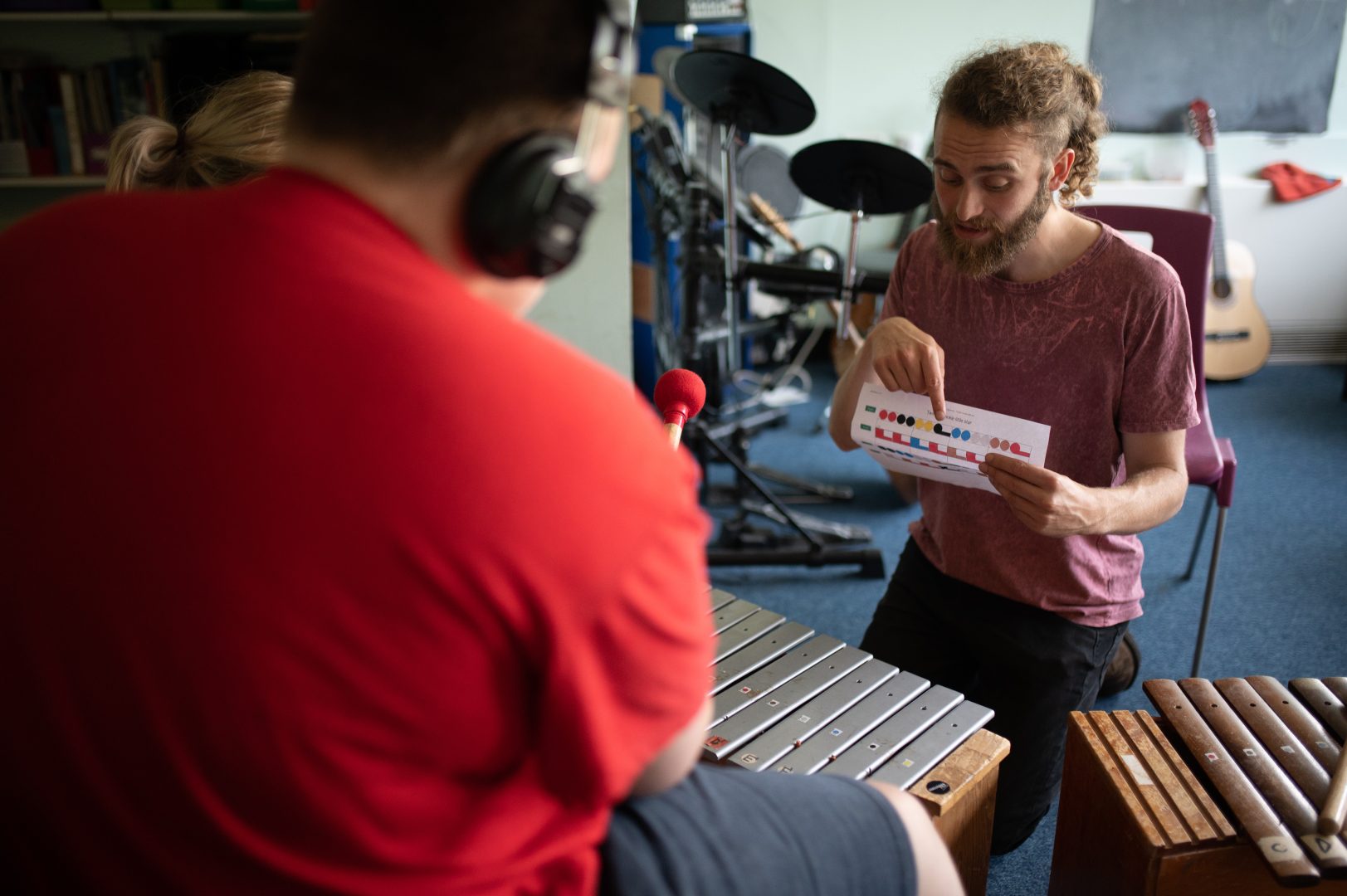
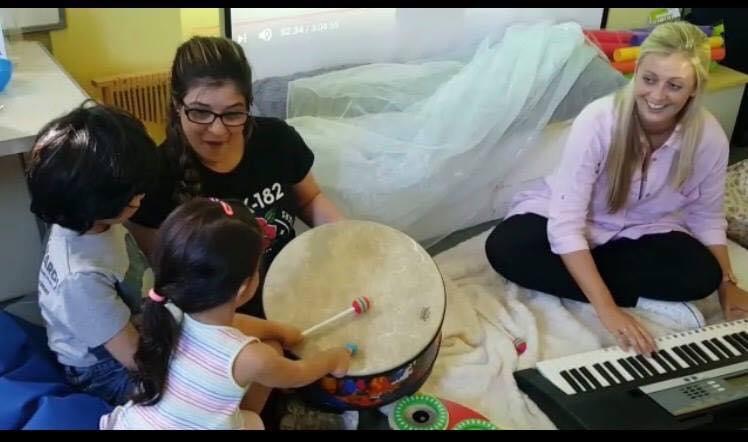
A Drake Music Scotland Associate Musician with a pupil and support at Kaimes School
My name is Iain and I’m a music teacher. After starting my career as a peripatetic guitar teacher, I started teaching general music in primary schools in London. I qualified as a secondary music teacher in 2012, but have spent most of the time since working in Additional Needs settings.
I first came across Figurenotes when I was working at a residential school where all the students had experienced significant early years trauma. This meant they had struggled with mainstream school because of challenging behaviour and were now in a more nurture-focused environment. All these kids were amazing as people and had bucket loads of energy and enthusiasm, but they also had very low self-esteem and would quickly give up on something if they felt they would get it wrong. Basically, they hated school and would go to extreme lengths to avoid ‘work’.
I eventually realised that the less time I spent talking and explaining stuff, the better the lessons went! This is why Figurenotes was a huge hit with the students – they didn’t need any explanation as to how it worked. They could straight away just start following the music and playing on the keyboards! All I had to do was figure out easy versions of songs that they liked and print them off. Everyone was happy! Once they could play something they liked and had chosen, they were much more open to trying other activities and/or instruments. Engagement in music lessons was much better across the whole school.
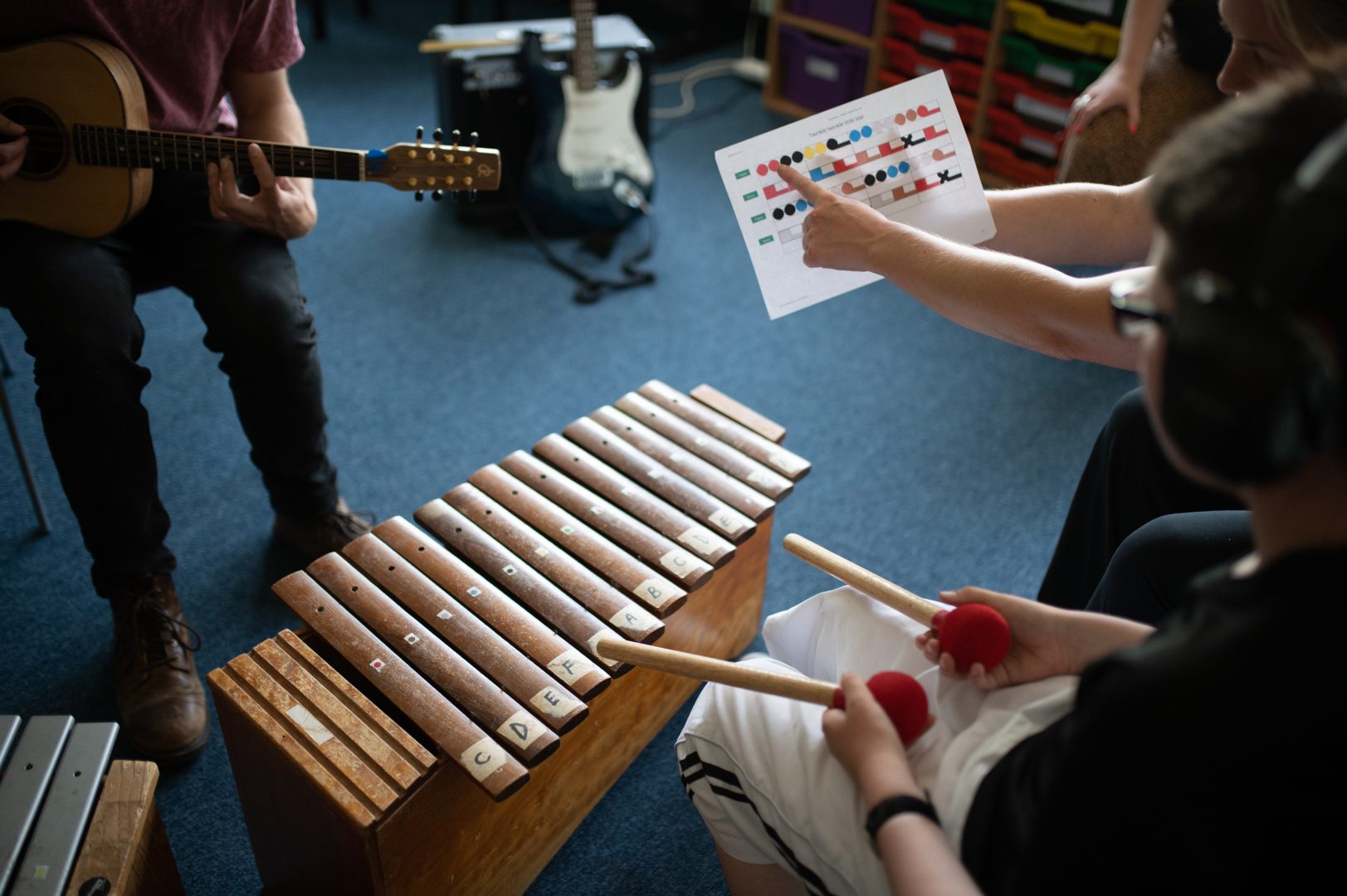
Drake Music Scotland musician, Tenzin, leads a session at Kaimes
I am now teaching in a school for ASD students, and they love Figurenotes too. I think it is the best thing for introducing notation and getting people playing straight away. I think if it was used in all schools (mainstream and specialist) a lot more people would be motivated to learn instruments and get involved with music.
Thanks for sharing, Iain. You can check out Iain’s music on his website.
In today’s guest blog, Fiona Sharp shares the success of a talented pupil she is working with in Scotland. Fiona is an Associate Musician with Drake Music Scotland, who arranged this project. She is also the founder of F Sharp Music, recently celebrating their 10 year anniversary.
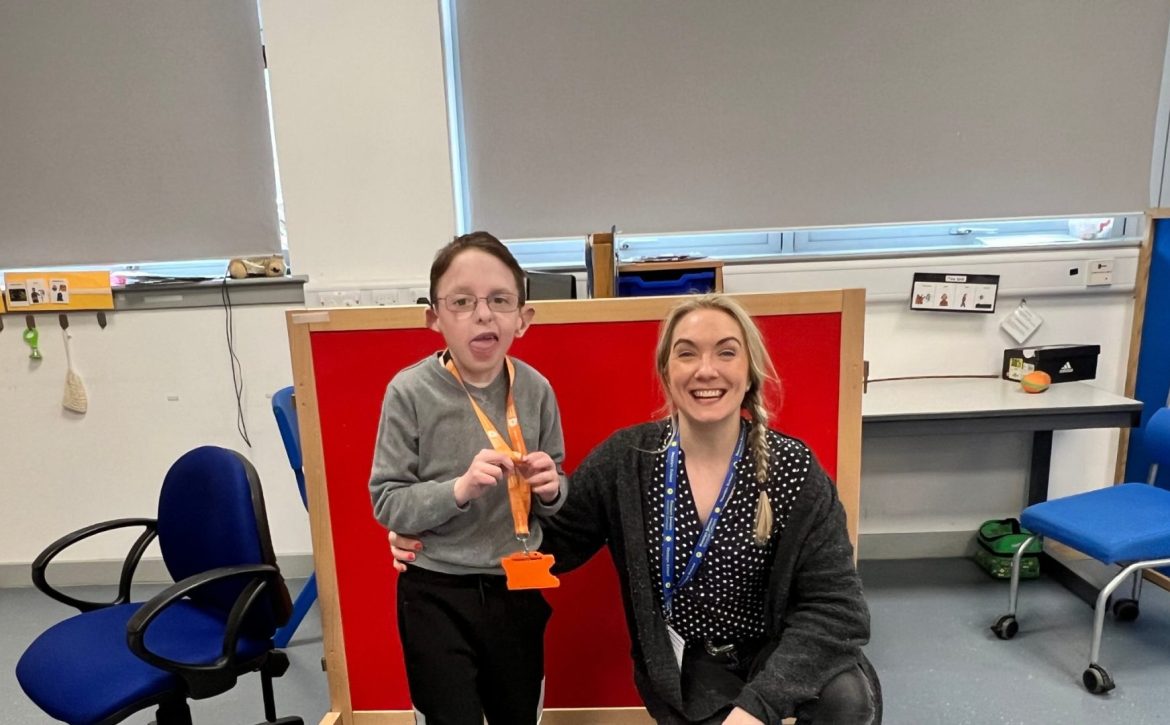
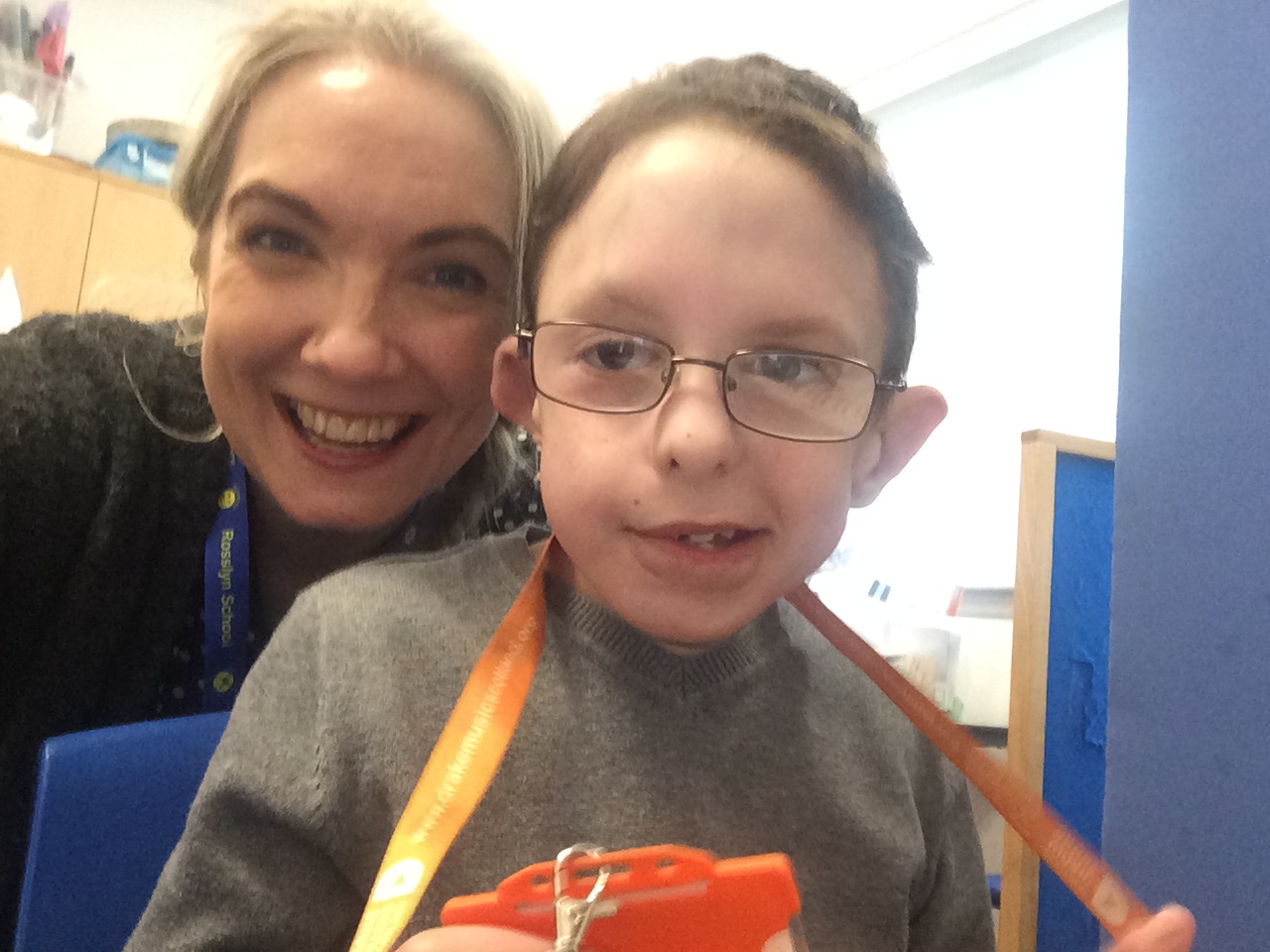
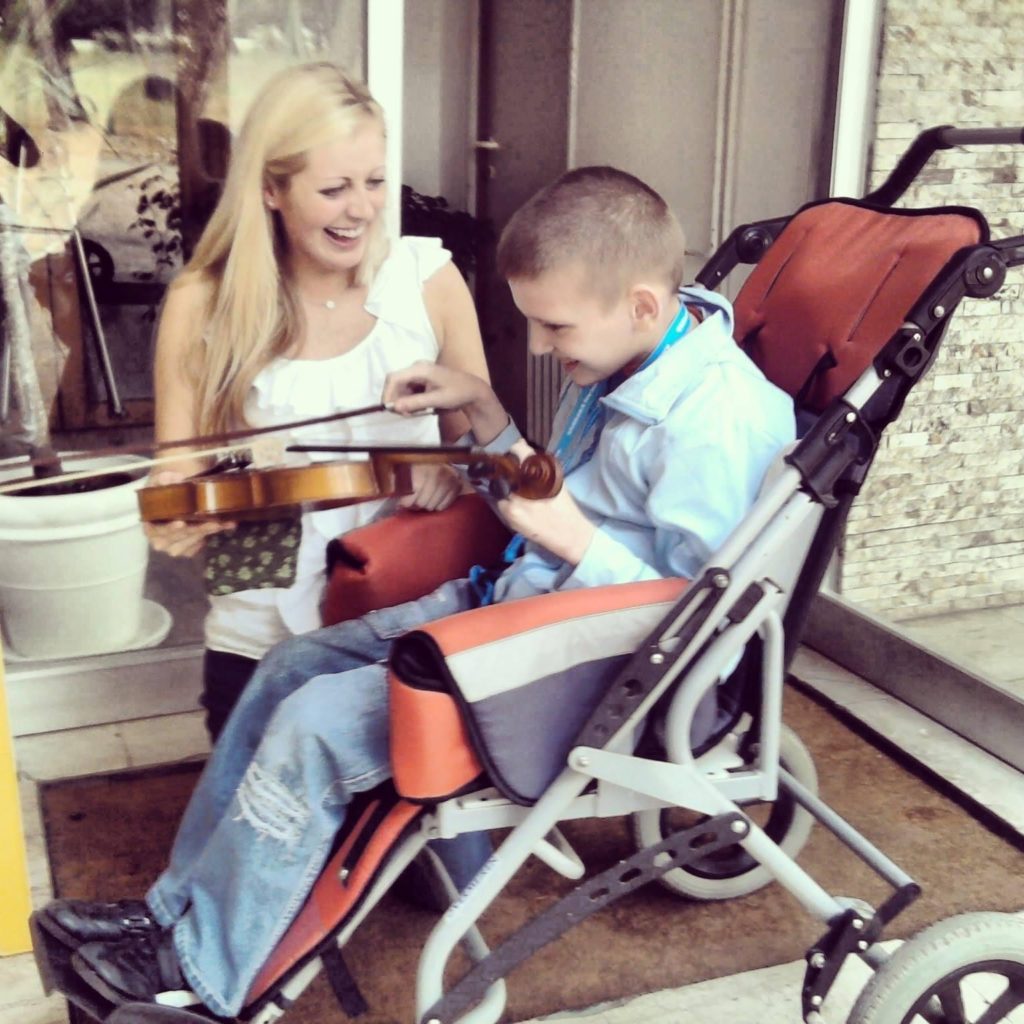
Fiona and Arnas
Natural Talent
From a very young age Arnas has shown a great talent for music, especially listening to a song and then working out how to play it on an instrument. This first became evident when he was in primary 1-2 and one day his teacher noticed Arnas playing ‘Wheels On The Bus’ on a musical toy, which had buttons on it. Arnas worked out the melody using the sound buttons on the toy.
Development
I have been working with Arnas to further develop his musical skills and interest by using Figurenotes notation. Arnas has a keen interest in playing the piano, and over the past couple of years with support from Elaine, his teaching support assistant at school, Arnas has progressed to playing the piano with both hands, and learning to play chords in the left hand as an accompaniment for the melody in the right.
Last summer Arnas and Elaine played piano together for a school event. The school are now looking at ways to further develop Arnas’s interest in music and supporting him with his developments in Figurenotes. He has his own keyboard at school and at home along with music folders full of ‘Figurenotes Songs for Arnas’.
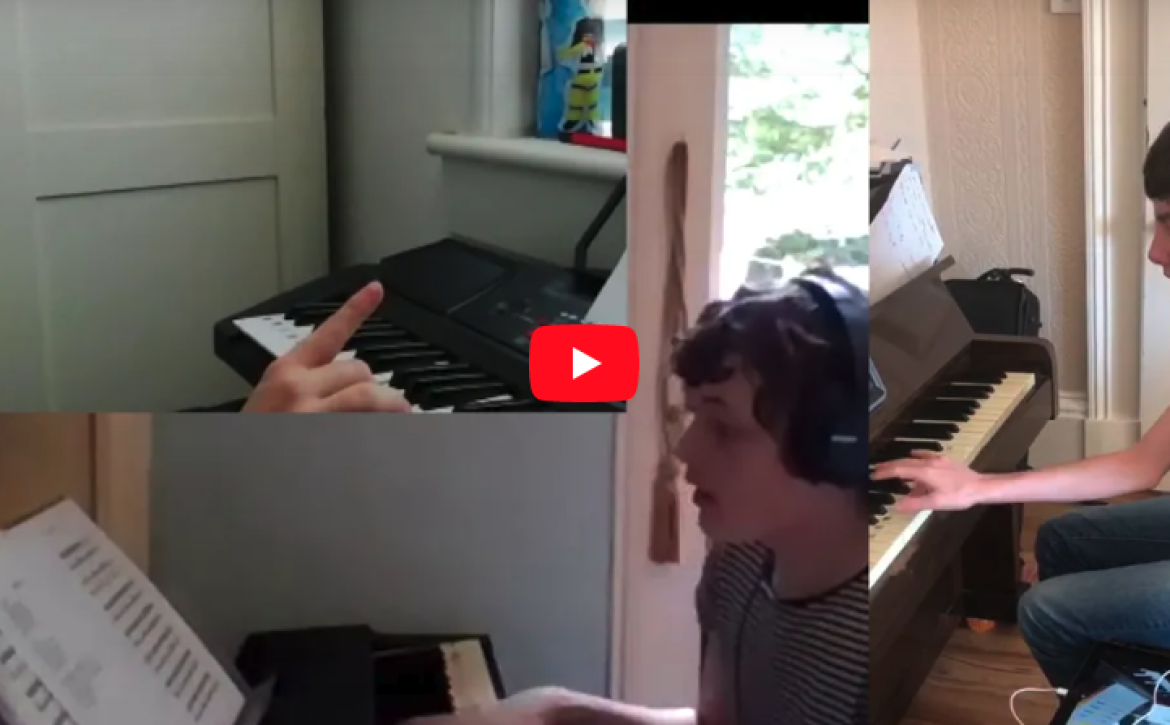
Some clips from Arnas’s sessions with Fiona
Although Arnas tends to play music by ear, Figurenotes has allowed him to play and access a wide range of songs and will continue to do so hopefully for many years to come.
Huge thanks to the staff at Rosslyn School for their continued support and encouragement with Arnas’s piano playing.
If you’d like to share a recent project, Figurenotes journey, or your top tips, get in touch via email at Figurenotes@DrakeMusicScotland.org. We love hearing from you!
Emily Carr-Martin from Hear My Music has continued to provide high quality music provision during lockdown. Here she gives us an insight into how they moved sessions online, as well as some of the unexpected benefits of working in this way.
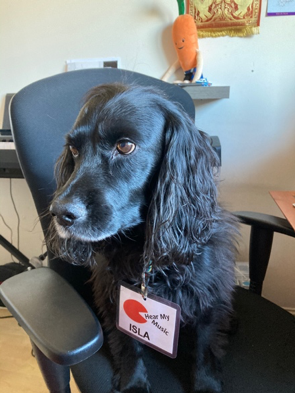
I’m Emily and I’m the creative director of Hear My Music, a charity enabling people with complex needs and/or autism to express themselves as individuals through inclusive participant-led music making. In short, pre-pandemic, this meant that I spent most of my time making/teaching/facilitating music with remarkable people in schools, community centres, and the green room of the Glad Café where we held our classes. In the current world I now do this from my laptop screen via Zoom or Teams with the company of my wonderful office companion, Isla the spaniel.
Isla the spaniel at Hear My Music HQ
I have used Figurenotes in my work for a number of years and love it! As a dyslexic musician, something in the logic of the visual system immediately clicked with me and the colours are so ingrained with pitch in my brain that I can get very twitchy when looking at a solid block of colour and hearing music that is not in the corresponding key.
I love that moment when you introduce a child to a Figurenotes score on a piano or chime bars and before the adult in the room has finished drawing breath to ask how the system works, the child has played their first full tune! No words required. This suits both me and the majority of people I work with!
Hear My Music runs a project called Glad Spectrum Music (GSM), an after school group and individual music classes for autistic children and young people. It is this project that this blog post will focus on with a particular emphasis on how we have moved the project to remote delivery and our continued use of Figurenotes within this.
I’m sure everyone remembers the run up to the lockdown in March vividly. I spent a surreal week cancelling every project we run and then swiftly working out how to run remote music sessions for the following week. GSM took one week off, the week before the schools closed, and the following week we were delivering our classes online, this was perhaps quicker than was sensible, however the craving for routine and normality was tangible and it was that that I reacted to.
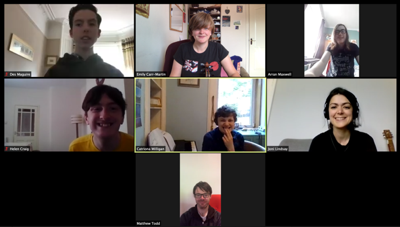
Zoom Group session – Lockdown Hairstyles…
The setup/preparation for these sessions wasn’t huge. Anyone who didn’t have a keyboard in their house was provided with one to borrow, with Figurenotes stickers. We sent out many ‘fingers’ templates (available on the Resource Base under ‘General‘ or in the free bundle), and huge amounts of music for home printing. When presented with my first bit of black and white music from the other side of the screen (no colour printer!) I learnt that sometimes posting music was the best option.
I discovered that there are popular coloured keyboard stickers with notes drawn on them and letter names that don’t correspond to Figurenotes colours, a lot of information on one sticker that maybe a sibling was using on a shared keyboard. Add a Figurenotes ‘fingers’ template to this and it made my head hurt to look at it! Fortunately, the same sticker company also makes a black and white version!
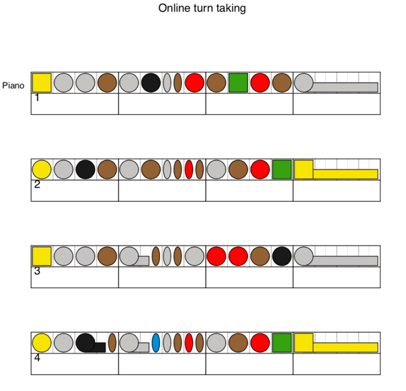
We quickly learnt about the limitations of group music making on the internet. We began to learn what works and what you have to accept as a no-go. Playing as a group, that feeling of absolute ‘togetherness’, the sound and vibrations of instruments working together – that cannot be replicated. Listening to each other, however, is something that can be honed and worked on in ways that would be more difficult in person. I wrote a very simple piece of music called Online Turn-Taking and it was with this piece of music that we learnt the skills of turn-taking online, first with heavy operation of the mute button from practitioners and over time with participants learning when to listen, when to play, how the music could still be a group effort.
Our crutch for early remote group sessions
There was a really lovely discovery within our remote sessions that some people with very high anxiety found remote sessions much less anxiety inducing. This could be due to a number of reasons: no travel, total control over your own environment, no fear of external sounds/smells/visual distractions, the ability to switch us off at will…It meant that for some participants we have made more musical progress than we would have in person and while we will never exclusively deliver sessions online if we don’t need to, a hybrid approach for some individuals is definitely something to consider.
We also put on a Zoom concert in the summer; this was livestreamed on Facebook and involved two separate breakout rooms as our ‘green rooms’ and a main stage using the broadcast message function to call people to the ‘stage’. The livestream was streamed in the breakout rooms. This set-up was probably one of the most anxiety inducing concerts we’d ever put on for practitioners, however some young people who wouldn’t dream of walking into a room with an audience nonchalantly performed exceptionally well!
We use Figurenotes creatively in sessions and this has been easy to transfer to doing online. We miss the huge coloured pieces of lycra that we would set up in a room as different lands; jumping quickly from the red hot lava – C, swimming in the blue sea – F, relaxing in the green grass – B etc. This has been replaced by the screenshare function with Figurenotes software and has resulted in me now having an encyclopaedic knowledge of different dinosaur species and some excellent original pieces of music.
https://youtu.be/NSW8r6nbrsc
This is the first group piece we wrote and recorded during lockdown, it was written with coloured chord flashcards to choose the chord pattern which formed the basis for the rest of the song. Our recording and editing skills have become much more refined over time but I remain very proud of this first one.
The transition to remote music sessions has been both very challenging and remarkably smooth. The fundamentals of what we do have not changed and I think that is one of the things that has helped practitioners and participants alike throughout this difficult time. The continuity of seeing each other and working together every week has certainly provided some much needed routine for me and I am so proud of the resilience of each and every one of our participants. As we continue on navigating our way through this difficult time we will have the safety of mutual musical goals and the community that we have developed through this.
Fiona Sharp of F Sharp Music Practicehas had great success with her online music sessions during 2020 and into the new year. As many musicians worried about their future work opportunities, Fiona has continued to provide high quality sessions for many organisations including PAMIS and Drake Music Scotland. She has also delivered training sessions on how to get the most from online delivery, including advising on a new online project for schools with the RSNO. Here she gives us a brief insight into her practice.
Fiona Sharp of F Sharp Music Practice (above)
I was concerned like many music teachers, practitioners and specialists at the start of lockdown how music tuition could be achieved solely on an online basis, especially when working with pupils who have Additional Support Needs. Over the past few months I have been astounded at the level of development made with many of my clients and pupils and in particular their progress with Figurenotes.
I have tried various ways of using Figurenotes online and I have detailed below the activities and methods I have found to work particularly well.
Something I have found to work well when using Figurenotes online for teaching is emailing sheets of Figurenotes notes for the pupils to print and cut out so they are able to make up their own songs, unless the pupils already have their own Figurenotes magnets. I usually start my online sessions asking the pupil to choose 10-15 cut out notes, either showing me the note or telling me what colour and shape it is. They can either lay the notes out in front of them, or as I tend to do, I put the Figurenotes magnets on a board, which I then hold up to the screen for them to see.
To vary the exercises I sometimes change the shapes they have chosen and get them to play the squares with their left hand, and the circles and triangles with their right hand. I also do chord work using the magnets/cut outs as well as exercises focusing on hands separately and hands together.
Themes can be fun to make the sessions a bit more interesting, for example themes about the sea, weather and emotions are popular ones, then finding songs or making up musical activities to go along with that theme.
The sea is always a good theme. You can get pupils to put lentils or rice in a plastic tub with a lid and slowly rock it from side to side so it sounds like the waves. Try the ocean drum tutorial in the video below. You can make up a short sea shanty using the Figurenotes magnets or cuts outs, and there are plenty of sea-themed songs which you can play using Figurenotes:
My Bonnie Lies Over the Ocean
Bobby Shaftoe
Row Your Boat
Skye Boat Song
Overall, my experience so far working online has been positive. I have noticed I am having to describe and communicate a lot more than I would normally in a music session, but I have been very surprised by the level of development my pupils have had since teaching online. I have come to the conclusion that it could be due to fewer distractions. For pupils on the Autistic Spectrum this has been particularly evident, and I have been quite amazed at the level of concentration and engagement they have during their session. I feel many of my pupils have achieved a lot more in a half hour session than they would normally with me sitting next to them. I have also noticed they have to work things out for themselves more than normal as I am not there to physically support them or show them what to do. I have been very impressed and pleasantly surprised by the level of development made with each pupil through online music sessions.
In our latest guest blog, Emmeline McCracken shows us how she uses Figurenotes in her work as a music therapist.
Hello everyone,
My name is Emmeline and I am a music therapist. I work for my own company, ELM Music Therapy, primarily with children who have profound and multiple learning difficulties and those with terminal illnesses.
Although music therapy is very different from teaching someone to play an instrument, this can sometimes play a part in my therapeutic sessions. Often children will be keen to learn to play the piano with me as this is the instrument I use most frequently. Sometimes through learning some tunes together this can give a client confidence and also relax them into more therapeutic work. Often learning something can seem less daunting than the therapeutic process itself and can open many doors for the therapeutic work to take place. A few examples of this may be;
Composing our own words to a learnt song.
Moving into free improvisation.
Relaxing a child enough for them to open up or share emotions.
As I work primarily with children with profound and multiple learning disabilities the use of Figurenotes has been invaluable in this teaching process. It has really allowed the children to quickly learn to play simple/familiar songs at the piano and allowed us to progress into other therapeutic processes. The matching of colours and symbols seems to be particularly appealing to many of the pupils on the autistic spectrum with whom I work and is quick and easy for them to grasp.
In my other work at the Royal Aberdeen Children’s hospital the quick and easy to grasp concept to allow children to learn and play tunes has been lifechanging. My work here is often not progressive as there can be children I only meet once on the ward and others who are long-term patients. It is wonderful to see not only the children’s but also their family’s faces light up around them as they perform songs they have learnt that day through the use of figure notes at a time when often the rest of their lives are unpredictable and out of control.
Here are some examples of children’s favourite songs that we have quickly written out in figurenotes.
Although I do not use Figurenotes in the same way as many others I find it very beneficial to my work and I hope that other music therapists will too!
As a strange summer stretches before us, musician Francis
Moore-Colyer looks ahead to the joy of what is to come.
“After a long time at home, we
can start to get excited about the future.
When you feel ill, the very
best bit is how good you feel when you’re better again.
When you miss something, the
very best bit is how you feel when you get it back.
I miss making music with other
people, face to face, in real time. And now I can’t wait to get back to it.
There is no better feeling.
It’s going to be amazing to see
other people beside me smiling along to the music.
It’s going to be wonderful to
feel the energy of other people helping to drive the music onwards.
It’s going to be incredible to
react to what other people do when they make music and to see where the music
will go.
And it’s going to feel SO GOOD
to look people in the eye at the end of a bit of music; to see that moment when
we all realise that we’ve just created some magic!
I want to laugh and smile in
that moment again – to feel the excitement that comes when we can go back to
the start of the music and enjoy it once again!
I want that conversation where
we say ‘let’s just go for it, let’s talk with music’ or ‘let’s use our imaginations
and just see what happens’
I’m excited to get back to
making music with others, in real time, in the future. I hope you are too. For
now though, let’s be happy to wait a little while longer, if we have to.
Because, after all, it’s this waiting, this missing, this wanting, that will
make the moment feel even sweeter.”
What a wonderful ode to music-making and togetherness. This time
has been hard on everyone. What have you done to share a musical experience
during lockdown?
Musician Francis Moore-Colyer talks about some of the ways
technology has helped us through lockdown.
“I find that making music can be light relief from ‘work’ – household chores, schoolwork, shopping for groceries, etc.
Taking part in music can be a release from these mundane or stressful things, because it sets off lots of sparks in our brain — a very different combination of sparks to normal. Musical activity, or even just listening to a song, can refresh our mind and centre us for whatever’s next — it can be like a ‘detox’ for the mind.
Technology has stepped up to make lots of musical activity possible during lockdown; it has been a really useful tool!
Streaming services and concerts
have given us access to music from home. Listening
to music can help us to work through our emotions, unleash our imagination, and
even escape to a dream world for a bit. You may find you need this even more
during this time.
Remember, your friends and family are sharing this forced ‘home time’ experience, so send them videos of you playing music and get them to send you theirs. You could always call them to discuss your favourite music or host a listening party. Or, if you are desperate to play together, get together on Zoom and have one of you muted.
Not only have we been able to see each other on video calls and laugh together (often about how our long hair has become), but we’ve also been able to share ideas. I’ve particularly enjoyed sharing ideas with other teachers about how to help young people with music activities.
The Chrome Music Lab helps us to learn how we can build music from the inside, out. It shows us the ingredients of music and helps us build it up from there – a great way to approach learning anything! Best of all, you have the chance to put some music together yourself. I love it when games give you the space and time to explore independently. Music is all about creating something of your own and this site shows us a way to do that.
We’ve had to get creative over Zoom and other apps, as they make us play separately (the internet doesn’t let us play together as we normally might). This means we are learning great lessons in turn-taking. We play ‘your turn, my turn’, or ‘you say, I say’. This exercise highlights the communication element in music. Music is, after all, a language.
Phew! So much to do. So much to create. I am very thankful that we live
in a technological age that makes all this possible.
Whatever you do, enjoy.”
You can find lots of videos helping you to use apps and music technology over on the Drake Music Scotland website: https://drakemusicscotland.org/resources/ Take a look at the ‘Tutorial’ and ‘Training’ pages in particular.
Musician Francis Moore-Colyer shares some ideas for unlocking your creative side during lockdown.
“If you have to stay at home, you might have more time to get creative. Everyone has a creative side, so let yours out!
Thankfully, most of us have access to the internet or recorded music, which means we can play along to our favourite tunes at home. Here is a lovely video from one of my fellow musicians at Drake Music Scotland — enjoy this great Scottish tune!
Firstly, get to know the song or piece of music, inside-out. Listen to it lots. Each piece of music is made up of lots of different individual sounds — the ‘ingredients’ of the music, if you like.
Now, you can find your own ingredients and add these to the mix! Use your imagination, your ears, and any instrument you have and just go for it! What sounds can you find to fit the music? I hope you find this fun
But what’s all this about instruments? Some of us have them at home, some don’t. BUT…we can all make our own instruments out of things we find around the house. I’ve had fun watching videos on how to make household percussion. Why not have a go yourselves? Try this site for some ideas, or watch the videos below.
There
will be more from Francis in his ‘Don’t lockdown your creativity’ series.
Share your videos and pictures with us via social media and let us know what you’ve been up to.
This wonderful project, which uses Figurenotes to help in the recovery from eating disorders, was brought to our attention recently. The instant accessibility of Figurenotes seemed to work really well in this scenario and allowed the group to compose and express themselves without any prior musical knowledge.
My name is Nadine Allan and I am a recent Music and Communities graduate from The University of Aberdeen. During the final year of my studies, I created a music project called ‘Can You Hear Me?’ that used Figurenotes to compose a song with the North East Eating Disorder Service (NEEDS) in Aberdeen. NEEDS is a charity that is run for sufferers and carers of eating disorders by volunteers who have experience with the illness. The charity holds meetings at Cornhill Hospital in Aberdeen monthly, where individuals can share experiences and support one another in a confidential setting.
‘Can You Hear Me?’ was a project that created a pro-recovery song for sufferers and carers of eating disorders. The main purpose of the project was to work alongside participants to create a song that represented their feelings, emotions and opinions on the illness. I wanted the project to highlight a new outlet for the participants to express themselves. This outlet was music.
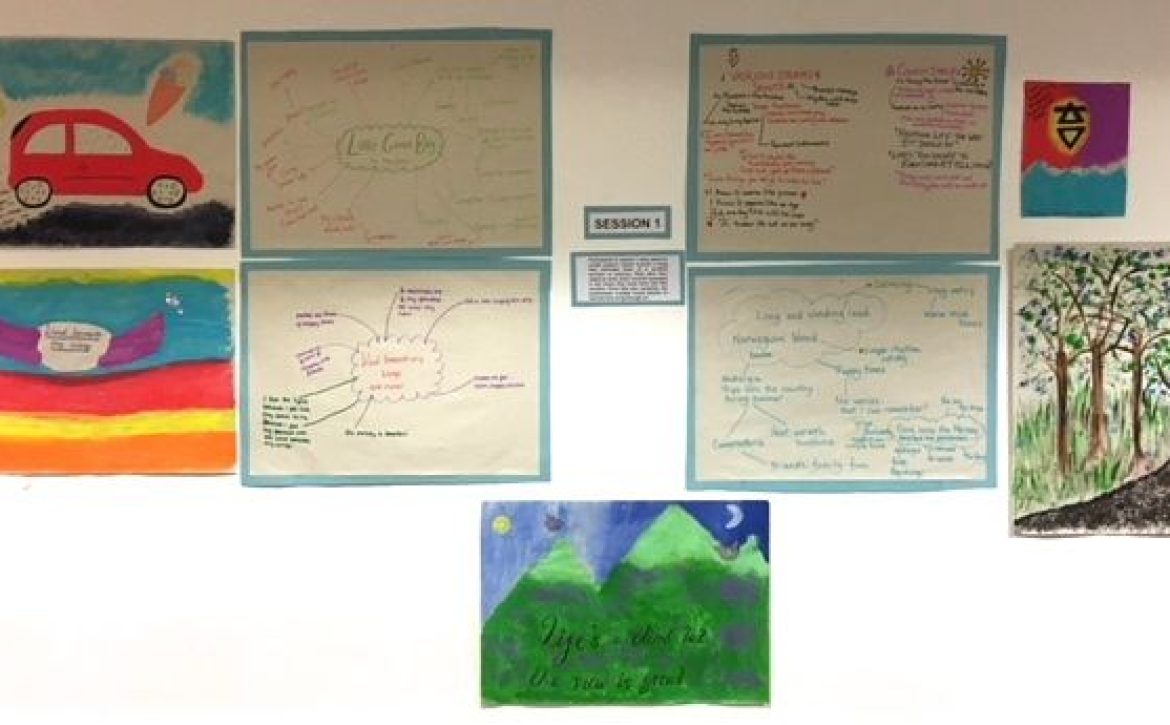
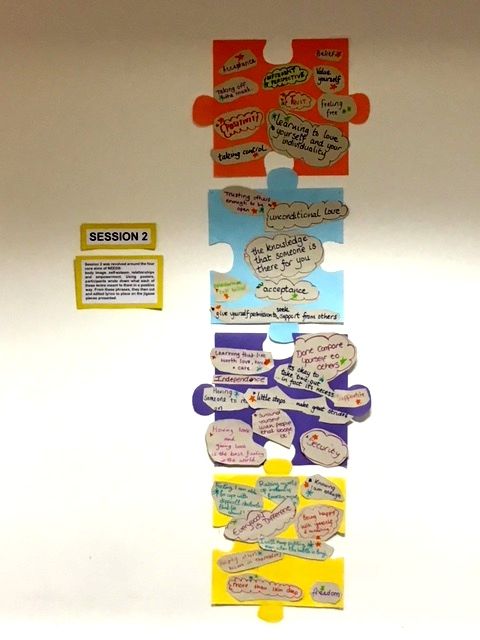
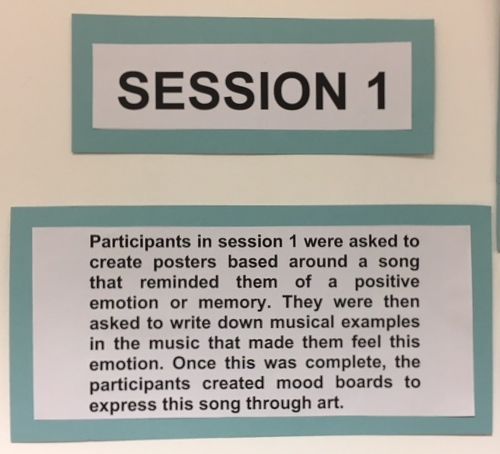
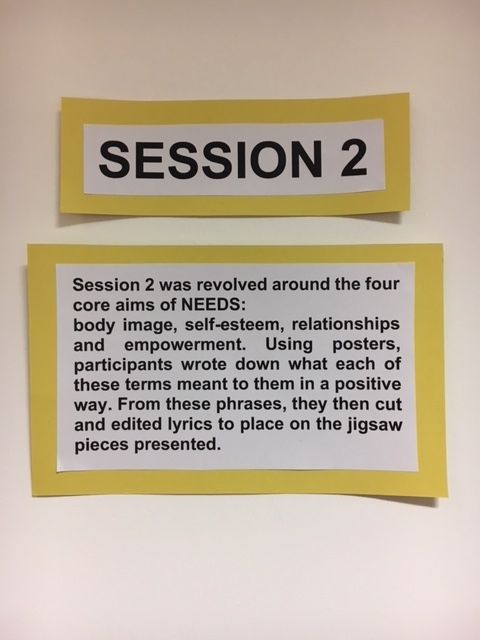
The participants were involved in four sessions over the course of four months. The first two sessions were art based, where the group worked together to create lyrics in a sensory way. Firstly, I got the participants to create mood boards and paintings based around their favourite songs and memories. I then asked them to note down what it was about the music that made them feel these emotions and why. As a group we then brainstormed words or phrases from four categories: empowerment, self esteem, body image and relationships. The participants chose words or phrases from these posters that would become the lyrics for their recovery song.
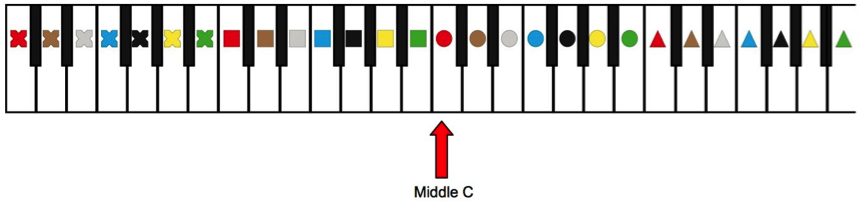
The final two sessions focused on word setting and creating melodies by using Figurenotes. Once the participants separated their words into syllables and then rhythms, we began making the music! I brought along my own keyboard for the participants to use. I labeled an octave on the keyboard to match the Figurenotes colours. I also brought along the Figurenotes diagram to use as a visual aid when explaining Figurenotes to the participants. This acted as a guide throughout the composition process that we were able to refer back to when experimenting with the keyboard.
As the participants took it in turns to compose, they would mark the corresponding colours underneath the rhythms and lyrics to create their melodies. Once each line was composed, I would impute this into my music software. This allowed the participants to listen and edit their music as the session went on.
As majority of my participants had little or no experience with music making, I found using Figurenotes a really easy and accessible way for everyone to create music together. This allowed the participants to bond with each other while learning completely new skills. These were skills that they were unable to access previously, due to their illness.
Participants worked well as a group and listened to each other’s work when composing their own part. By using colours as a way to notate, the participants were able to focus in on the music and the sound of it rather than getting caught up in the ‘notes’ of the keyboard.
The participants often mentioned how they thought the process of writing their own music would have been a lot harder. However, by using Figurenotes they were able to freely write music. Overall, I felt that by using Figurenotes I was able to give the group creative control in an environment where they perhaps felt they didn’t have any control.
Thanks to Nadine for sharing this brilliant project with us. It is so useful to see the different ways that Figurenotes is being used in a wide range of settings. You can find out more about NEEDS through their website.
If you’d like training in inclusive music education using Figurenotes, with many composition activities, come along to the Music Teacher’s Toolbox on 24th March.