Emmeline McCracken – ELM Music Therapy
In our latest guest blog, Emmeline McCracken shows us how she uses Figurenotes in her work as a music therapist.
Hello everyone,
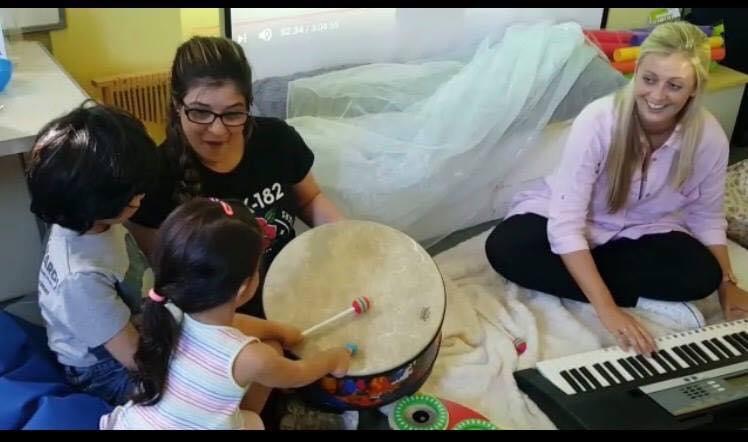
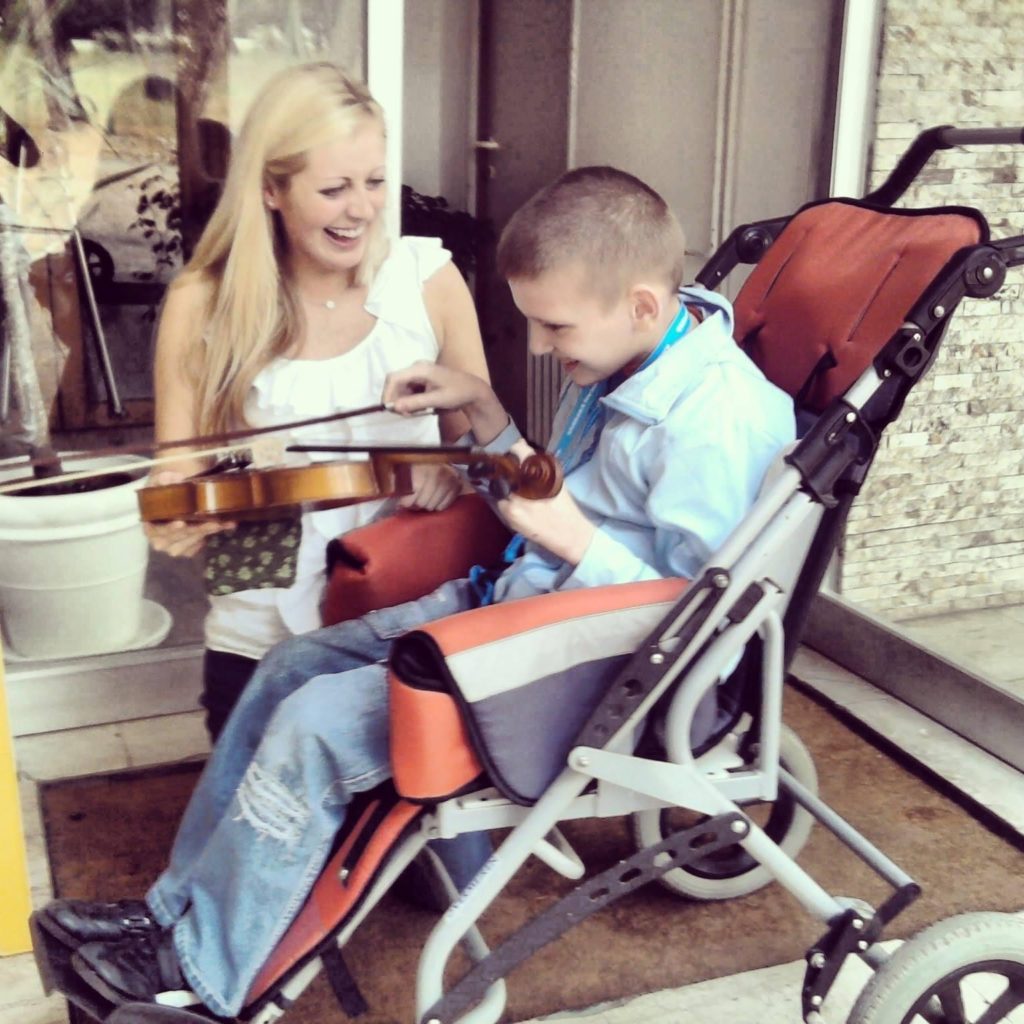
My name is Emmeline and I am a music therapist. I work for my own company, ELM Music Therapy, primarily with children who have profound and multiple learning difficulties and those with terminal illnesses.
Although music therapy is very different from teaching someone to play an instrument, this can sometimes play a part in my therapeutic sessions. Often children will be keen to learn to play the piano with me as this is the instrument I use most frequently. Sometimes through learning some tunes together this can give a client confidence and also relax them into more therapeutic work. Often learning something can seem less daunting than the therapeutic process itself and can open many doors for the therapeutic work to take place. A few examples of this may be;
- Composing our own words to a learnt song.
- Moving into free improvisation.
- Relaxing a child enough for them to open up or share emotions.
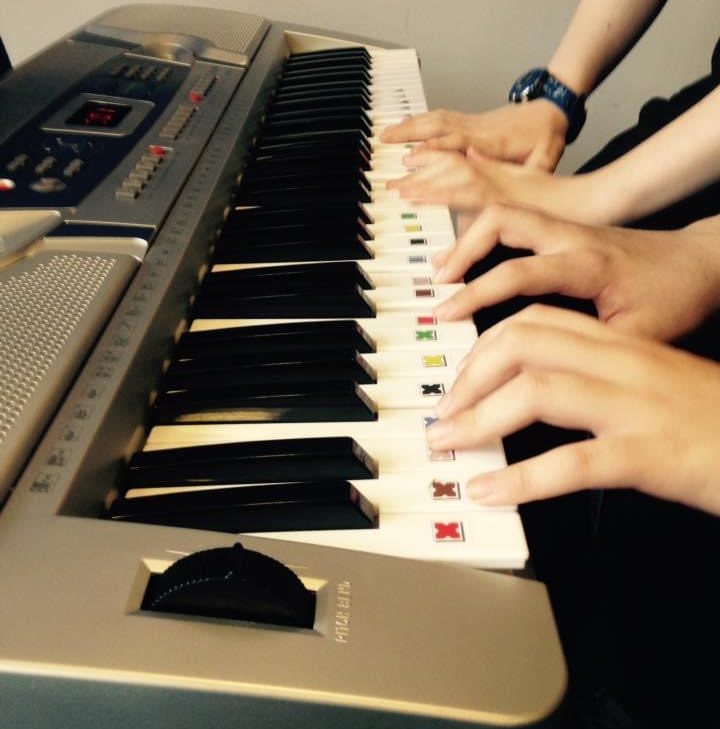
As I work primarily with children with profound and multiple learning disabilities the use of Figurenotes has been invaluable in this teaching process. It has really allowed the children to quickly learn to play simple/familiar songs at the piano and allowed us to progress into other therapeutic processes. The matching of colours and symbols seems to be particularly appealing to many of the pupils on the autistic spectrum with whom I work and is quick and easy for them to grasp.
In my other work at the Royal Aberdeen Children’s hospital the quick and easy to grasp concept to allow children to learn and play tunes has been lifechanging. My work here is often not progressive as there can be children I only meet once on the ward and others who are long-term patients. It is wonderful to see not only the children’s but also their family’s faces light up around them as they perform songs they have learnt that day through the use of figure notes at a time when often the rest of their lives are unpredictable and out of control.
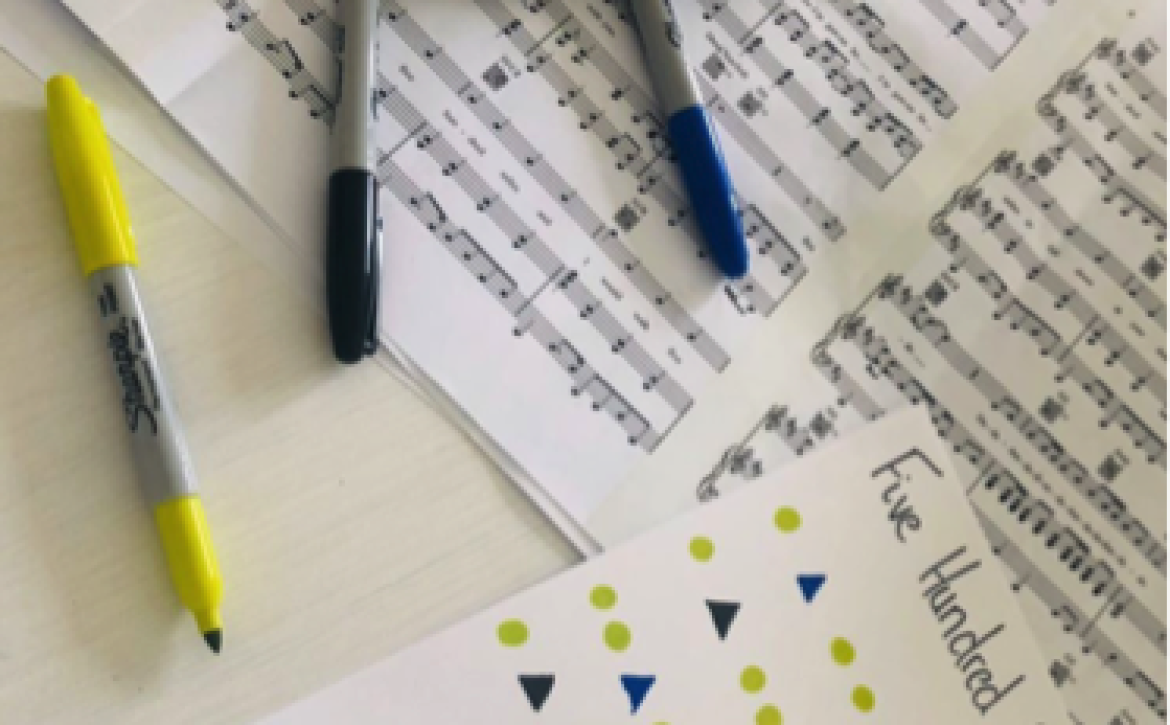
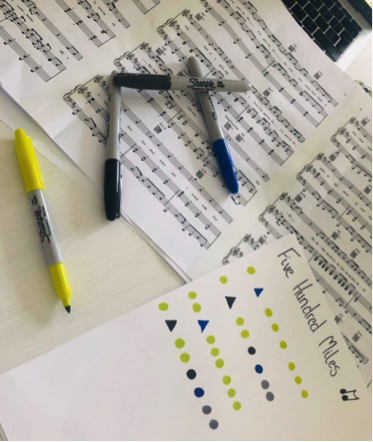
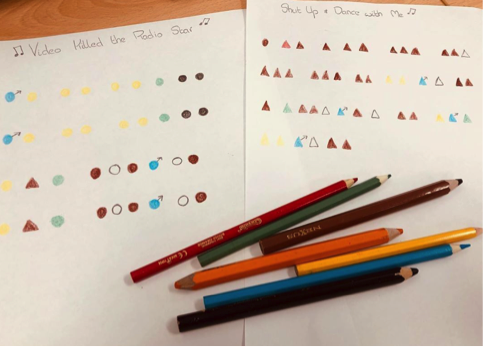
Here are some examples of children’s favourite songs that we have quickly written out in figurenotes.
Although I do not use Figurenotes in the same way as many others I find it very beneficial to my work and I hope that other music therapists will too!
“Figurenotes, Figurenotes, play what you see!”
Thanks to Emmeline for sharing her experiences. If you are interested in writing a guest blog, please get in touch with the Figurenotes team to share your ideas.