Teaching Figurenotes Online part 1 – F Sharp Music Practice
Fiona Sharp of F Sharp Music Practice has had great success with her online music sessions during 2020 and into the new year. As many musicians worried about their future work opportunities, Fiona has continued to provide high quality sessions for many organisations including PAMIS and Drake Music Scotland. She has also delivered training sessions on how to get the most from online delivery, including advising on a new online project for schools with the RSNO. Here she gives us a brief insight into her practice.
I was concerned like many music teachers, practitioners and specialists at the start of lockdown how music tuition could be achieved solely on an online basis, especially when working with pupils who have Additional Support Needs. Over the past few months I have been astounded at the level of development made with many of my clients and pupils and in particular their progress with Figurenotes.
I have tried various ways of using Figurenotes online and I have detailed below the activities and methods I have found to work particularly well.
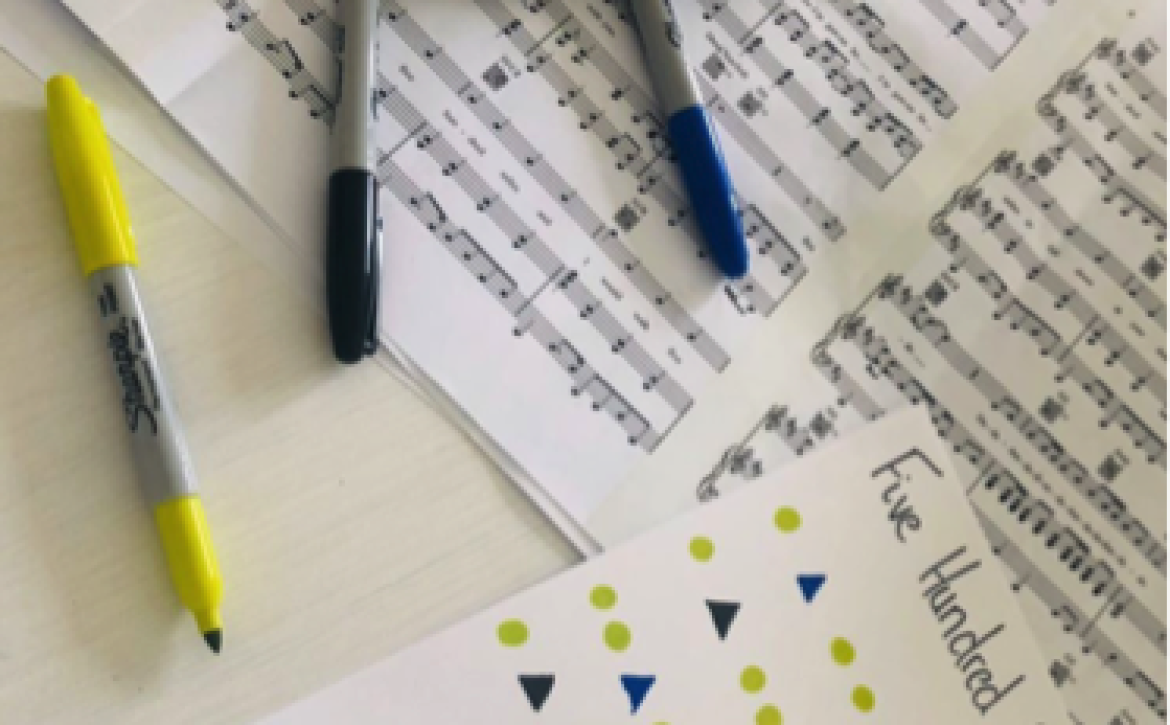
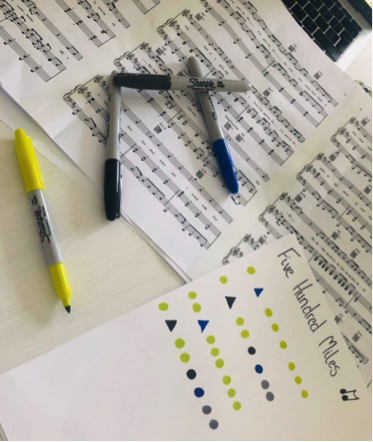
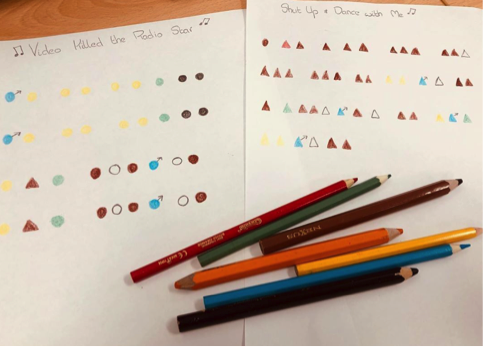
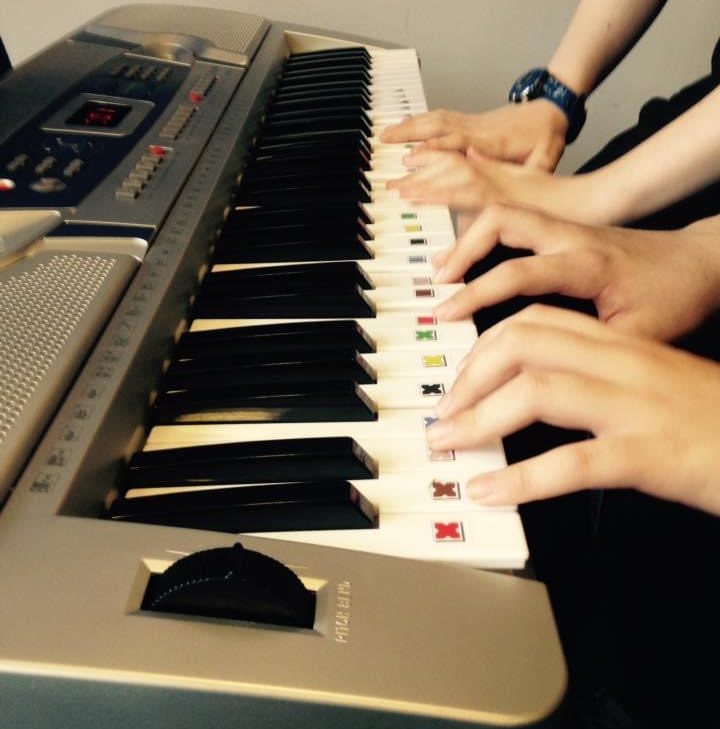
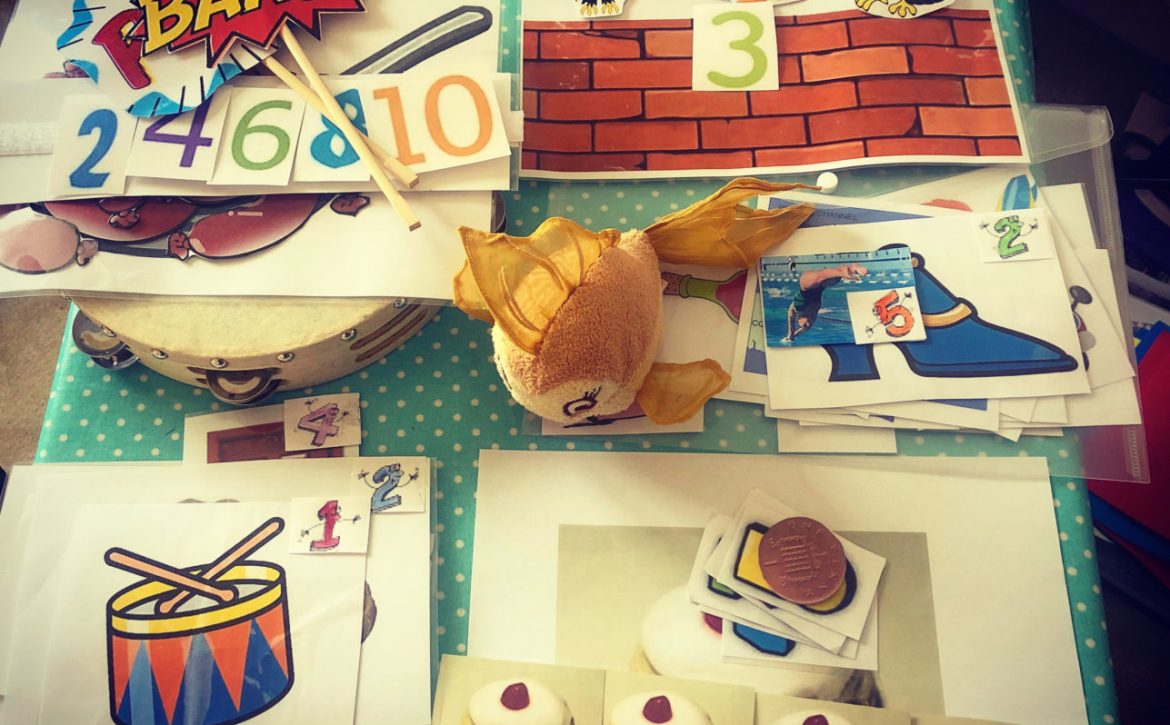
Something I have found to work well when using Figurenotes online for teaching is emailing sheets of Figurenotes notes for the pupils to print and cut out so they are able to make up their own songs, unless the pupils already have their own Figurenotes magnets. I usually start my online sessions asking the pupil to choose 10-15 cut out notes, either showing me the note or telling me what colour and shape it is. They can either lay the notes out in front of them, or as I tend to do, I put the Figurenotes magnets on a board, which I then hold up to the screen for them to see.
To vary the exercises I sometimes change the shapes they have chosen and get them to play the squares with their left hand, and the circles and triangles with their right hand. I also do chord work using the magnets/cut outs as well as exercises focusing on hands separately and hands together.
Themes can be fun to make the sessions a bit more interesting, for example themes about the sea, weather and emotions are popular ones, then finding songs or making up musical activities to go along with that theme.
The sea is always a good theme. You can get pupils to put lentils or rice in a plastic tub with a lid and slowly rock it from side to side so it sounds like the waves. Try the ocean drum tutorial in the video below. You can make up a short sea shanty using the Figurenotes magnets or cuts outs, and there are plenty of sea-themed songs which you can play using Figurenotes:
- My Bonnie Lies Over the Ocean
- Bobby Shaftoe
- Row Your Boat
- Skye Boat Song
Overall, my experience so far working online has been positive. I have noticed I am having to describe and communicate a lot more than I would normally in a music session, but I have been very surprised by the level of development my pupils have had since teaching online. I have come to the conclusion that it could be due to fewer distractions. For pupils on the Autistic Spectrum this has been particularly evident, and I have been quite amazed at the level of concentration and engagement they have during their session. I feel many of my pupils have achieved a lot more in a half hour session than they would normally with me sitting next to them. I have also noticed they have to work things out for themselves more than normal as I am not there to physically support them or show them what to do. I have been very impressed and pleasantly surprised by the level of development made with each pupil through online music sessions.

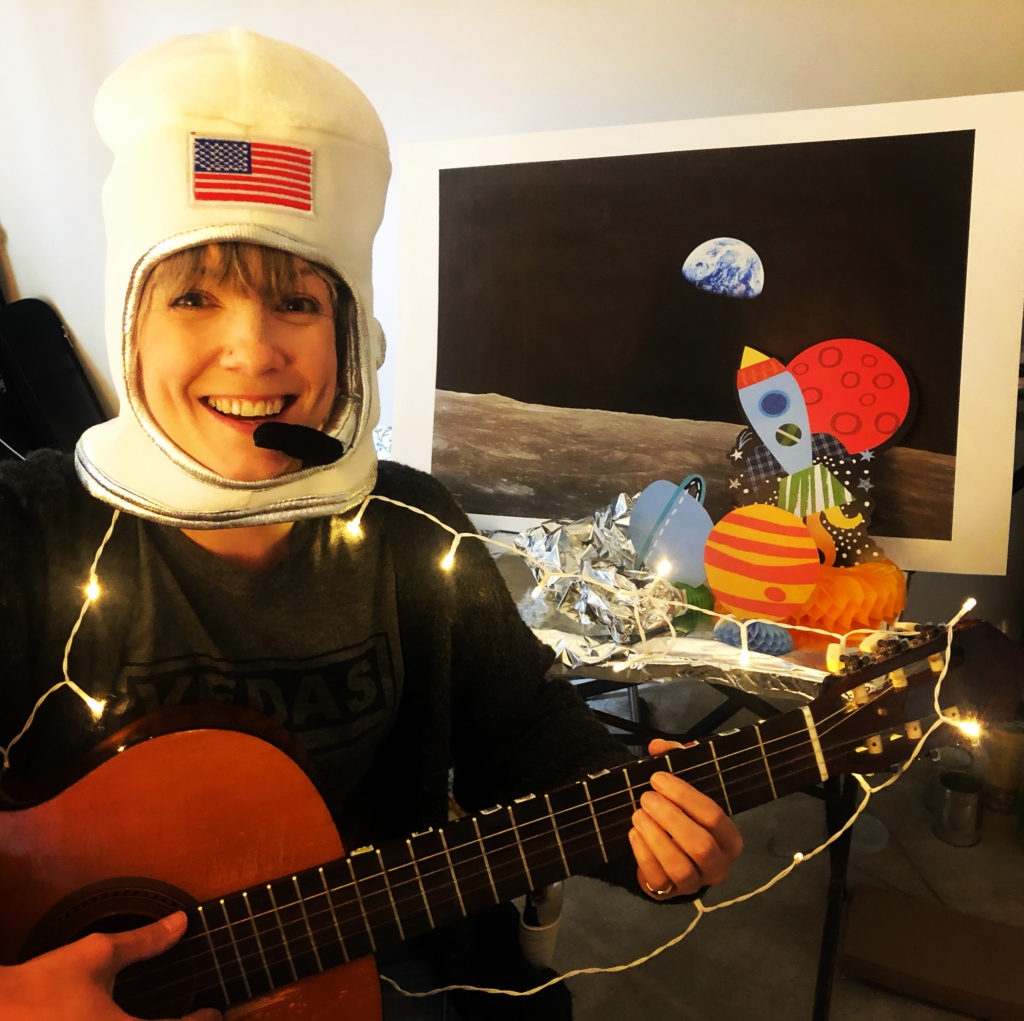
Space Themed Sessions 
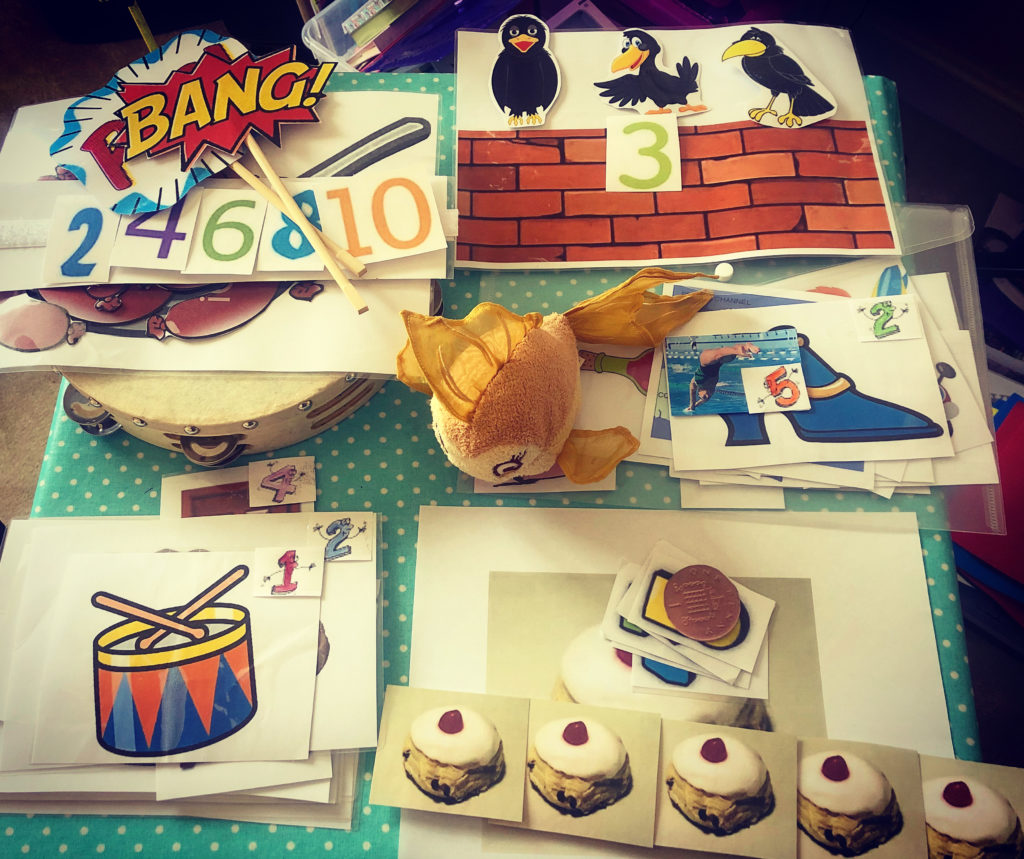
Props Props Props!