“I feel sorry for those people that couldn’t make the training today, as I think they’ve missed out on something great!”
It is always wonderful to get a glowing review from our training sessions. Over two days, this one combined both Figurenotes and demonstrations of the technology that Drake Music Scotland use in their work. If you are interested in booking a bespoke training session or workshop, you can find more details and contact information on our website.
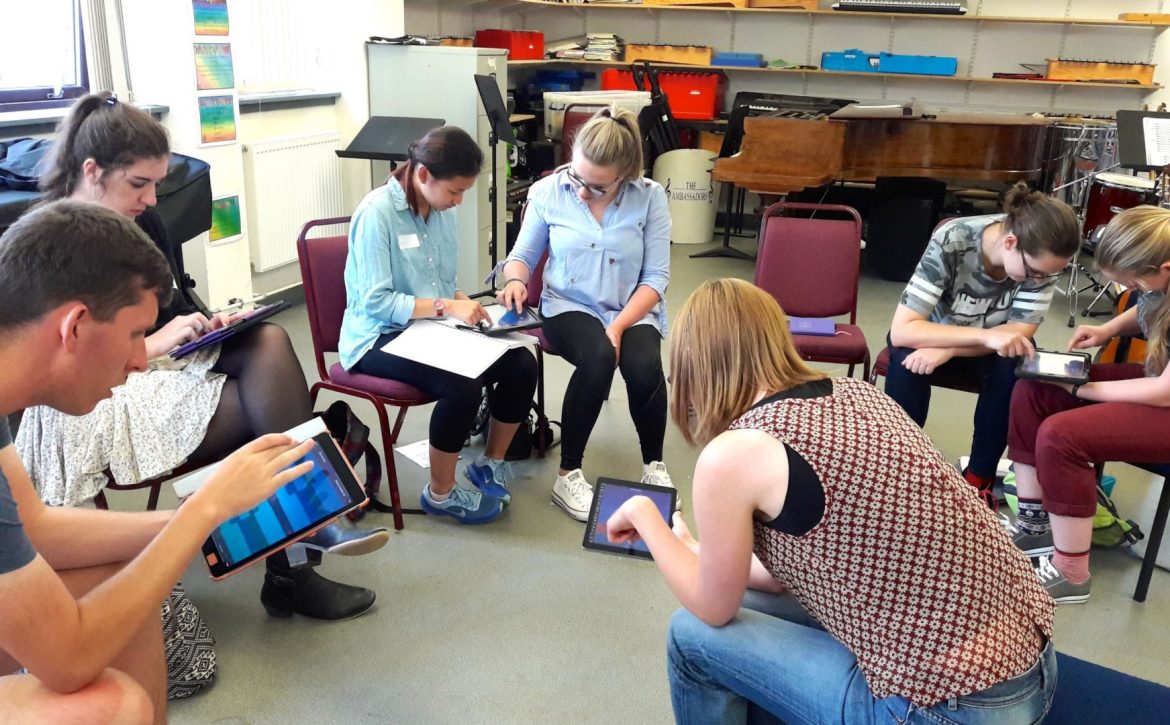
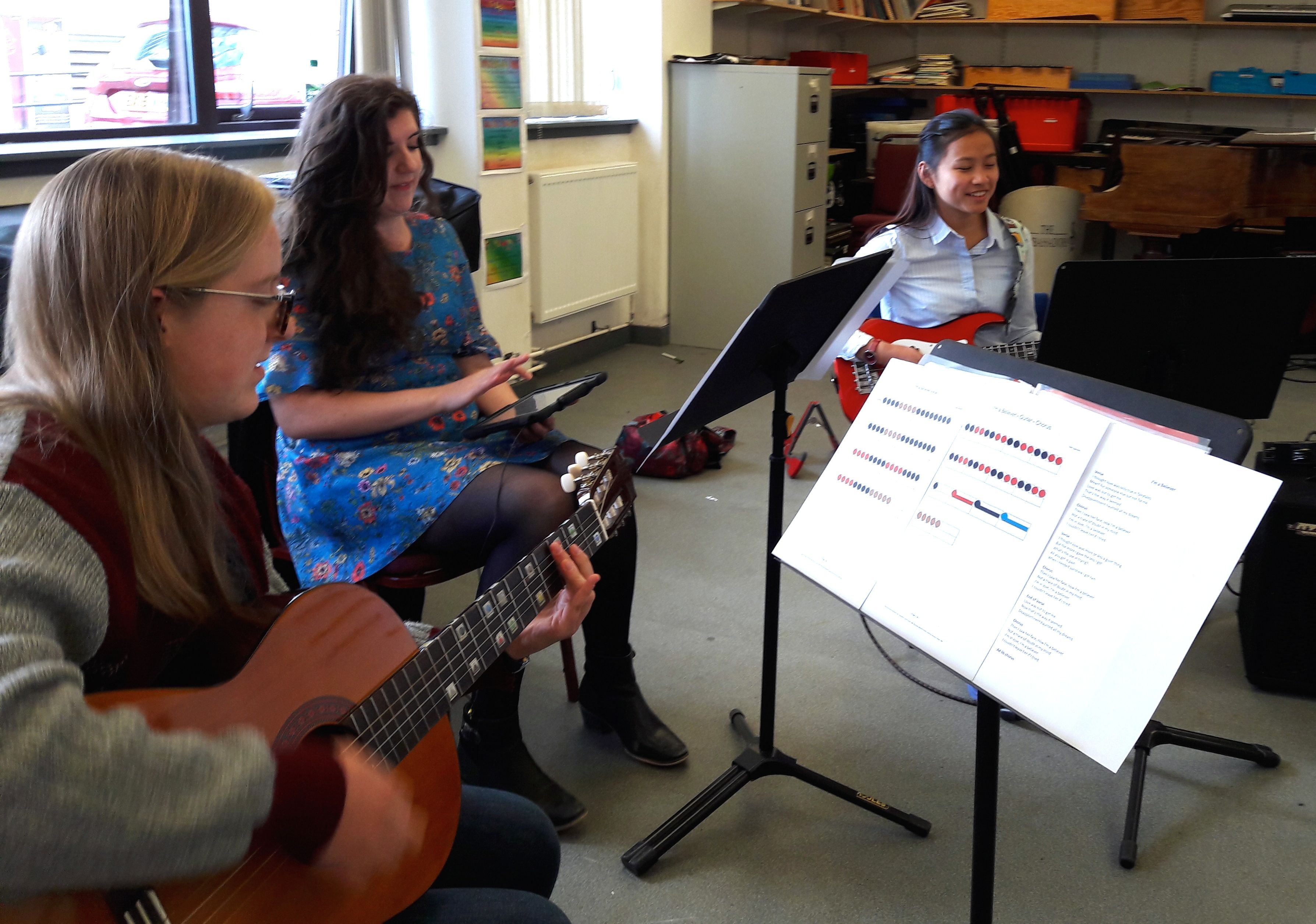
Last week, we packed up our kit bags and headed off to the University of Aberdeen to train students and recent graduates. The group was wonderfully enthusiastic and full of questions, which we love! We did tonnes of rhythm games, from body percussion to vocal work. Some really interesting pieces were created from modern artworks, all with audience participation! There were brilliant improvisations using the technology, but the sound effect switches were a particular hit. Squealing pigs, anyone?
Working with people who are totally new to Figurenotes is particularly rewarding, especially current students and new teachers. The enthusiasm and imagination that the group brought to the sessions gives a lot of hope for the future of music education.
If you’d like to receive some training in Figurenotes, you can either book a training day for your organisation, or come to one of our Music Teacher’s Toolbox days. The next Music Teacher’s Toolbox takes place on Saturday 24th November, 2018. As usual, it will take place at our space in Edinburgh.
This wonderful project, which uses Figurenotes to help in the recovery from eating disorders, was brought to our attention recently. The instant accessibility of Figurenotes seemed to work really well in this scenario and allowed the group to compose and express themselves without any prior musical knowledge.
My name is Nadine Allan and I am a recent Music and Communities graduate from The University of Aberdeen. During the final year of my studies, I created a music project called ‘Can You Hear Me?’ that used Figurenotes to compose a song with the North East Eating Disorder Service (NEEDS) in Aberdeen. NEEDS is a charity that is run for sufferers and carers of eating disorders by volunteers who have experience with the illness. The charity holds meetings at Cornhill Hospital in Aberdeen monthly, where individuals can share experiences and support one another in a confidential setting.
‘Can You Hear Me?’ was a project that created a pro-recovery song for sufferers and carers of eating disorders. The main purpose of the project was to work alongside participants to create a song that represented their feelings, emotions and opinions on the illness. I wanted the project to highlight a new outlet for the participants to express themselves. This outlet was music.
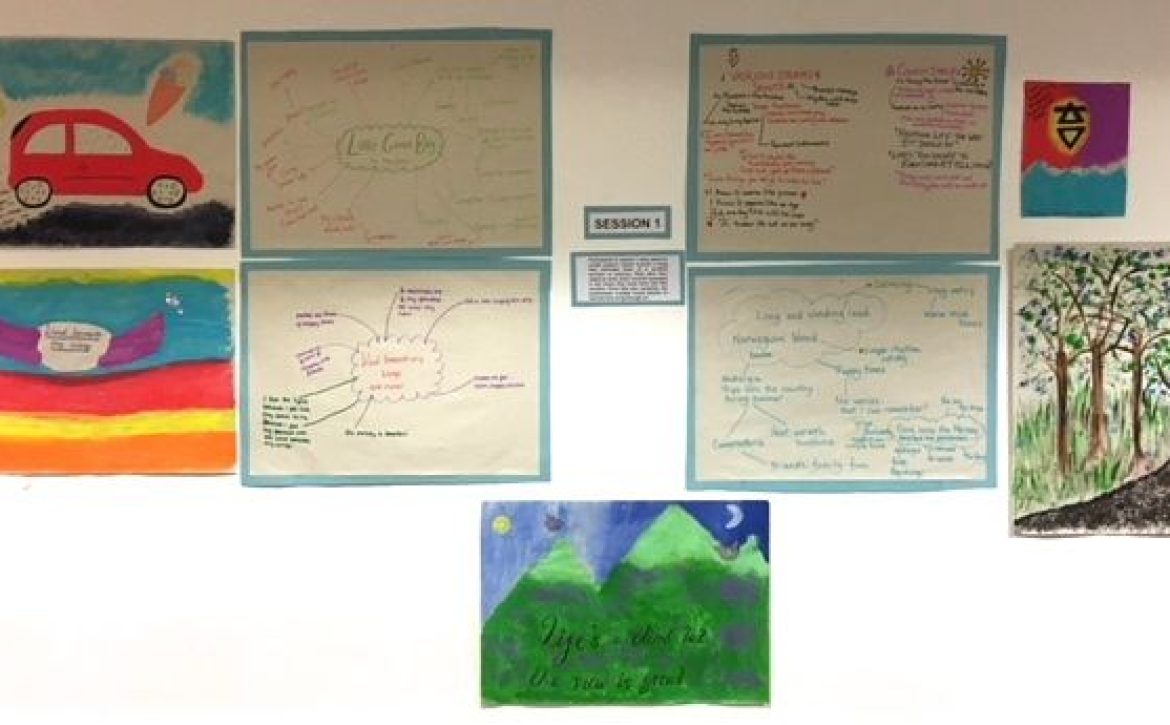
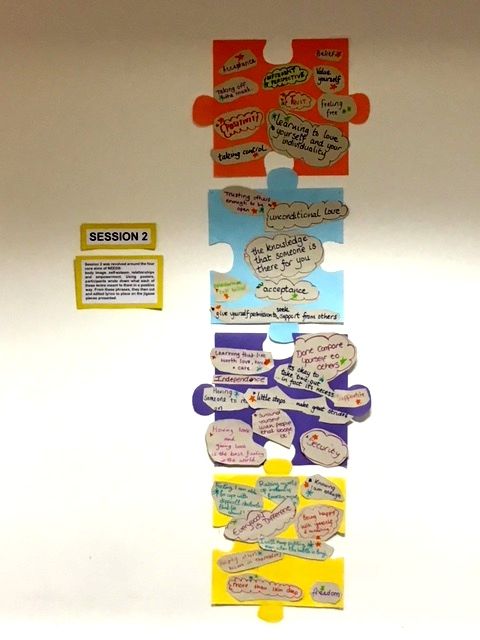
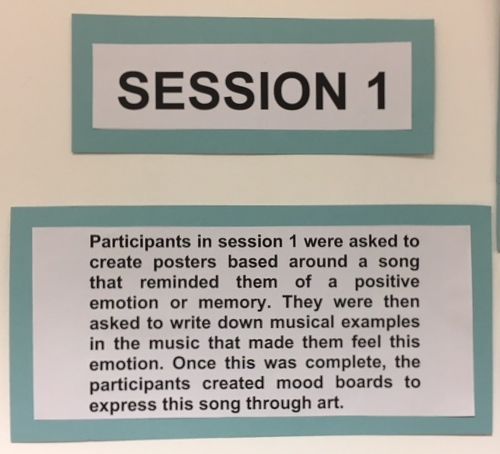
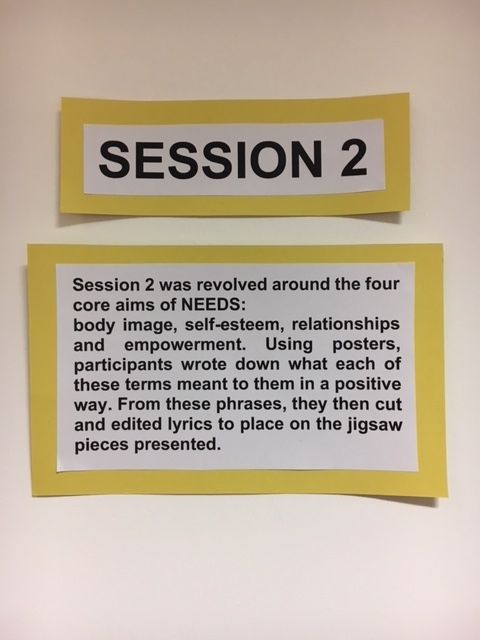
The participants were involved in four sessions over the course of four months. The first two sessions were art based, where the group worked together to create lyrics in a sensory way. Firstly, I got the participants to create mood boards and paintings based around their favourite songs and memories. I then asked them to note down what it was about the music that made them feel these emotions and why. As a group we then brainstormed words or phrases from four categories: empowerment, self esteem, body image and relationships. The participants chose words or phrases from these posters that would become the lyrics for their recovery song.
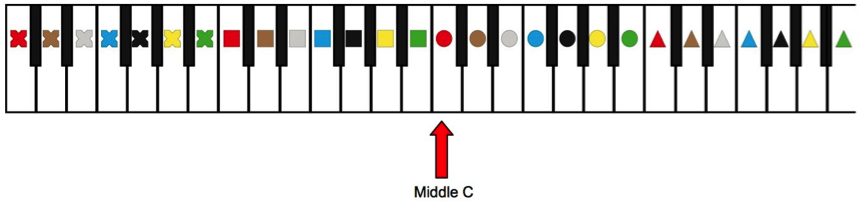
The final two sessions focused on word setting and creating melodies by using Figurenotes. Once the participants separated their words into syllables and then rhythms, we began making the music! I brought along my own keyboard for the participants to use. I labeled an octave on the keyboard to match the Figurenotes colours. I also brought along the Figurenotes diagram to use as a visual aid when explaining Figurenotes to the participants. This acted as a guide throughout the composition process that we were able to refer back to when experimenting with the keyboard.
As the participants took it in turns to compose, they would mark the corresponding colours underneath the rhythms and lyrics to create their melodies. Once each line was composed, I would impute this into my music software. This allowed the participants to listen and edit their music as the session went on.
As majority of my participants had little or no experience with music making, I found using Figurenotes a really easy and accessible way for everyone to create music together. This allowed the participants to bond with each other while learning completely new skills. These were skills that they were unable to access previously, due to their illness.
Participants worked well as a group and listened to each other’s work when composing their own part. By using colours as a way to notate, the participants were able to focus in on the music and the sound of it rather than getting caught up in the ‘notes’ of the keyboard.
The participants often mentioned how they thought the process of writing their own music would have been a lot harder. However, by using Figurenotes they were able to freely write music. Overall, I felt that by using Figurenotes I was able to give the group creative control in an environment where they perhaps felt they didn’t have any control.
Thanks to Nadine for sharing this brilliant project with us. It is so useful to see the different ways that Figurenotes is being used in a wide range of settings. You can find out more about NEEDS through their website.
If you’d like training in inclusive music education using Figurenotes, with many composition activities, come along to the Music Teacher’s Toolbox on 24th March.