composition

Uncategorised

BBC Young Composer

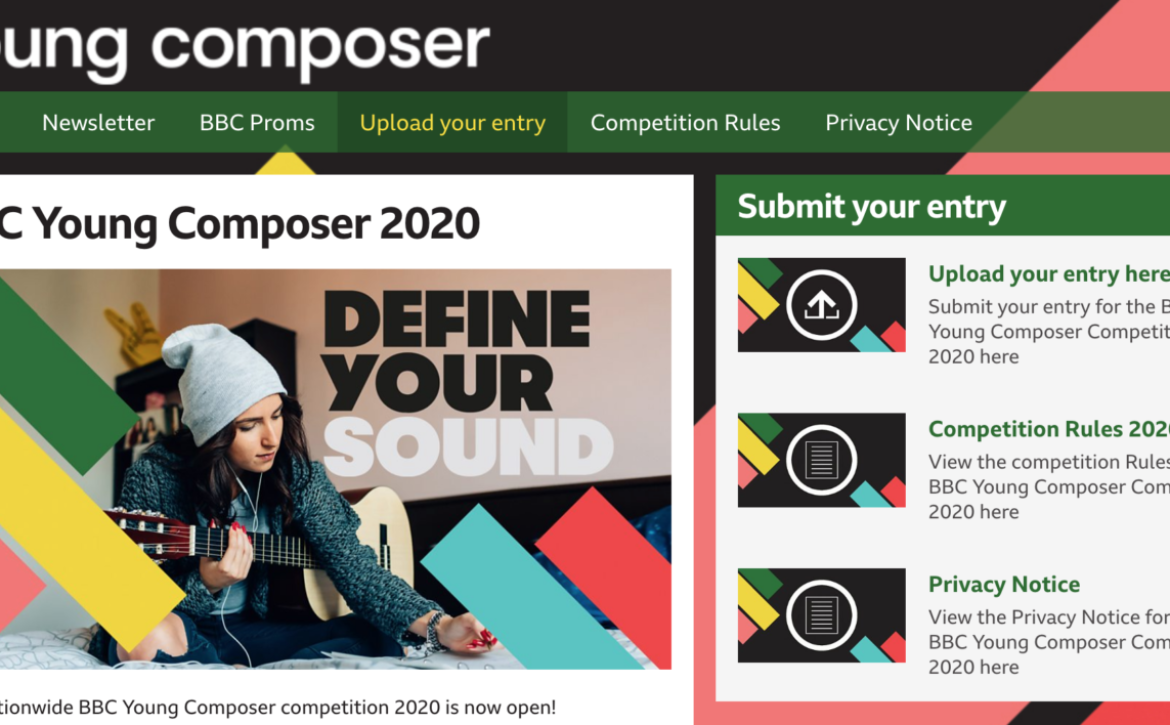
We are very excited to see that the BBC Young Composer competition is accepting alternative notation. This means you can enter with your Figurenotes scores!

This would make a great project for a school class, as the deadline isn’t until 11th June 2020. Plenty of time to learn how to create your own original music, write it up in Figurenotes, and send it in. If you’re aged 12-18 and are a budding composer, take a look at the entry requirements and have a go. The prize looks fantastic!

You could use some of our creative composition resources from the Resource Base to give you a boost. Figurenotes works brilliantly for creative composition. You can take inspiration from abstract art that uses colour and shape; maybe use our composing dice made up of rhythms and pitches; or perhaps you want to map out your ideas using coloured sweets or other foods. The possibilities are endless!

Let us know if you’re planning on entering, as we’d love to know how many Figurenotes entries they get.

Good luck!

Guest Blogs

Aiding Recovery with Figurenotes

This wonderful project, which uses Figurenotes to help in the recovery from eating disorders, was brought to our attention recently. The instant accessibility of Figurenotes seemed to work really well in this scenario and allowed the group to compose and express themselves without any prior musical knowledge.

My name is Nadine Allan and I am a recent Music and Communities graduate from The University of Aberdeen. During the final year of my studies, I created a music project called ‘Can You Hear Me?’ that used Figurenotes to compose a song with the North East Eating Disorder Service (NEEDS) in Aberdeen. NEEDS is a charity that is run for sufferers and carers of eating disorders by volunteers who have experience with the illness. The charity holds meetings at Cornhill Hospital in Aberdeen monthly, where individuals can share experiences and support one another in a confidential setting.

‘Can You Hear Me?’ was a project that created a pro-recovery song for sufferers and carers of eating disorders. The main purpose of the project was to work alongside participants to create a song that represented their feelings, emotions and opinions on the illness. I wanted the project to highlight a new outlet for the participants to express themselves. This outlet was music.

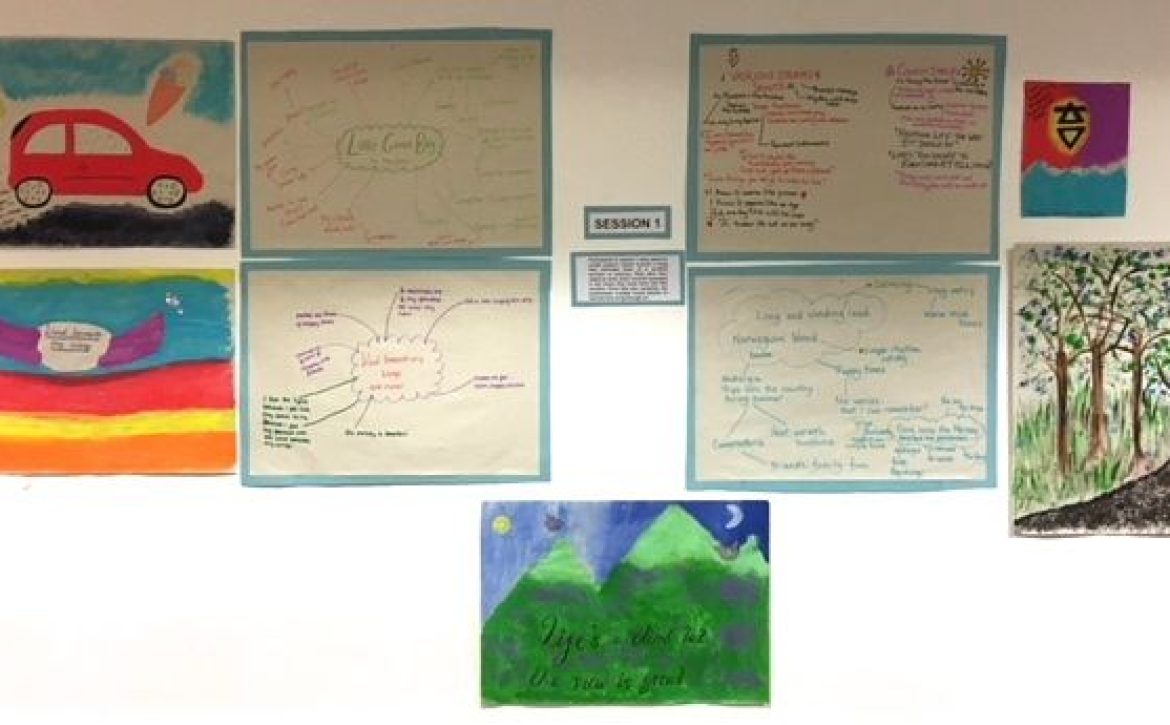
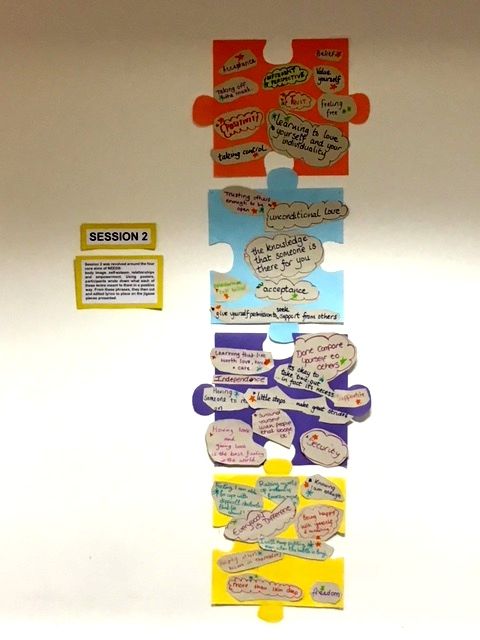
The participants were involved in four sessions over the course of four months. The first two sessions were art based, where the group worked together to create lyrics in a sensory way. Firstly, I got the participants to create mood boards and paintings based around their favourite songs and memories. I then asked them to note down what it was about the music that made them feel these emotions and why. As a group we then brainstormed words or phrases from four categories: empowerment, self esteem, body image and relationships. The participants chose words or phrases from these posters that would become the lyrics for their recovery song.

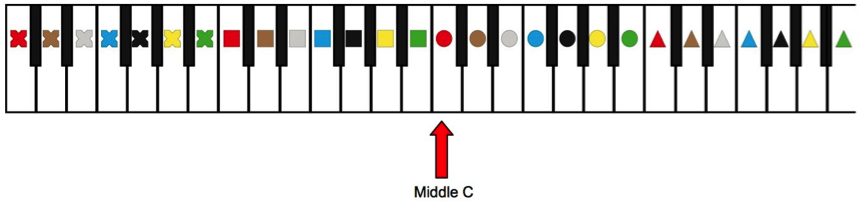
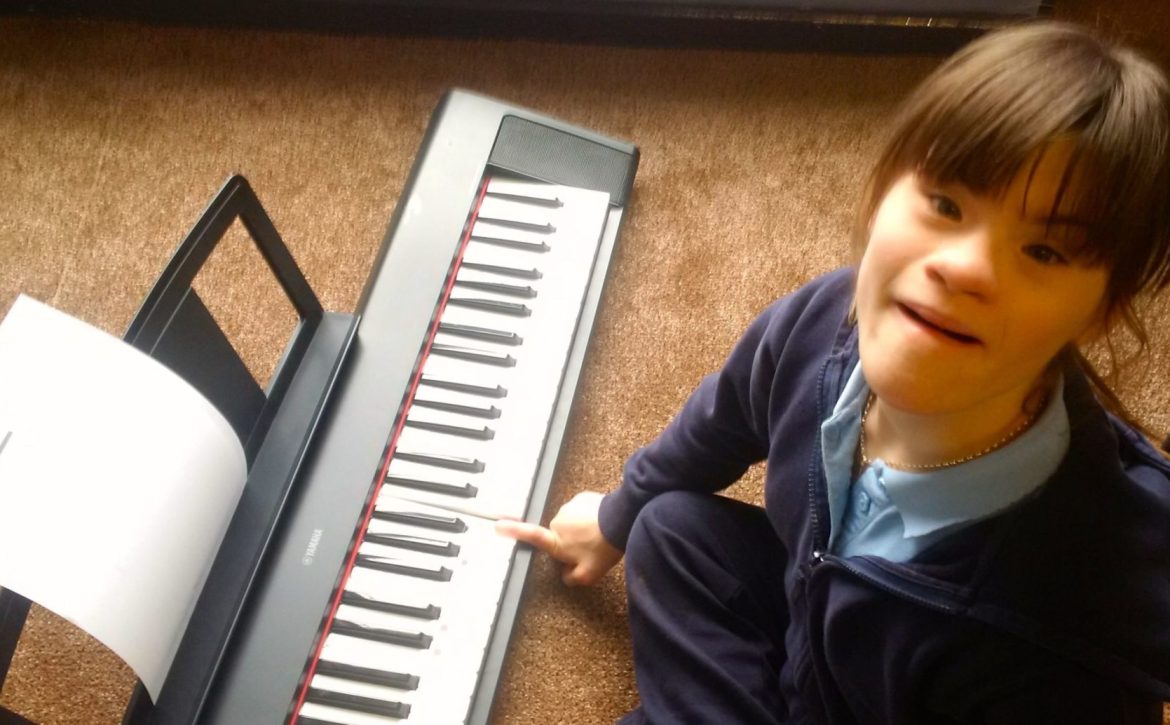
The final two sessions focused on word setting and creating melodies by using Figurenotes. Once the participants separated their words into syllables and then rhythms, we began making the music! I brought along my own keyboard for the participants to use. I labeled an octave on the keyboard to match the Figurenotes colours. I also brought along the Figurenotes diagram to use as a visual aid when explaining Figurenotes to the participants. This acted as a guide throughout the composition process that we were able to refer back to when experimenting with the keyboard.

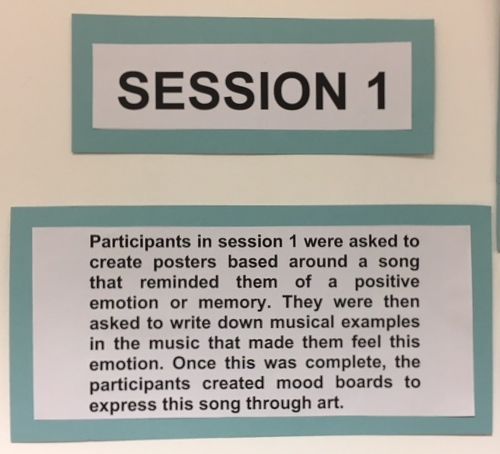
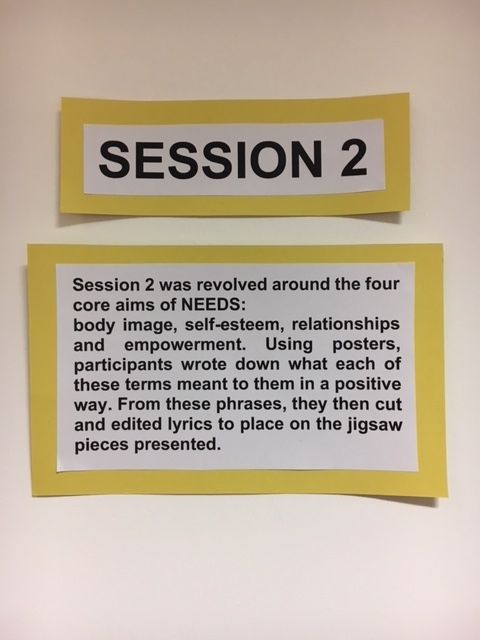
Display caption for 'Session 1' exhibition "Participants in session 1 were asked to create posters based around a song that reminded them of a positive emotion or memory. They were then asked to write down musical example in the music that made them feel this emotion. Once this was complete, the participants created mood boards to express this song through art" Display caption for Session 2 exhibit. "Session 2 revolved around the four core aims of NEEDS: body image, self-esteem, relationships and empowerment. Using posters, participants wrote down what each of these terms meant to them in a positive way. From these phrases, they then cut and edited lyrics to place on the jigsaw pieces presented"

As the participants took it in turns to compose, they would mark the corresponding colours underneath the rhythms and lyrics to create their melodies. Once each line was composed, I would impute this into my music software. This allowed the participants to listen and edit their music as the session went on.

As majority of my participants had little or no experience with music making, I found using Figurenotes a really easy and accessible way for everyone to create music together. This allowed the participants to bond with each other while learning completely new skills. These were skills that they were unable to access previously, due to their illness.

Participants worked well as a group and listened to each other’s work when composing their own part. By using colours as a way to notate, the participants were able to focus in on the music and the sound of it rather than getting caught up in the ‘notes’ of the keyboard.

The participants often mentioned how they thought the process of writing their own music would have been a lot harder. However, by using Figurenotes they were able to freely write music. Overall, I felt that by using Figurenotes I was able to give the group creative control in an environment where they perhaps felt they didn’t have any control.

Thanks to Nadine for sharing this brilliant project with us. It is so useful to see the different ways that Figurenotes is being used in a wide range of settings. You can find out more about NEEDS through their website.

If you would like to share some of your work through our guest blog slot, please get in touch. We also have a closed Facebook group for teachers and musicians. Figurenotes – Let’s Play Music is a place to discuss, share, and ask questions on anything Figurenotes related. Let’s support each other in enabling accessible and inclusive music-making worldwide. 

If you’d like training in inclusive music education using Figurenotes, with many composition activities, come along to the Music Teacher’s Toolbox on 24th March.

Guest Blogs

Guest blog: Focus on Composing 1 – Introducing Figurenotes

In a new series of guest blogs, Matilda Brown, composer and community musician, gives us an insight into how she uses Figurenotes with pupils. Matilda uses her work in special schools to demonstrate particular ways into using Figurenotes, which work wonders with beginners of all ages. Look out for part 2 and 3 over the next couple of weeks. 

Part 1 – Introducing Figurenotes to Group Music

Fun with colour, fun with shapes

I love getting to know my new music groups through fun warm-ups, singing songs, conducting games, and improvisation. No matter what level of musical experience the pupils have had in the past, this kind of group work creates an inclusive environment where everyone’s musical say is important. This practice also helps the pupils become aware of each other in the space, get to know each other’s likes and dislikes, and how it feels to put sounds together in practice for playing in a band.

Where does Figurenotes come in?

Figurenotes can become part of this initial process. Here are a few example of how I introduce Figurenotes to groups:

  • Colour Song Warm-up – Introducing colour through a song. Pupils love singing about their favourite colours.

Benefits: Introducing Figurenotes colours through a song can really help pupils to become comfortable working with colour in the future.

  • Play What You See – Pupils choose a colour. They then choose an instrument and match the instrument to their colour. When their colour is held up by the conductor, they play their instrument.

Benefits: It’s fun! This starts to introduce the pupils to following colours and can help with following a Figurenotes score. You can also introduce call and response technique.

  • Two Colour Conductor – Each pupil selects an instrument. The pupils are split into two groups; each group selecting a colour. For example, Group 1 is red (C) and group 2 is blue (F). When the conductor holds up the Figurenotes red circle, group 1 will play their instruments. You can introduce a chime bar that matches these pitches, so that your pupils start to recognise the pitch of the colour.

Benefits: Pupils begin to hear red as C and blue as F, as well as practising following both colour and the conductor. They also have to be aware of what the others in their group are playing, try to play together musically, whether playing to a beat or playing without a beat.

I develop this game by using different Figurenotes shapes to introduce octaves. I also use guitar chords C and F, for example, as an accompaniment. This helps the pupils hear the pitch of the note with the chords.

There are many other ways to use Figurenotes in warm-up exercises. You could focus on rhythm, learning about rests and sustaining notes. This is easily done using a short rhythm in a Figurenotes bar/box.

Examples from my work in Hampden Primary:

I work with two groups at Hampden and we use some of these warm-ups in our groups.

Group 1 love using their bodies to move to music. They like copying a leader/conductor. After working like this to a simple backing track, I assigned each pupil a colour. They would move their bodies when the conductor held up their colour. This was fun and gave them freedom to move to the accompaniment any way they liked. The pupils were learning about following colour and playing in turn. Their bodies became the instruments to simple Figurenotes notation.

In my second group, Paul was the conductor and he wanted to know how long to hold up the colour for. This was a great question! We decided that Red would be played for 1-5 seconds and Blue would be played for 2-8 seconds. The pupils love counting, so I started to introduce different length notes and rests.

After getting to know my groups, we start to write our own songs and structured pieces of music. It’s also productive to schedule in one to one composing and performing sessions, creating new tunes or finishing songs we started as a group. This is when I use Figurenotes a lot. I’ll explain more on this subject in part 3.

You can read the next stage of Matilda‘s blog, A Composer’s Perspective, next week. The final blog will explore composition with her groups at Hampden Primary School. 
#lmsmart_search_6a4920421f50a:hover { color: rgba(30,40,69,1) !important; }#lmsmart_button_6a49204227d6a { color: rgba(7,47,96,1); }#lmsmart_button_6a49204227d6a:hover { color: rgba(7,47,96,1); }#lmsmart_button_6a49204227d6a { border-color: rgba(30,40,69,1); background-color: rgba(249,232,20,1); }#lmsmart_button_6a49204227d6a:hover { border-color: rgba(30,40,69,1); background-color: rgba(0,166,214,1); }#lmsmart_button_6a49204229c56 { color: rgba(7,47,96,1); }#lmsmart_button_6a49204229c56:hover { color: rgba(7,47,96,1); }#lmsmart_button_6a49204229c56 { border-color: rgba(30,40,69,1); background-color: rgba(249,232,20,1); }#lmsmart_button_6a49204229c56:hover { border-color: rgba(30,40,69,1); background-color: rgba(0,166,214,1); }