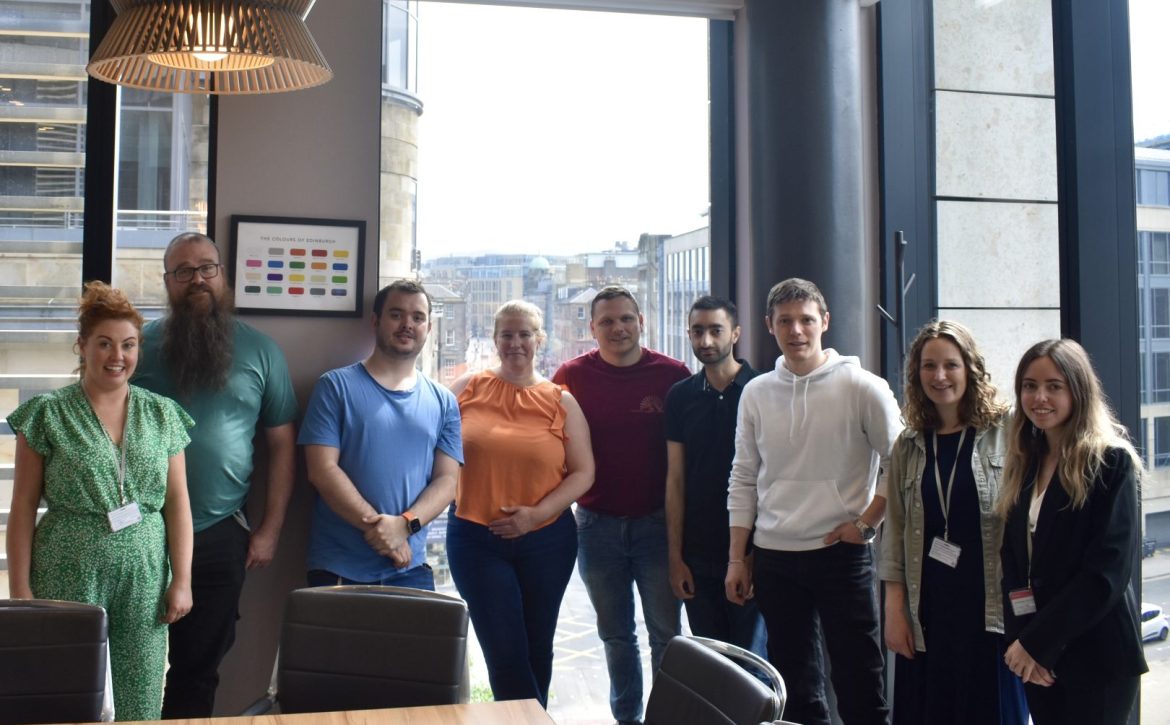
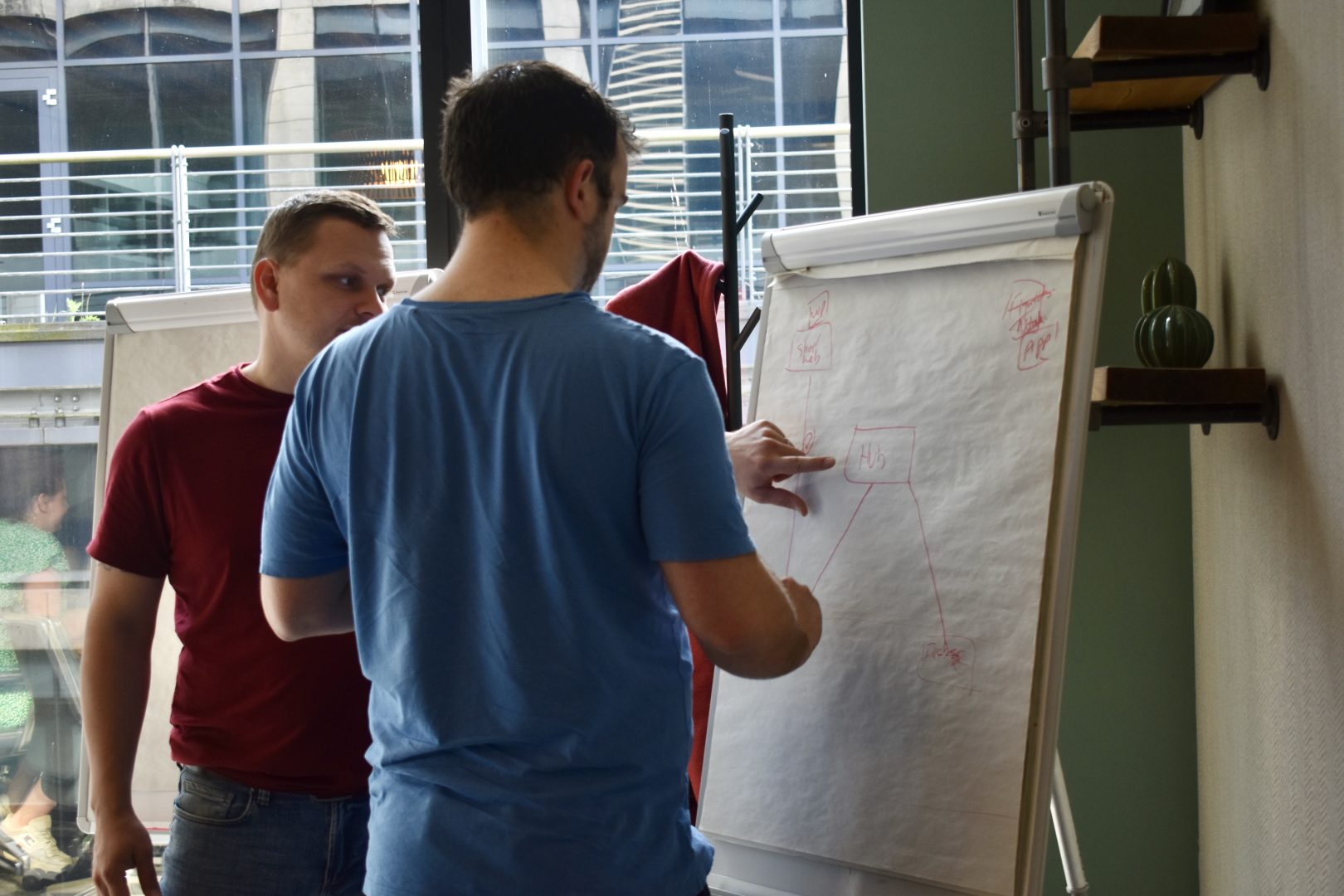
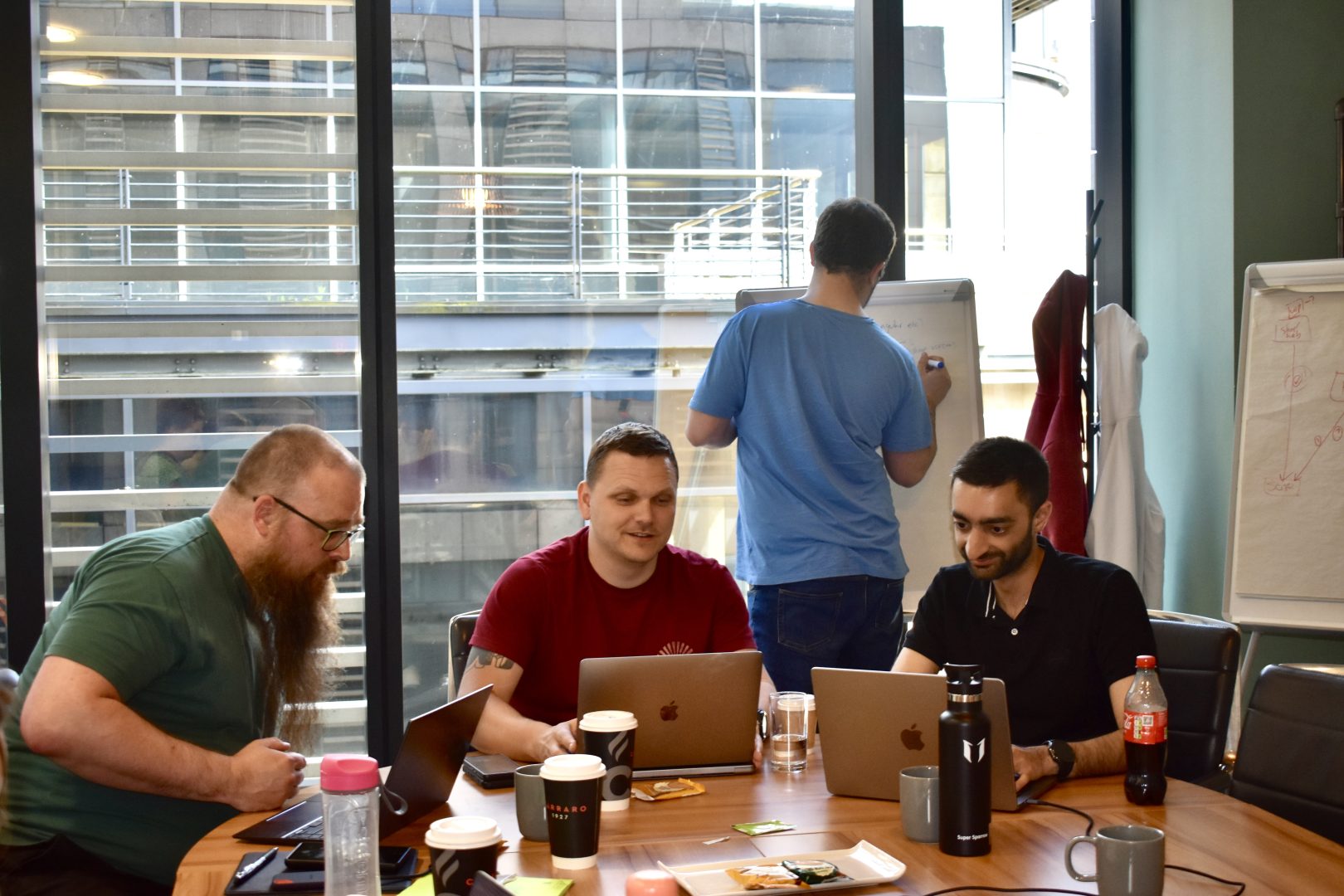
Tech Army, Assemble! We’ve never responded to an offer of help so quickly. Scottish Tech Army got in touch to say Drake Music Scotland had been chosen by one of their corporate partners for a day of volunteering. This isn’t your usual volunteering. A team of highly skilled tech folk swoop in and give you a full day of their time (and then some) to help solve a tech issue.
Scottish Tech Army are a catalyst for a step change in the application of technology for public good in the UK. Their highly-engaged volunteer community works in partnership with the technology ecosystem of the UK to deliver scalable, impactful solutions.
As a non-profit, we rely on funding and offers of support. Such is the nature of working in the third sector (and the arts!) This way of working means progress is never linear, so anything that gets us closer to our goals is welcomed with open arms.
PWC linked up with Scottish Tech Army for ‘One Firm, One Day’. The UK contingent worked on 3 projects across Edinburgh, Manchester, and London. We were lucky enough to be chosen by the Edinburgh team.
With offices in 151 countries and more than 364,000 people, PWC are among the leading professional services networks in the world. They help organisations and individuals create the value they are looking for, by delivering quality in Assurance, Tax and Advisory services.
One Firm One Day is described as an “annual firm-wide fundraising and volunteering event, where staff across the UK and Channel Islands are encouraged to join together and take part in giving something back to our local communities.”
The Edinburgh team worked tirelessly and we are incredibly grateful. Thank you to Scottish Tech Army for setting this up, PWC for choosing our project, and the volunteers for being so welcoming and working so hard.
“Not only was the training great, it was also really fun, which is so important”
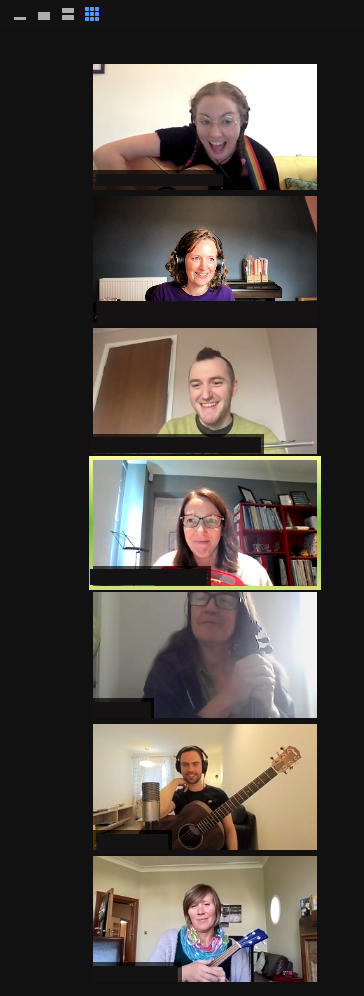
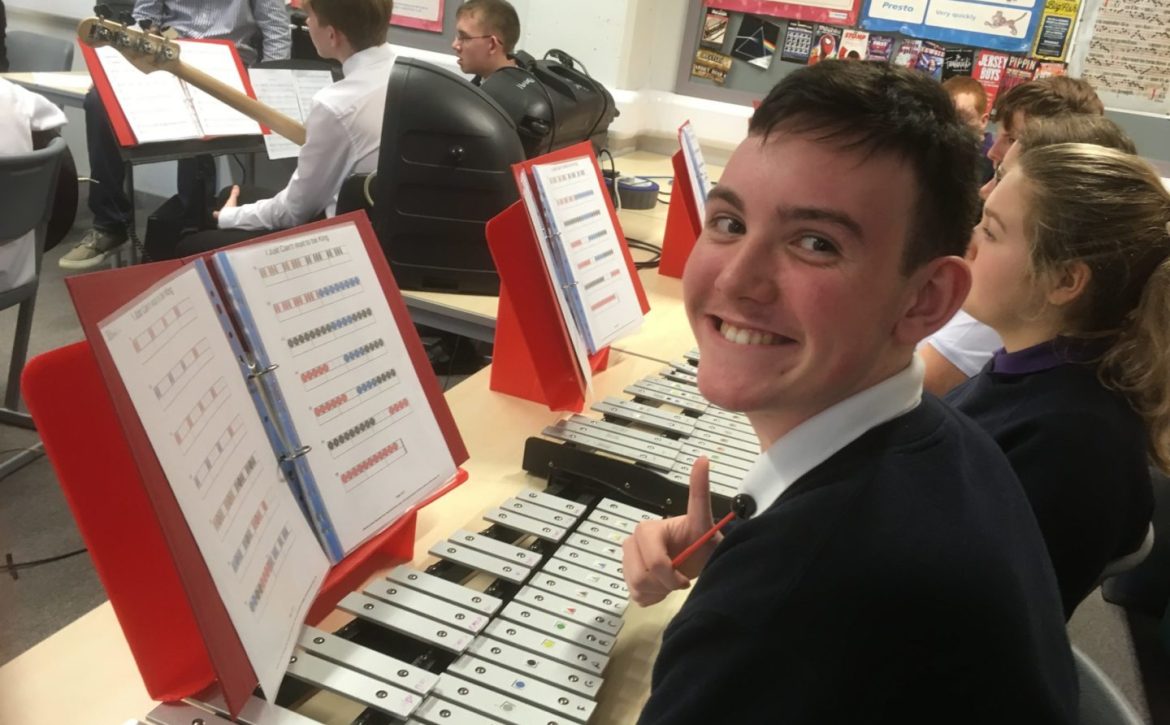
As always, we had an absolute blast delivering the Figurenotes: Developing Your Practice course. The interactive elements always have everyone smiling and it really brightens our day to work with such enthusiastic music leaders.
The inspiration was sparking for our fabulous course participants from the very first week! It is so invigorating to set an activity or a homework challenge and see the ideas pouring out of the wonderful teachers before us.
“Online worked a treat! Well planned for the context and plenty of opportunity to share practice. Good space for thoughts to be absorbed too.“
The Group
Last time we had an international crowd, but this crew were all based in Scotland, so we are also building a lovely network of musicians that can support each other in their day-to-day work too. That is why we encourage all our Figurenoters to join the private Facebook group too. It’s a great place to ask questions and share ideas with other Figurenotes teachers and leaders.
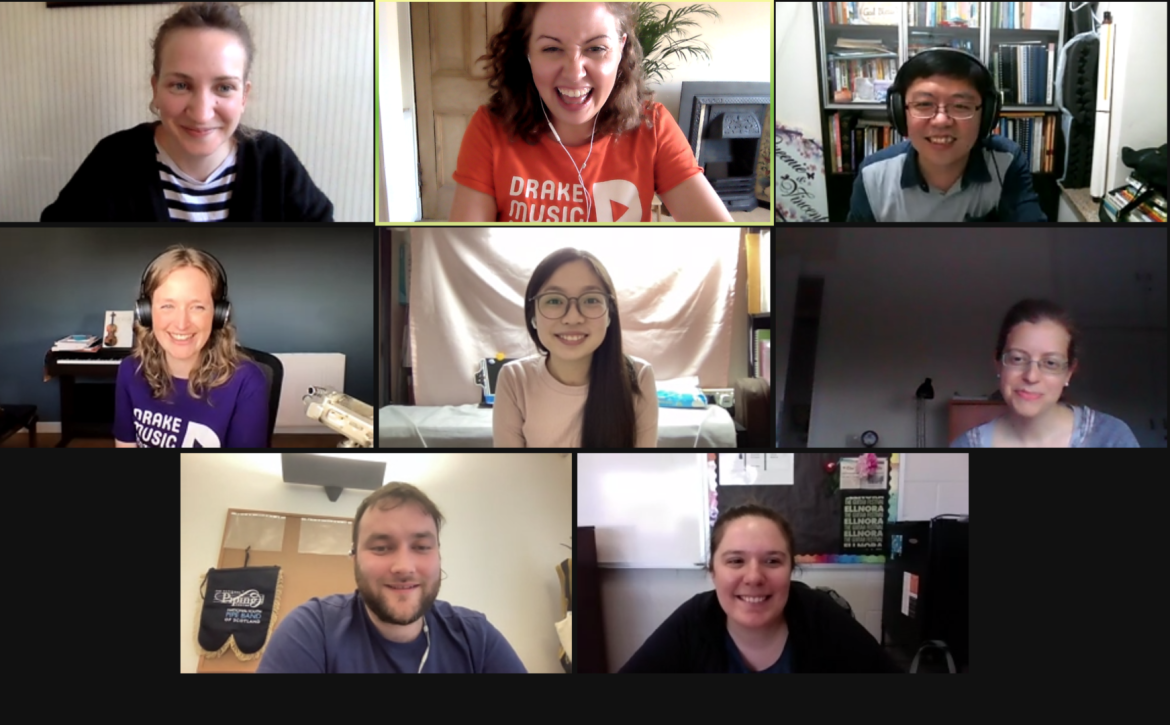
Getting to know our small groups and working together over the weeks really helps us to deliver practical advice relevant to each person and their working environment. With such broad portfolio careers in music and music education, we love hearing about the incredible professional experience each attendee brings to their work. Instrumental and classroom teachers, mainstream and specialist schools, composers and community musicians – we had a wealth of knowledge and experience within this group. Music education in Scotland is very lucky to have such an inspirational bunch of musicians teaching the next generation.
“Excellent, fun, interactive, and curious sessions that were active and engaging.“
Week 1 – Rhythm
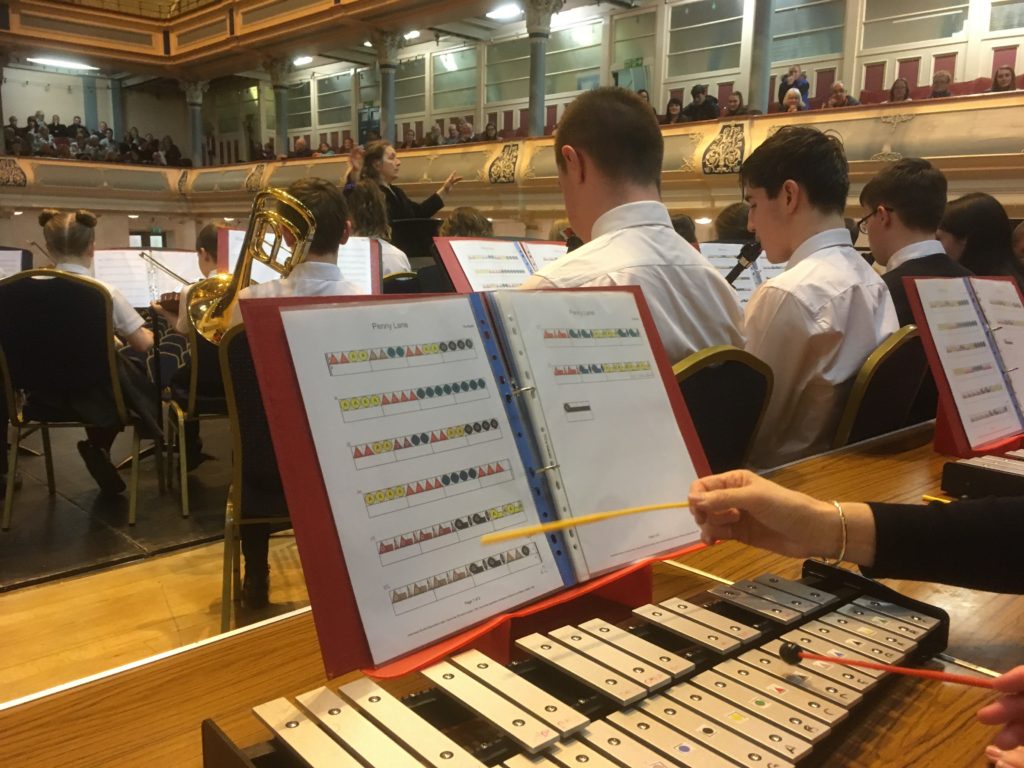
After introducing the basic principles of Figurenotes, we start the fun and games. Our rhythm activities using canon even got a live outing with a woodwind group in the week following the session, which went down very well with the pupils!
Our rhythm homework challenge inspired such innovative responses. These ranged from movement activities inspired by Pachelbel’s Canon, exploring and listening on an adventure with a cuckoo (Saint-Saens), all the way into outer space for a space-themed rhythm and structure activity. Their pupils are going to be having a lot of fun in the coming weeks working on this lot.
Week 2 – Composition
Chime cam made an appearance this week to showcase some compositions created during the session. We played with different ways of using rhythm and colour (pitch), as well as directing each other’s playing. It is always lovely to hear some live playing in an online setting too (the viola played as a cello was my personal highlight).
Week 3 – Groups
The Gingerbread Man came to play today. Incorporating elements from the past 2 weeks, this activity is great for differentiation, turn-taking and other ensemble skills, as well as having more extension activities than you can shake a rainstick at!
By combining this with practical tips for making group-work accessible and fun, this action packed week should set up our music leaders with the tools they need to get cracking with Figurenotes.
“I’ve already started using it and the kids just get it straight away. It’s definitely here to stay. It’s been life-changing!”
1:1 Follow-ups
Every participant can book a follow-up session with course leaders to ask whatever questions and queries that weren’t covered in the training or to dive deeper into certain aspects of their practice. This could be anything from reviewing and discussing resources created during the course, refining and developing them, or a walk-through of the software. These sessions are a wonderful way to tie up the learning from the previous 3 weeks to set our participants up with the skills and confidence to dive into using Figurenotes in their practice.
What Next?
Our next course will run in March 2022. Book your place here and join us for more Figurenotes fun and games, learning skills for delivering accessible music sessions, whatever your work setting.
“Loved all of the compositional games gifted and the resources of materials – an amazing package of tools to get going in a lot of contexts.“
Did you miss out on our online course back in April? Well, we have great news!
Figurenotes training is BACK 🎉 for all teachers, tutors, music practitioners, and music therapists.
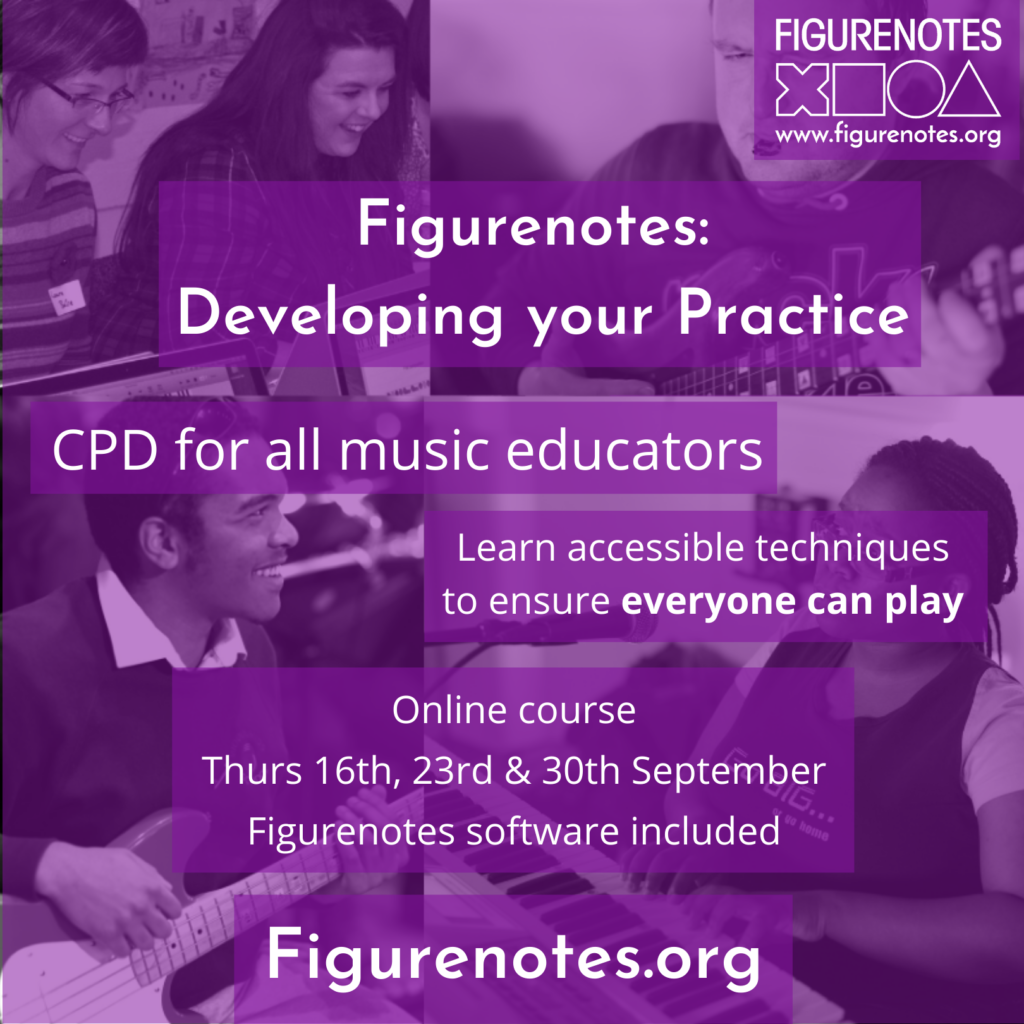
Join us for Figurenotes: Developing Your Practice, running online in September. Live delivery takes place in small groups on Thursdays, September 16th, 23rd, and 30th. We’ve adapted the time for this course, so that those who couldn’t make last time will get the chance to come; 1pm – 3pm (UK time)
We specifically wanted to highlight funding opportunities for this course, so keep an eye on our Facebook group where we will share these opportunities with you. For people working in Scotland this fund is brilliant: https://www.scottishmusiccentre.com/ymi-cpd. There is a fairly quick turnaround, so get your application in as soon as you can.
We can’t wait to meet you, whether you’ve attended previous training or are brand new to Figurenotes. With more interactive activities, opportunities for 1:1 sessions, peer feedback, and a whole load of practical advice and guidance, this is not one to be missed!
“Really great to see everyone’s ideas and the range of different minds from all over the world – great for inspiration!”
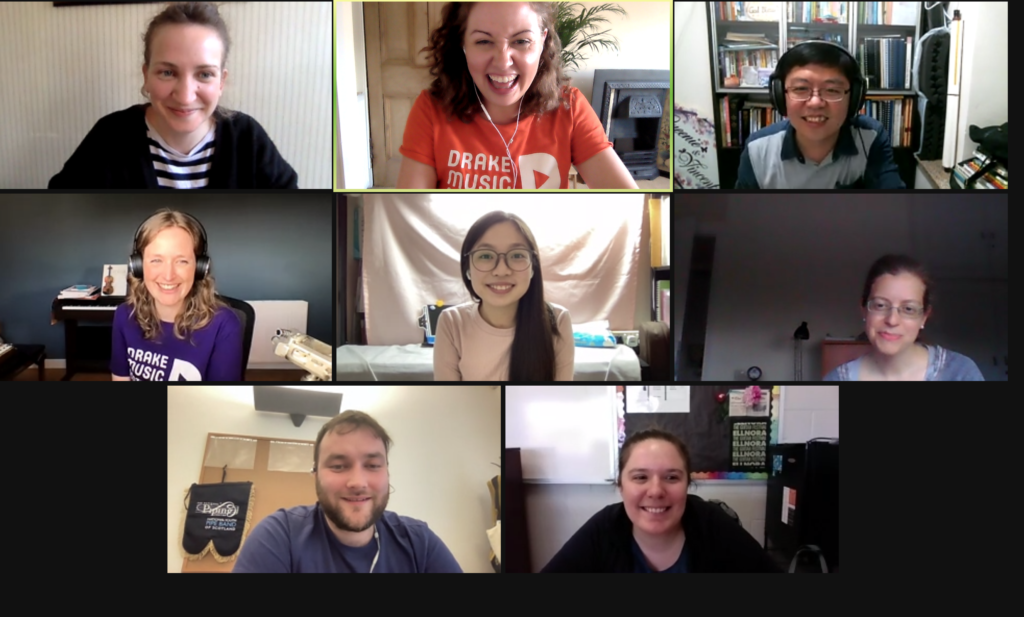
We had a fantastic time delivering our new online course designed to help people explore Figurenotes within their own teaching settings. Running 2 small groups across 3 weeks of training, we’ve really enjoyed getting to know more about the people involved and how they work.
Thank you to all our participants for engaging so well with this course. The activities and ideas created by your homework tasks were phenomenal and have such potential. We can’t wait to hear what you achieve in your lessons.
I have learnt how to use the Figurenotes system itself, but also some great ideas about planning, differentiation and different ways into composing.
Trainee 2021
Each week had a different focus, which was consolidated in the homework activity. Week 1 was an introduction to Figurenotes with particular emphasis on rhythm. Week 2 explored the world of creative play and composition. Week 3 focused on groups, ensembles, and differentiation.
As always, the creative composition task had the most wide-ranging results. The opportunities are endless when working with colour and shape. We have had everything from Kandinsky to puppets, train journeys to braille Bananagrams, Moomins to holiday snaps – and everything inbetween! What a creative bunch.
Tools for Creative Composition (week 2)
Our in-person training nearly always has a visitor to Scotland from another country, but with online delivery we can reach so many more people who could benefit from this training. With participants from Hong Kong, Greece, USA, and the UK this time around, we hope to reach even more countries with our next course date.
If you are interested in attending this course in the future, please get in touch, as we are currently working out dates and timings for the next run. With so many timezones to consider, it is helpful to know what works best for you.
The information was presented really well and you are both super knowledgable about teaching to diverse groups. It was great to get your insight.
As some of you may already know, we are in the process of applying to update the current Figurenotes Software. A part of the application requires us to estimate our reach i.e how many people are using Figurenotes.
With this in mind, we have launched our new project Figurenotes Collect! We are delighted to announce that we have been getting out and about in the Figurenotes Community, visiting projects, school, concerts and meeting some Figurenotes users.
Teens+
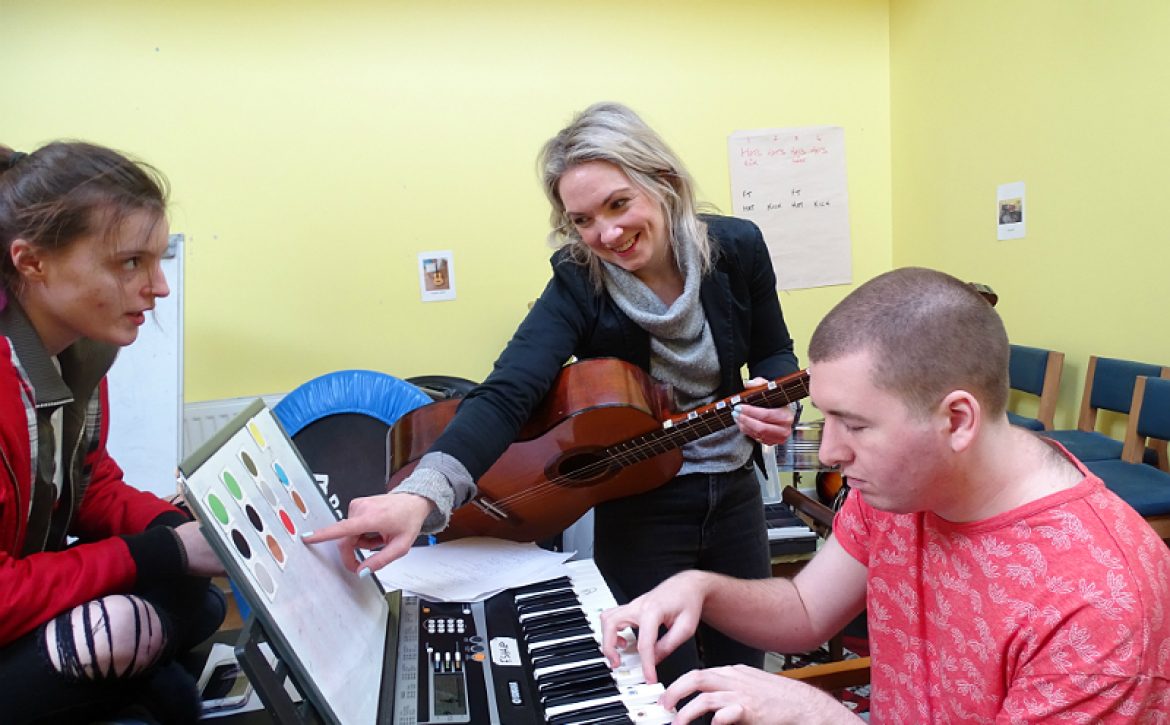
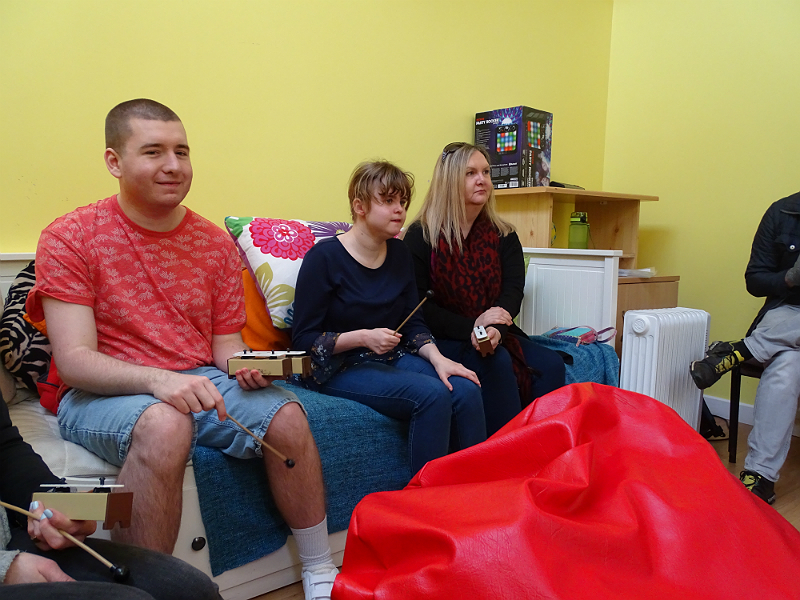
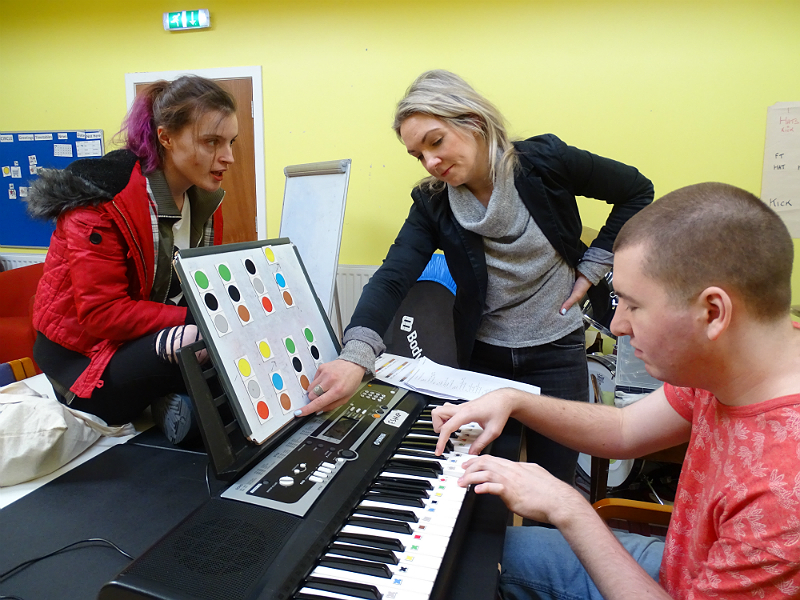
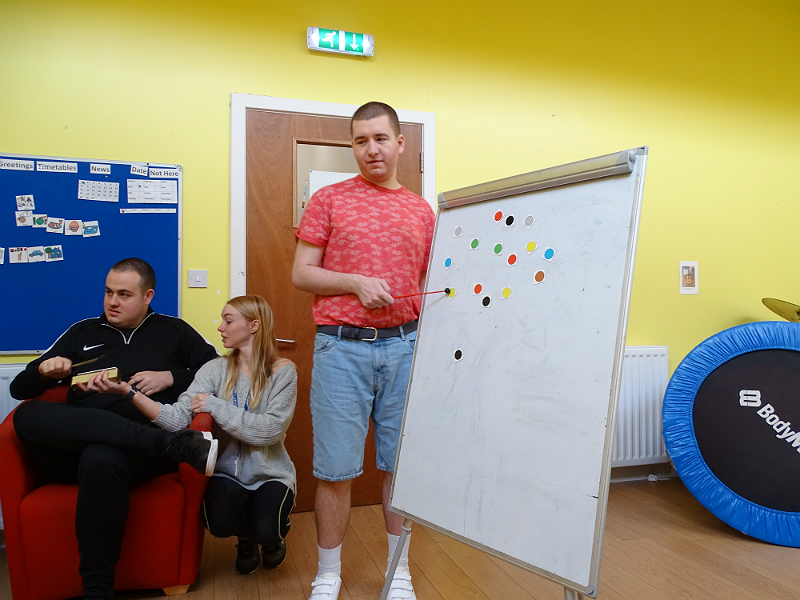
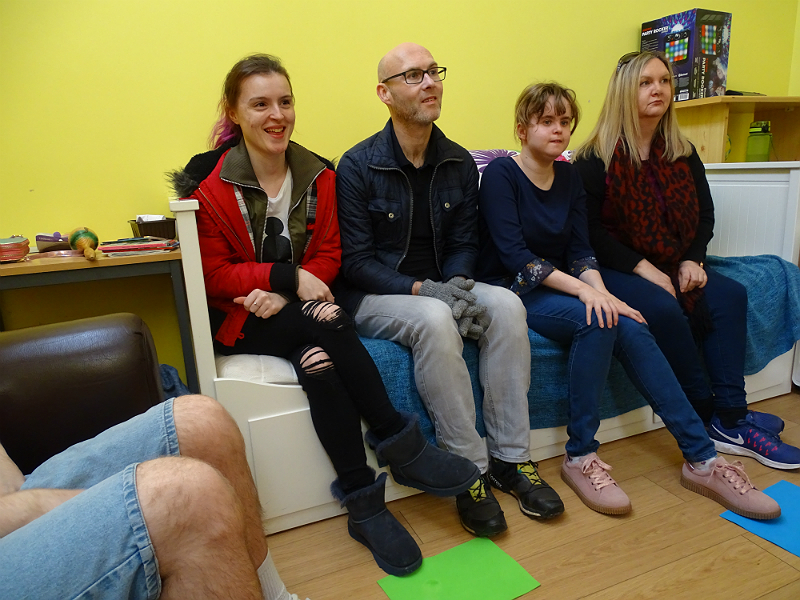
Rebecca was lucky enough to visit Teens + Ravenscroft, a unique service providing further education, life and social skills, transition to ownership of tenancies and lifelong learning, to young people who, due to their needs, would ordinarily be excluded from accessing any form of further education once they have left school.
Rebecca visited one of our Associate
Musicians, Fi Sharp. Fi leads a small group of young adults with a variety of
needs, in their quest to learn and play music.
It was fantastic to see these young
adults interacting with Figurenotes in different ways to suit their stage and
it was a real treat to experience people of differing ages and musical
abilities playing together.
Big thanks to Fi and everyone at Teen+
for allowing me to come along.
If
you are using Figurenotes in your school/council/community project we want to
hear from you!
From its establishment in 1997 Drake Music Scotland’s primary purpose was to create music-making opportunities for disabled people of all ages. For the first 10 years this was primarily achieved through the use of accessible music technologies, giving those with limited mobility and co-ordination the means to control musical sounds and express themselves creatively. As well as working with physically disabled people, we also provided opportunities for those with learning difficulties. Many of these were able to play conventional musical instruments, but the main issue for us was how best to help them develop musical skills.
The ability to read music notation is a fundamental aspect of learning to play an instrument and joining in music making with other people. Notation presents a barrier for many learners – not just those with disabilities – and we hadn’t found a way round this. We relied on different approaches to music making, such as improvising, rhythm games, playing by ear, and creative composition using alternative notation such as graphic scores.
Essentially we recognised our own ‘teaching difficulty’ rather than seeing our participants as having a ‘learning difficulty’.
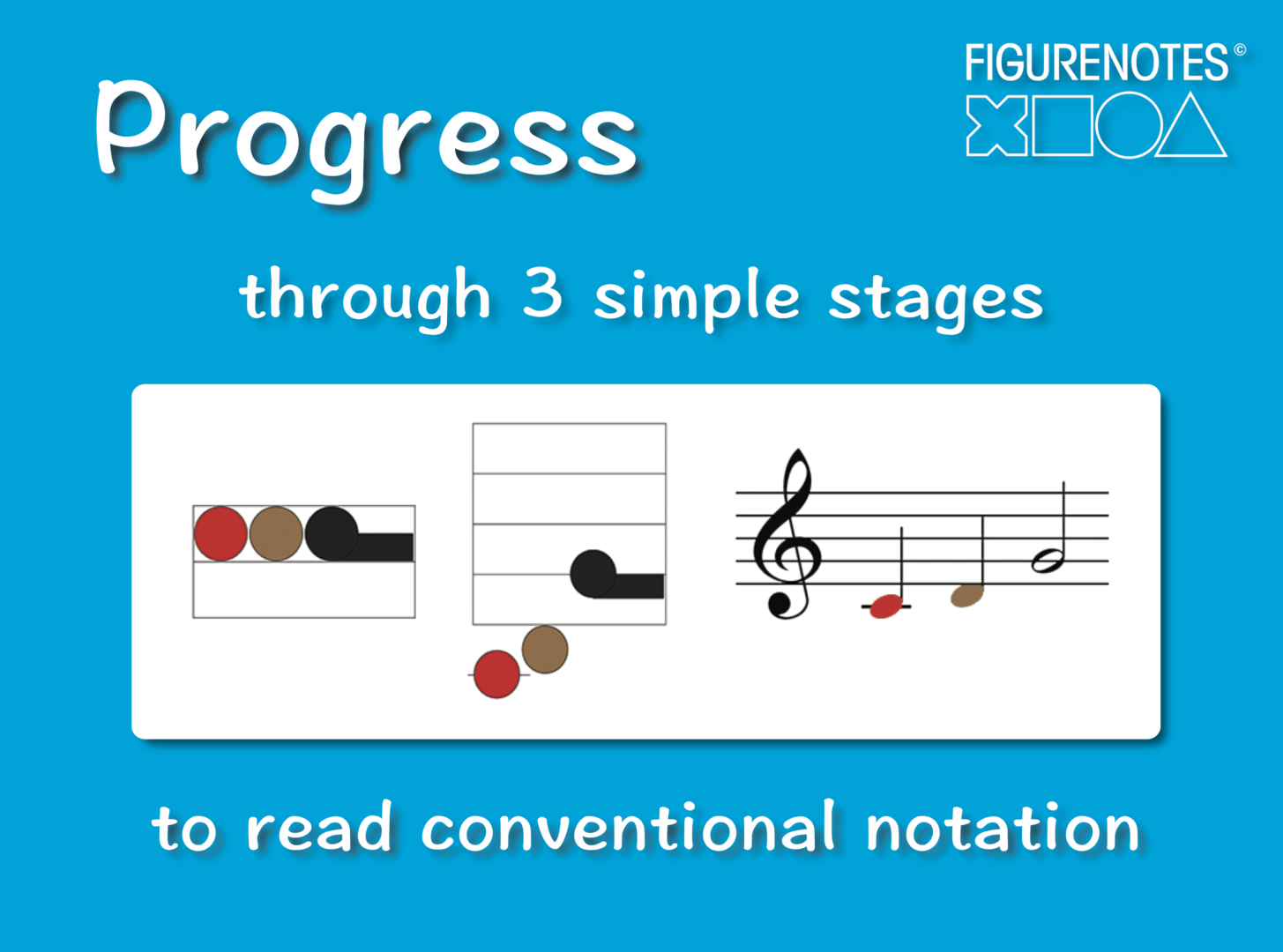
In 2008, we became aware of Figurenotes and, since that moment, this colourful notation system has had a major impact on our work. Our former Artistic Director, Brian Cope, went to Helsinki, where Figurenotes was invented and developed by Markku Kaikkonen and Kaarlo Uusitalo with their pupils at the Resonaari Music School. He returned to Scotland enthused by its simplicity and effectiveness, and we didn’t look back. Although other colour-based systems have been created, Figurenotes presents all the fundamental features of notation in a clear and accessible way, and at the same time allows learners to progress through three simple stages towards standard notation. Following our ‘Inspire’ pilot project, testing Figurenotes with a variety of learners from young children to adults, we needed no further convincing. Our mission was to introduce it to Scotland, make it more widely available by creating Figurenotes software and resources, and bring music leaders and educators on board with this revolutionary, but simple tool.
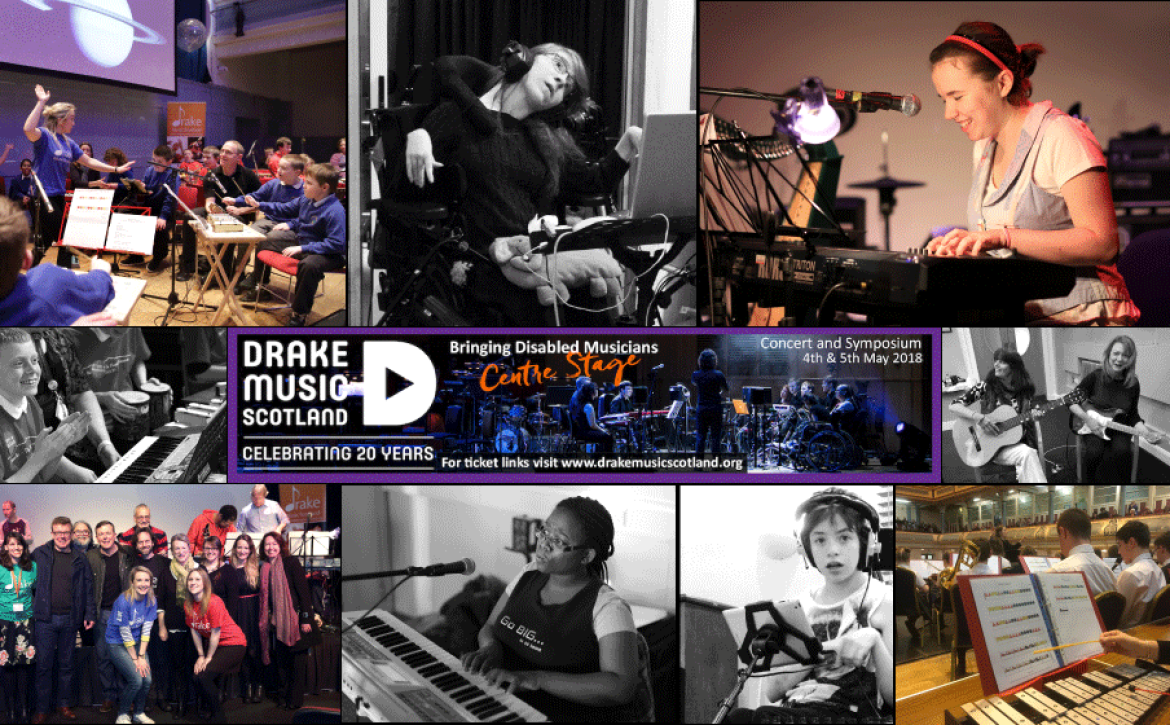
Over the last ten years, Figurenotes has had a pervasive and positive effect on all aspects of our work. As we reach the major landmark of our 20th Anniversary Concert, putting disabled musicians ‘Centre Stage’, it is enlightening to assess the impact it has had. Rather than being a dramatic ‘solution’ to everybody’s needs, there has been a gradual growth of confidence in our flexible methodology. A combination of the right kind of open-minded, creative and versatile people – musicians and music educators – with the best combination of tools, teaching practices and technologies to create a holistic approach that can be adjusted to meet the needs of any learner, seeing opportunities instead of obstacles, and allowing people’s potential and talent to be realised.
Highlights
We have had many successes with Figurenotes, both on a small individual scale, at organisational level and in terms of the wider sector both here in Scotland and further afield. Creating a list of our ‘Top Ten’ achievements with Figurenotes is nearly impossible, but here we highlight some of the major ways we have helped our participants realise their potential with the brilliant Figurenotes system over the last 10 years:
Winning the award for Best SEN Resource at the Music Teacher Awards for Excellence
This award was in recognition of everything we had achieved since launching Figurenotes resources in 2012. It was the first in what is now a much longer list of awards and accolades won by Drake Music Scotland.
Collaborations between mainstream and special schools
Increasingly, Figurenotes is enabling pupils from all schools to play together in concerts and collaborations. Many of these pupils would not have had this opportunity without Figurenotes. One of the highlights was our Mambo concert in Angus that featured in the BBC Ten Pieces newsletter.
Links with national organisations to increase accessibility and inclusion
Our resources for BBC Ten Pieces, Friday Afternoons, and links with Sistema Scotland have given so many more people access to music making. It is great to see these projects increasing their focus on inclusion and accessibility.
Recognising our work finding digital solutions to break down the barriers to music making for disabled people, including development of the Figurenotes software. Our music software is now used world-wide by teachers and students alike. A great tool for composition and for adapting pieces to the needs of the musician.
This research project helped us see the huge potential of Figurenotes and it’s effects. The orchestra frequently plays with top musicians such as Sir James MacMillan, Nicola Benedetti, and Colin Currie. Prestigious performances in both Holyrood and Westminster prove that learning with Figurenotes can take you a long way.
From a pupil moving to a mainstream school to study music after learning with Figurenotes, to a pianist with Dyslexia who is now training to be a music teacher. We absolutely love hearing back from projects all over Scotland and further afield. Access to Figurenotes resources has helped brass projects in the favelas of Brazil, school work in Uganda, Israel, Australia, Europe and the USA; the list goes on.
Tirelessly training teachers
We have been training teachers and musicians to use Figurenotes to increase accessibility, inclusion, and success for years. Our Music Teacher’s Toolbox training days go from strength to strength, attracting people from Australia, Czech Republic, Sweden, among others. We have seen an increase in training requests from organisations, schools, and companies, which means more teachers using Figurenotes and more people gaining access to music making.
We are looking forward to the biggest highlight of all: Centre Stage
Mark Browne and Jill Reeves have been using Figurenotes to great effect at Craigmarloch School, so we asked them to share their experience.
Figurenotes has revolutionised music here at Craigmarloch School. Its visual style and literal colour-matching logic has engaged pupils at all ages, stages and levels, and it has become integral to learning across the school. At Craigmarloch, a school for young people with a wide range of Additional Support Needs, music is a key part of the curriculum for every young person (aged 4 -18). As a teacher new to the school, and enthused by the possibilities of Figurenotes, I have been keen to embed Figurenotes within a curriculum that enables learners to achieve early to second levels of Curriculum for Excellence. I have seen for myself the difference that it has made to learning here and it has opened the door for young people to experience a much greater variety of music making experiences.
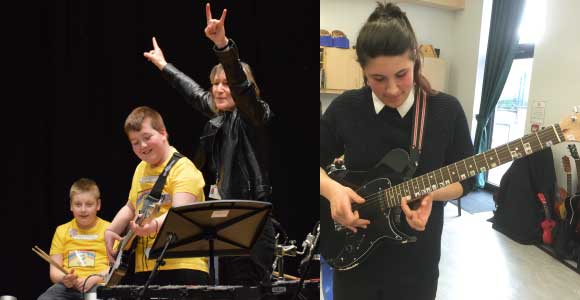
Craigmarloch students rock the guitar!
The first challenge of this was setting up the classroom and the instruments to be ready for young people to use Figurenotes from the start of the current school year. Of course, there have been colour coded notation schemes in existence before – the evidence of this was there in the many stickers that embellished the keyboards and glockenspiels throughout the classroom. In order to “launch” Figurenotes effectively, these needed to be painstakingly removed and replaced, a long and laborious process involving nail varnish remover and lighter fluid! Actually it turned out that metal polish worked best, so perhaps this is a useful “hot tip” for anyone yet to begin their journey into the realm of Figurenotes!
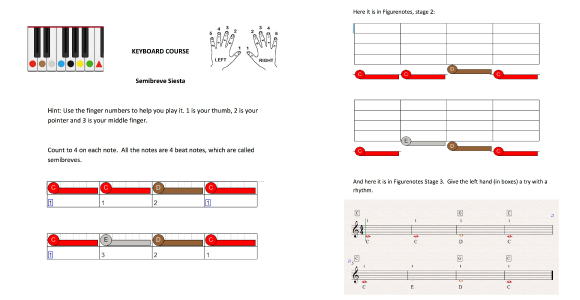
Having done this, it was time to create new resources designed around the new notation system. The first of these was a keyboard course that I hoped would (a) encourage young people to start with a secure hand position on notes C to G and (b) enable pupils with a range of abilities to be able to play together even at an early stage in their learning. With its three distinct stages, Figurenotes seems custom built for differentiation and this has meant that more able pupils would be able to see the progression to standard notation. So I began the process of composing simple keyboard pieces – with silly titles like “Semibreve Siesta” – and printing them in all stages of Figurenotes. The course comprises seven pieces – the first four of which can be played together – and move to an arrangement of the Largo from Dvorak’s New World Symphony. All pieces involve fingers 1 to 5 in the right hand and gradually progress from a first piece using four beat notes only to the final piece using a range of different note lengths.
Mark’s worksheet to teach semibreves in 3 stages of Figurenotes
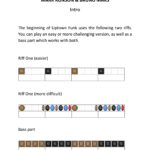
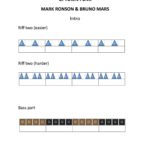
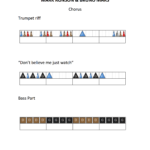
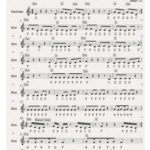
Figurenotes has also been embedded into more diverse schemes of work. A unit on riffs and ostinatos was produced, using Figurenotes exclusively. A study of Mars from the Planets involves clapping the opening rhythm using Figurenotes – a challenge to create, using a 15 beat bar; not the way Holst wrote it of course, but effective and accessible – while later on in the unit, differentiated parts for Billie Jean and Smoke on the Water were produced. One of the most popular recent songs in the school, Uptown Funk, forms the final group performance of the book. The different riffs are presented separately with a final “solo” keyboard version using Stage 3 of Figurenotes.
Doing this can all be achieved by simply using the Figurenotes software, but if you want to get your musical examples into a booklet format, using the screenshot tool in Microsoft Word and selecting screen clipping means you can do just that. This enables you to add (for example) pictures, words of explanation, cross-referencing numbers linking to Experiences and Outcomes (!), or artistic use of borders and shading. The same method can be used to insert music onto PowerPoint, especially useful if you are guiding learners through a unit and are using Figurenotes to exemplify particular concepts.
Performing with Port Glasgow High School
None of this seems revolutionary in any way, but I hope this has shown how Figurenotes can be used as an intrinsic part of the music curriculum, rather than as an add-on extra. At Craigmarloch, standard notation still forms part of the music curriculum, particularly for more advanced learners, so it was important to me that any new notation system would form part of a logical progression to reading and understanding standard music notation. With its different stages, Figurenotes does offer this, and it gives all learners – with or without Additional Support Needs – an accessible way to enjoy, and benefit from, a diverse range of musical experiences.
Mark Browne – Music Teacher, Craigmarloch School
We’ll make all of Mark’s resources available through the Resource Base, so you can download them and get cracking. Don’t forget to order your stickers for the classroom and download the software to help you create resources of your own. Thanks for sharing, Mark.
It’s not every day you get to workshop with a Grammy award winning musician.
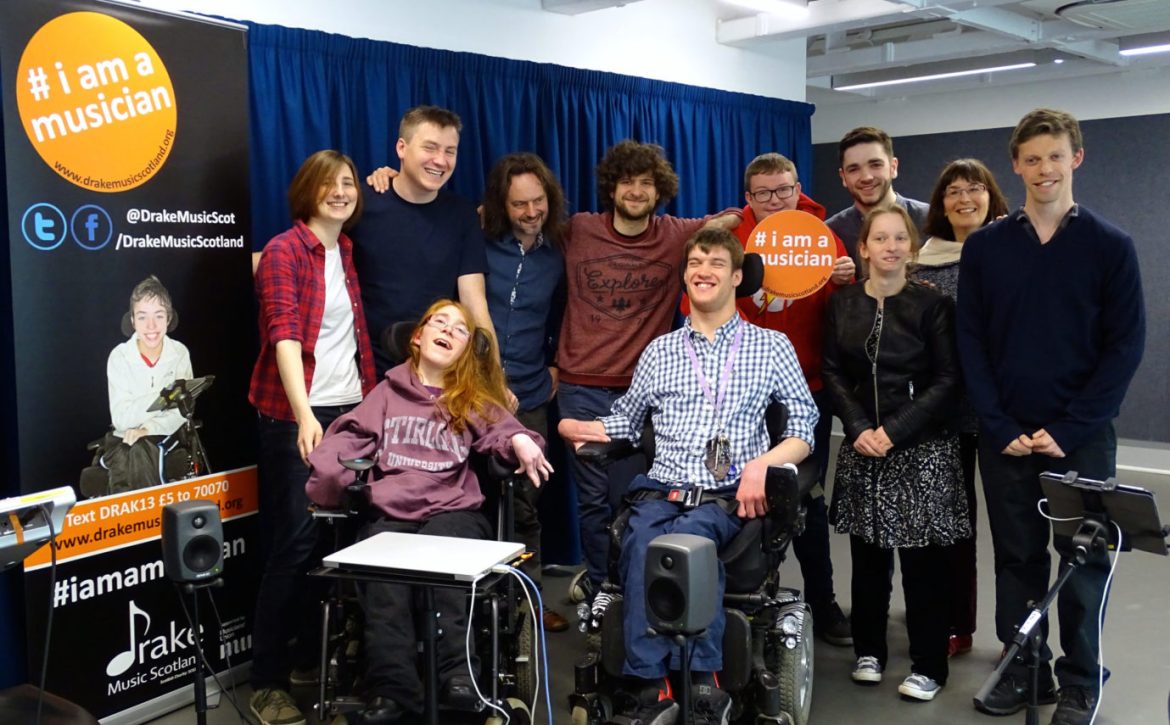
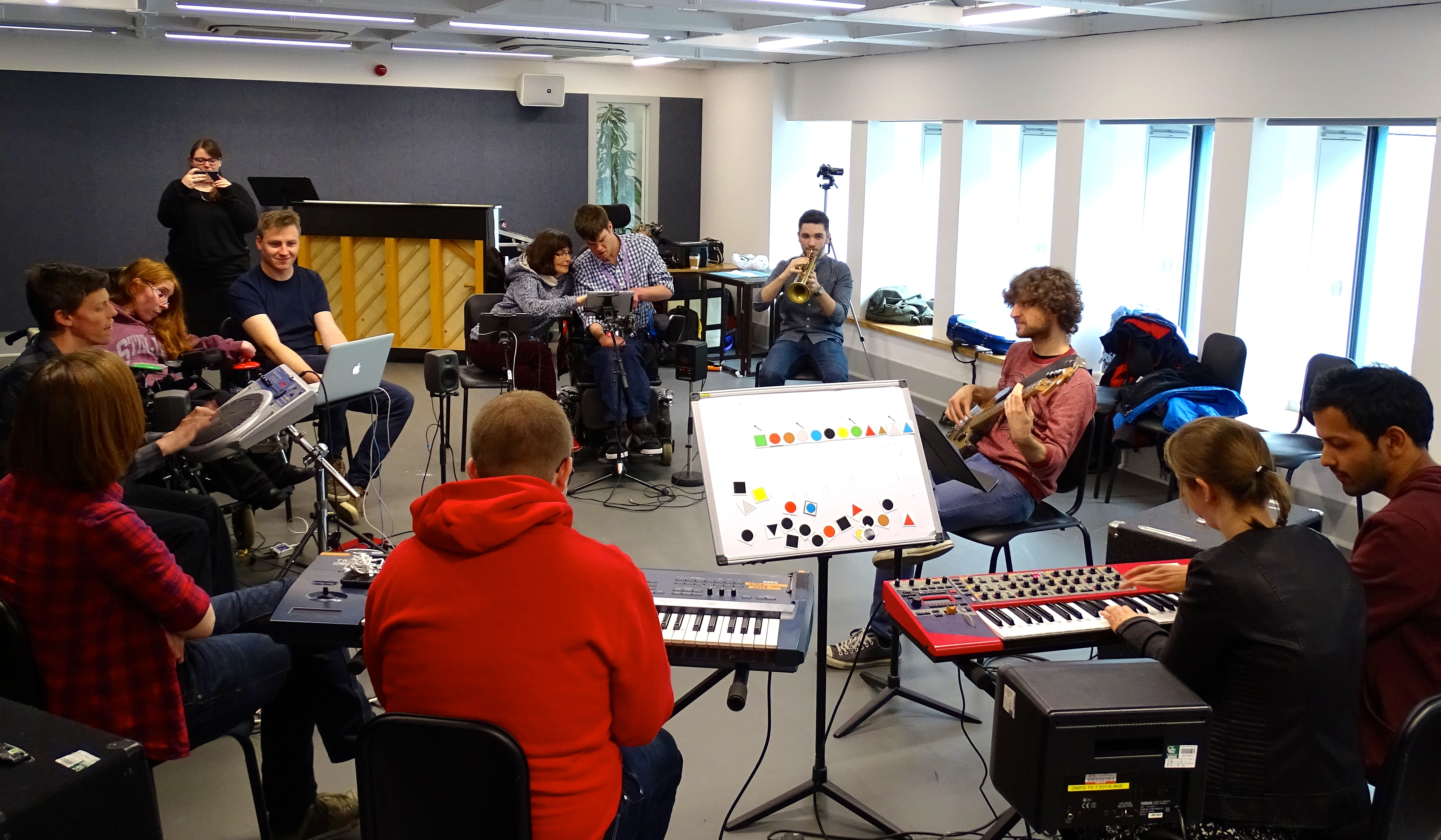
Michael League from Snarky Puppy kindly gave up his morning in Glasgow to work with members of Drake Music Scotland’s Digital Orchestra. This group uses all kinds of technologies to compose, play, and perform music: Notion and switches, iPads, synths, and more. Some of the members use Figurenotes, which helps them to compose patterns and ideas, creating a score to aid performance.
The members of Digital Orchestra had a brilliant time. The importance of interesting bass lines and how they can change the feel of the music was a big learning point. They also learned a lot about improvisation and cues, as well as how to lead and follow. Leading a band that uses improvisation on a daily basis, this is something Michael is very experienced in. He had some really interesting nuggets of information to pass on.
Thanks for a brilliant time, Michael. It was lovely to see such a mix of instruments working so well together. Everyone was really starting to see where their sound could be used within the piece, learning to lead and follow one another.
If you haven’t seen Snarky Puppy live yet, pop it on the bucket list. They are phenomenal.