guest blog

Guest Blogs

Guest Blog: Don’t Lockdown Your Creativity – 2. Technology

Musician Francis Moore-Colyer talks about some of the ways technology has helped us through lockdown.

“I find that making music can be light relief from ‘work’ – household chores, schoolwork, shopping for groceries, etc.

Taking part in music can be a release from these mundane or stressful things, because it sets off lots of sparks in our brain — a very different combination of sparks to normal. Musical activity, or even just listening to a song, can refresh our mind and centre us for whatever’s next — it can be like a ‘detox’ for the mind.

Technology has stepped up to make lots of musical activity possible during lockdown; it has been a really useful tool!

Streaming services and concerts have given us access to music from home. Listening to music can help us to work through our emotions, unleash our imagination, and even escape to a dream world for a bit. You may find you need this even more during this time.

Remember, your friends and family are sharing this forced ‘home time’ experience, so send them videos of you playing music and get them to send you theirs. You could always call them to discuss your favourite music or host a listening party. Or, if you are desperate to play together, get together on Zoom and have one of you muted.

Not only have we been able to see each other on video calls and laugh together (often about how our long hair has become), but we’ve also been able to share ideas. I’ve particularly enjoyed sharing ideas with other teachers about how to help young people with music activities.

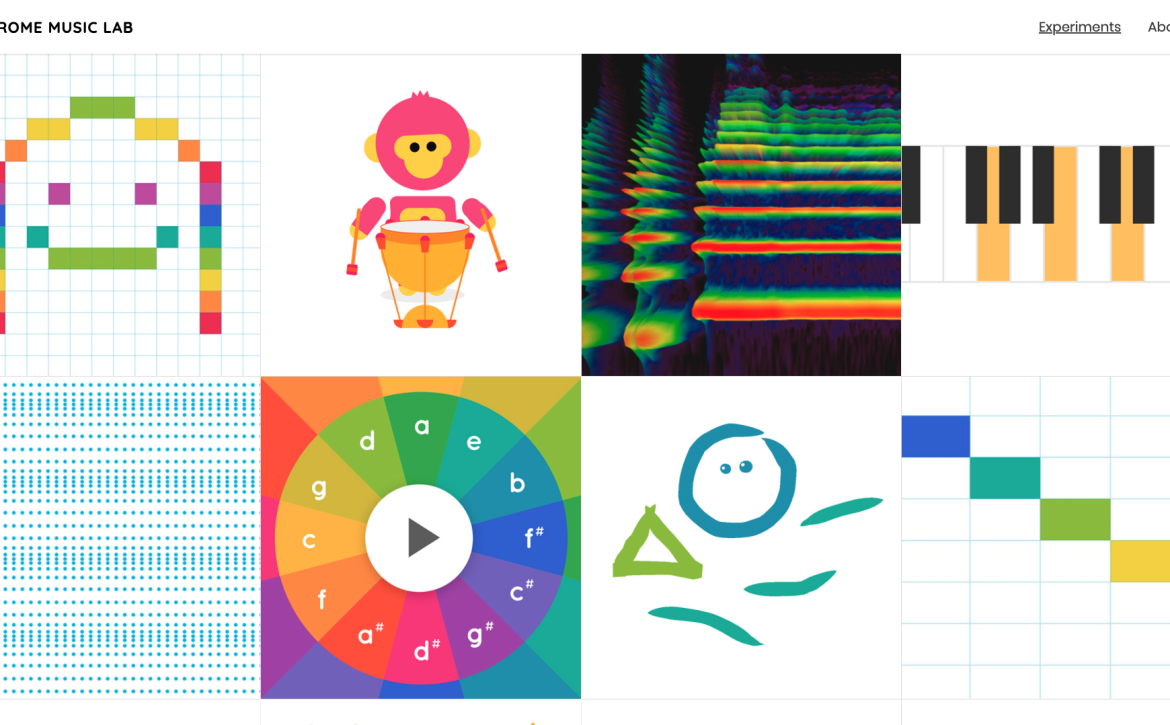
One of the many websites I’ve been using is Chrome Music Lab.
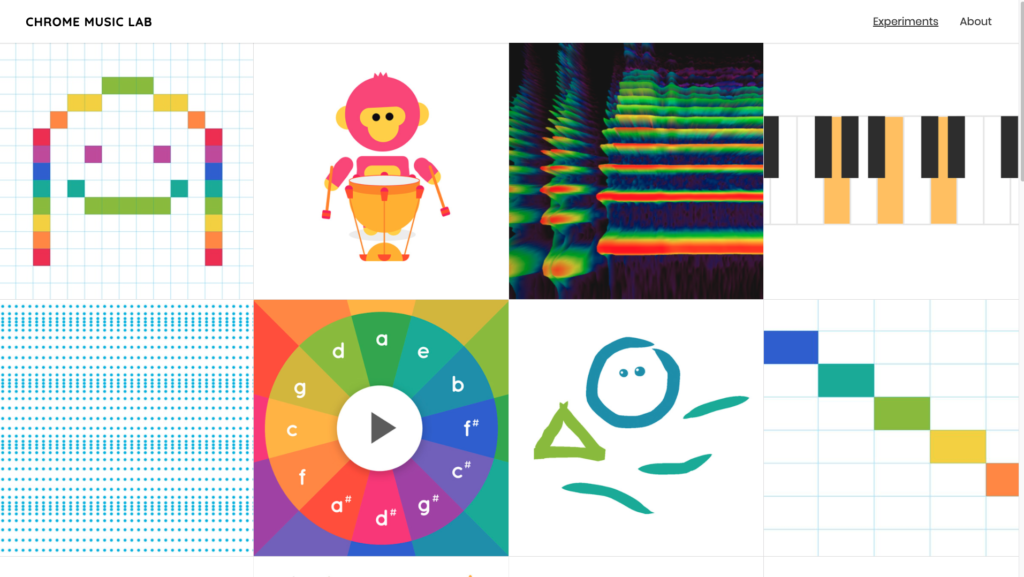
Homepage of Chrome Music Lab

The Chrome Music Lab helps us to learn how we can build music from the inside, out. It shows us the ingredients of music and helps us build it up from there – a great way to approach learning anything! Best of all, you have the chance to put some music together yourself. I love it when games give you the space and time to explore independently. Music is all about creating something of your own and this site shows us a way to do that.

We’ve had to get creative over Zoom and other apps, as they make us play separately (the internet doesn’t let us play together as we normally might). This means we are learning great lessons in turn-taking. We play ‘your turn, my turn’, or ‘you say, I say’. This exercise highlights the communication element in music. Music is, after all, a language.

Phew! So much to do. So much to create. I am very thankful that we live in a technological age that makes all this possible.

Whatever you do, enjoy.”

You can find lots of videos helping you to use apps and music technology over on the Drake Music Scotland website: https://drakemusicscotland.org/resources/ Take a look at the ‘Tutorial’ and ‘Training’ pages in particular.
Guest Blogs

Guest Blog – The Magic of Figurenotes

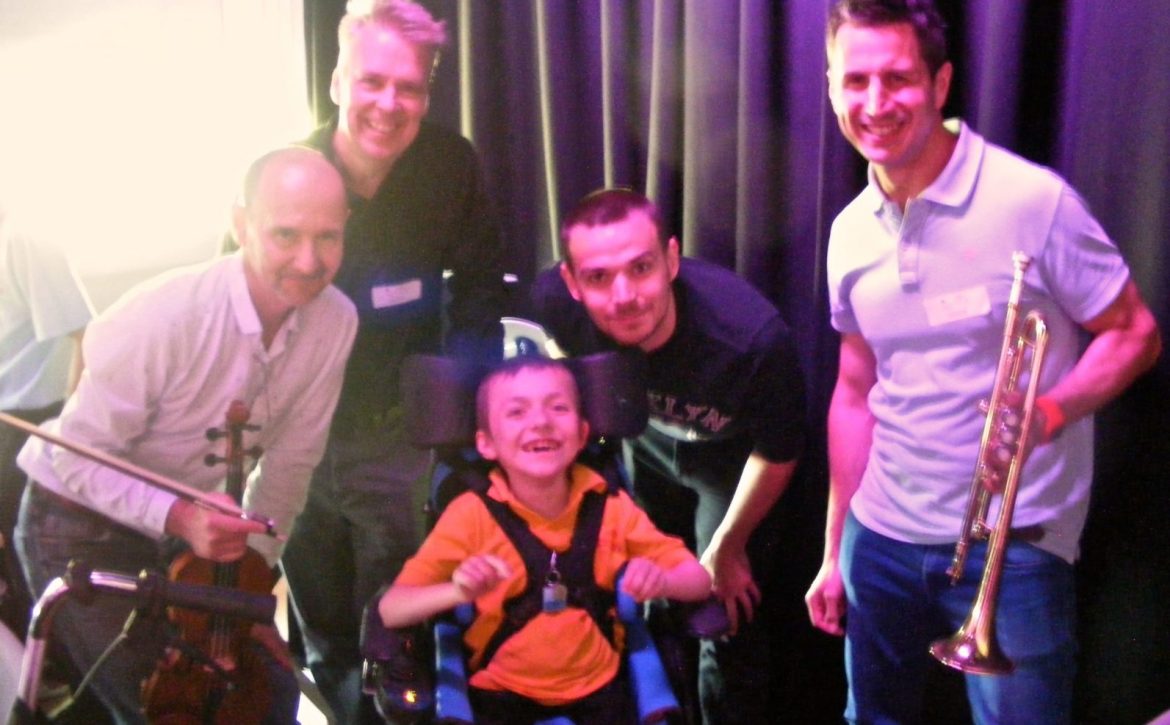
Adam Featherstone, a teacher from Middlesbrough, tells us how he used music from Harry Potter to inspire a creative project with BBC Philharmonic musicians (pictured above with a musician from Priory Woods).

I started to use Figurenotes in March of 2015 starting with whole class electronic keyboards, using single note melodies. I quickly progressed to getting the coloured shape notation sticker packs and placing them onto any instrument I could find. This ranged from chime bars to adapting some of our guitars to play open chords.

I am the music teacher in Priory Woods which is an SEN school in Middlesbrough for students with a mixture of special educational needs aged 4-19. These range from PMLD to SLD, however I feel the Figurenotes approach is suitable to both primary and secondary teachers as a good way to introduce students to practical music making. The only difference would be to change the difficulty of the material used.

We have used Figurenotes in a variety of ways. One such example has been to progress our post 16 music option students s to play rock and pop songs. I have written out songs by Green Day and The Clash, mostly chords. As a result they may take part in our end of year school show and hopefully at a battle of the bands next year. Most recently I have set up an inclusive orchestra using a mixture of hard to reach pupils using technology such as ICT, eye gaze, and traditional music instruments. This has held Figurenotes at its core.

We have recently had the pleasure of welcoming 3 musicians from the BBC Philharmonic into school for a day of workshops before a performance in the afternoon. We started the day exploring a simple melody taken from Harry Potter. I transposed this for some of the musicians quite easily using the software. The musicians took a few minutes to get to grips with the coloured notation, but settled in very quickly.

We had a student conduct our students and BBC Philharmonic musicians to create a rather beautifully layered composition. This gave us some ideas about how to progress the day, as our next steps fed into group composition using the entire ensemble, with iPads taking the lead with solos using the app ThumbJam. We also had a student on an eye gaze machine taking a solo. He was delighted to be able to take part. These students responded fantastically to whole group integrated work. One BBC Philharmonic musician conducted whilst the other 2 took solos on flute and trumpet during the piece and gave encouragement to the pupils.

Every person on that stage was valued as an equal and had an integral part to play, whatever their ability or experience. Each musician used Figurenotes. I hope to develop this ensemble at the start of the new school year, adding more ICT, samples, instrumentation and student musicians.

Adam sent us a lovely email saying “Without Figurenotes it would not have been possible. Thank you.” Thank you to Adam for sharing the ways in which he has used Figurenotes. If you’d like to share your ideas then please get in touch.

Find Adam on Twitter @eponymousdrums

#lmsmart_search_6a48ffab98ed5:hover { color: rgba(30,40,69,1) !important; }#lmsmart_button_6a48ffab9db9f { color: rgba(7,47,96,1); }#lmsmart_button_6a48ffab9db9f:hover { color: rgba(7,47,96,1); }#lmsmart_button_6a48ffab9db9f { border-color: rgba(30,40,69,1); background-color: rgba(249,232,20,1); }#lmsmart_button_6a48ffab9db9f:hover { border-color: rgba(30,40,69,1); background-color: rgba(0,166,214,1); }#lmsmart_button_6a48ffaba01e7 { color: rgba(7,47,96,1); }#lmsmart_button_6a48ffaba01e7:hover { color: rgba(7,47,96,1); }#lmsmart_button_6a48ffaba01e7 { border-color: rgba(30,40,69,1); background-color: rgba(249,232,20,1); }#lmsmart_button_6a48ffaba01e7:hover { border-color: rgba(30,40,69,1); background-color: rgba(0,166,214,1); }