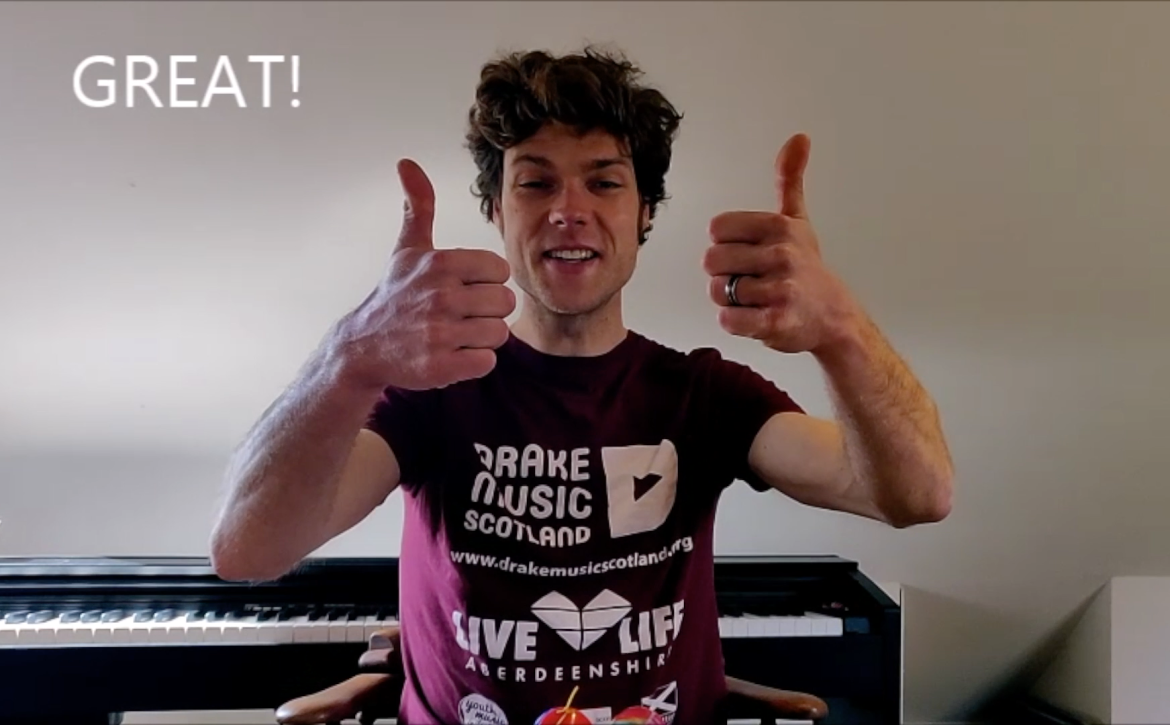
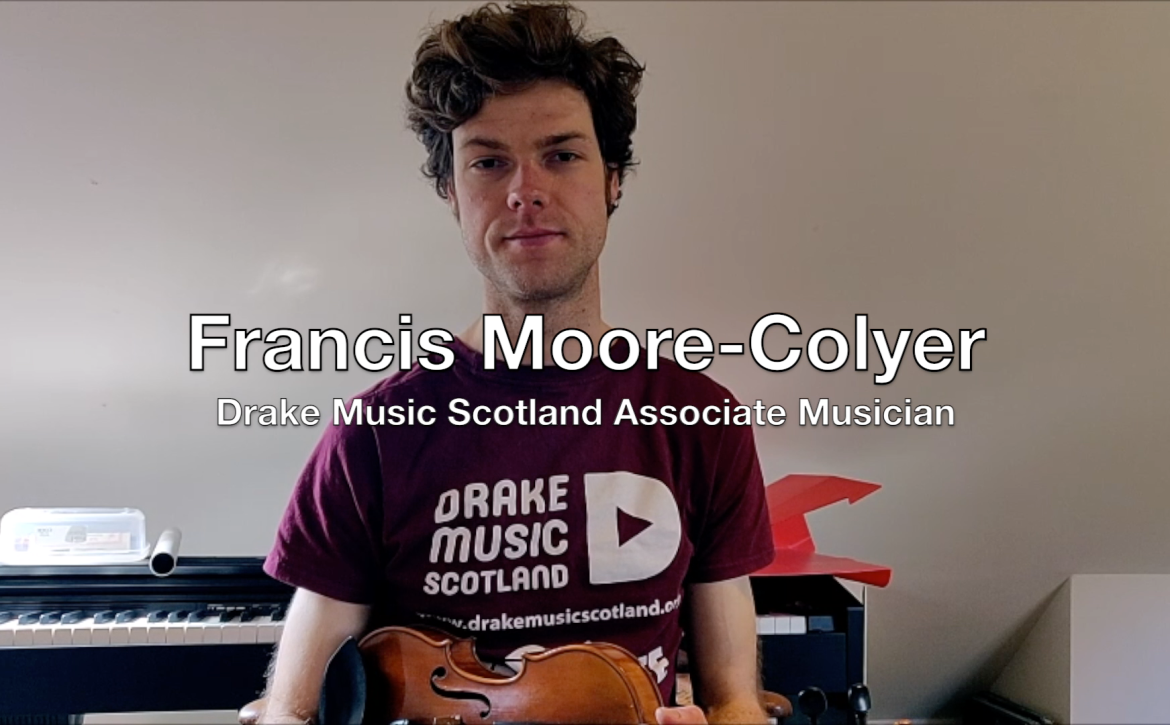
As a strange summer stretches before us, musician Francis
Moore-Colyer looks ahead to the joy of what is to come.
“After a long time at home, we
can start to get excited about the future.
When you feel ill, the very
best bit is how good you feel when you’re better again.
When you miss something, the
very best bit is how you feel when you get it back.
I miss making music with other
people, face to face, in real time. And now I can’t wait to get back to it.
There is no better feeling.
It’s going to be amazing to see
other people beside me smiling along to the music.
It’s going to be wonderful to
feel the energy of other people helping to drive the music onwards.
It’s going to be incredible to
react to what other people do when they make music and to see where the music
will go.
And it’s going to feel SO GOOD
to look people in the eye at the end of a bit of music; to see that moment when
we all realise that we’ve just created some magic!
I want to laugh and smile in
that moment again – to feel the excitement that comes when we can go back to
the start of the music and enjoy it once again!
I want that conversation where
we say ‘let’s just go for it, let’s talk with music’ or ‘let’s use our imaginations
and just see what happens’
I’m excited to get back to
making music with others, in real time, in the future. I hope you are too. For
now though, let’s be happy to wait a little while longer, if we have to.
Because, after all, it’s this waiting, this missing, this wanting, that will
make the moment feel even sweeter.”
What a wonderful ode to music-making and togetherness. This time
has been hard on everyone. What have you done to share a musical experience
during lockdown?
Musician Francis Moore-Colyer talks about some of the ways
technology has helped us through lockdown.
“I find that making music can be light relief from ‘work’ – household chores, schoolwork, shopping for groceries, etc.
Taking part in music can be a release from these mundane or stressful things, because it sets off lots of sparks in our brain — a very different combination of sparks to normal. Musical activity, or even just listening to a song, can refresh our mind and centre us for whatever’s next — it can be like a ‘detox’ for the mind.
Technology has stepped up to make lots of musical activity possible during lockdown; it has been a really useful tool!
Streaming services and concerts
have given us access to music from home. Listening
to music can help us to work through our emotions, unleash our imagination, and
even escape to a dream world for a bit. You may find you need this even more
during this time.
Remember, your friends and family are sharing this forced ‘home time’ experience, so send them videos of you playing music and get them to send you theirs. You could always call them to discuss your favourite music or host a listening party. Or, if you are desperate to play together, get together on Zoom and have one of you muted.
Not only have we been able to see each other on video calls and laugh together (often about how our long hair has become), but we’ve also been able to share ideas. I’ve particularly enjoyed sharing ideas with other teachers about how to help young people with music activities.
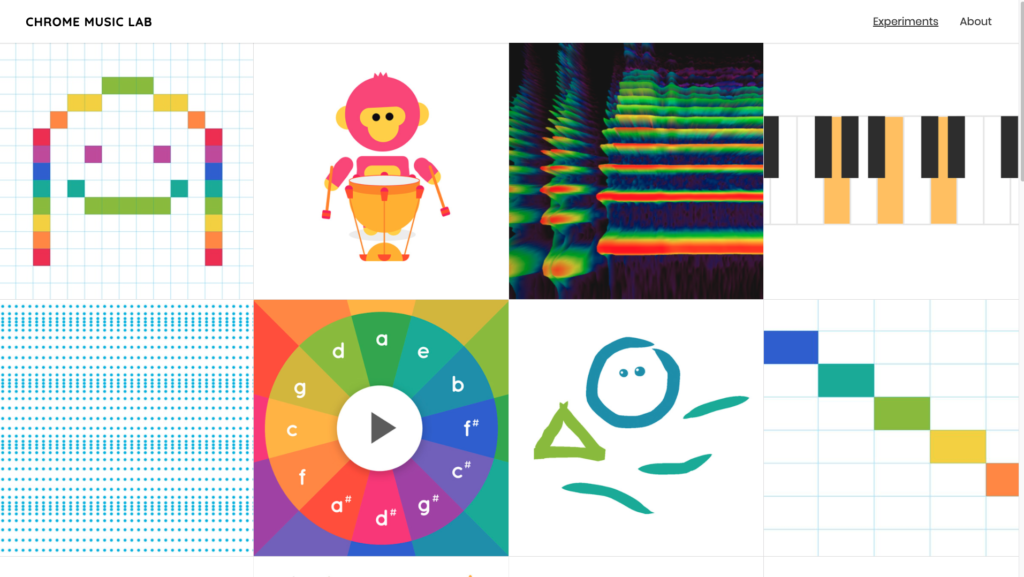
The Chrome Music Lab helps us to learn how we can build music from the inside, out. It shows us the ingredients of music and helps us build it up from there – a great way to approach learning anything! Best of all, you have the chance to put some music together yourself. I love it when games give you the space and time to explore independently. Music is all about creating something of your own and this site shows us a way to do that.
We’ve had to get creative over Zoom and other apps, as they make us play separately (the internet doesn’t let us play together as we normally might). This means we are learning great lessons in turn-taking. We play ‘your turn, my turn’, or ‘you say, I say’. This exercise highlights the communication element in music. Music is, after all, a language.
Phew! So much to do. So much to create. I am very thankful that we live
in a technological age that makes all this possible.
Whatever you do, enjoy.”
You can find lots of videos helping you to use apps and music technology over on the Drake Music Scotland website: https://drakemusicscotland.org/resources/ Take a look at the ‘Tutorial’ and ‘Training’ pages in particular.
Musician Francis Moore-Colyer shares some ideas for unlocking your creative side during lockdown.
“If you have to stay at home, you might have more time to get creative. Everyone has a creative side, so let yours out!
Thankfully, most of us have access to the internet or recorded music, which means we can play along to our favourite tunes at home. Here is a lovely video from one of my fellow musicians at Drake Music Scotland — enjoy this great Scottish tune!
Firstly, get to know the song or piece of music, inside-out. Listen to it lots. Each piece of music is made up of lots of different individual sounds — the ‘ingredients’ of the music, if you like.
Now, you can find your own ingredients and add these to the mix! Use your imagination, your ears, and any instrument you have and just go for it! What sounds can you find to fit the music? I hope you find this fun
But what’s all this about instruments? Some of us have them at home, some don’t. BUT…we can all make our own instruments out of things we find around the house. I’ve had fun watching videos on how to make household percussion. Why not have a go yourselves? Try this site for some ideas, or watch the videos below.
There
will be more from Francis in his ‘Don’t lockdown your creativity’ series.
Share your videos and pictures with us via social media and let us know what you’ve been up to.
Lockdown has brought different challenges to different people. You may have discovered that you’ve got tonnes of time to practise. Maybe you’re juggling multiple responsibilities and need to make your practice time as efficient as possible. Or you might find that having lots on your mind means you can’t concentrate very well at the moment.
We are here to help! We have loads of tips to help you increase motivation to practise and make your practice time more effective. Do you have any more tips to share? Let us know by email or social media.
Let’s get motivated
Make like Mr Motivator and get yourself pumped for practice! Getting started is the hardest part, so set a regular schedule for yourself. It will soon become as easy to fit in as brushing your teeth.
Try setting an alarm for starting your practice – the same time each day, if you can, or work out a time for each day of the week. Put this in your calendar and set up reminders.
Ever heard the term ‘eat the frog’? If you’re finding your practice hard, start doing it first thing in the morning. Getting it done early means you can relax for the rest of the day without worrying when you’ll fit it around your other commitments (those TV shows won’t binge themselves).
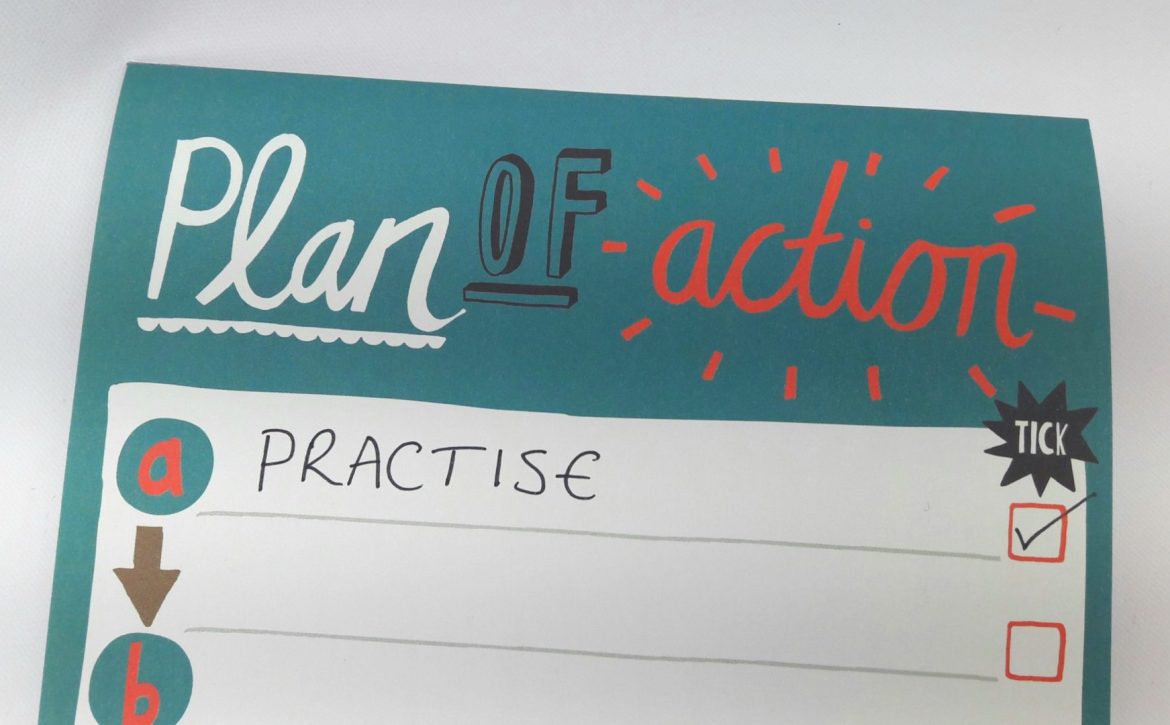
Try a practice challenge. We have charts available all the way up to 100 days on our Resource Base. Set your goal and give yourself a prize at the end of it. There is a special covid-19 day practice chart in our free resources bundle.
Now we’ve got going, how can we keep our focus and make our practice really effective in the time available?
Make your practice goal-focused. Be specific. Instead of thinking ‘I’m going to practise this piece’, think ‘I’m going to improve my dynamics in this middle section’. Write down a short list of goals for each practice. This is best done at the end of the previous practice session, as it means you can open your book and get cracking without having to plan and think too much.
Don’t always start from the beginning. If you start in the same place each time, you’ll get really good at that initial bit. Your brain will soon become tired and you will stop in the same difficult places each time. Start with the hardest/least familiar section.
Practice makes permanent! In order to improve, you need to work on playing things more times ‘right’ than ‘wrong’ (‘right’ being the way you want it to sound, rather than the way you’re unhappy with). Find your small tricky section – really reduce it down to the specific bit you need to work on. Repeat this until you can play it 3 times in a row exactly how you want it. Made a mistake? Go back to zero. Once you’ve managed 3 in a row, can you do 5 in a row? 10? Go wild!
Slow down. Your brain and body need time to process. Practise slowly and you’ll reap the rewards!
If you practise something slowly, you forget it slowly. If you practise something fast, you forget it fast.
Itzhak Perlman – violinist
Rewarding yourself
Life is hard enough at the moment. Be kind to yourself and take stock of what you’ve achieved, rather than focusing on the things you’d like to improve. Managed to improve your bow hold? Great! Is your intonation much better than 6 months ago? Look at you go! Is your ear so good that you notice when your tone isn’t AMAZING? Well, look who is one step closer to their virtuoso career!
Put on a concert for friends and family – this might be over the internet, phone, or even through the window. There aren’t many concerts happening at the moment, so you’ll really brighten someone’s day. It is a great practice goal to aim for too.
Give yourself a treat for all your hard work by playing something really fun at the end of your practice session. It makes all the technical work worth it.
Send us your videos and we’ll share our favourites on social media. Tag us @figurenotes or use #FigurenotesAtHome. We’d love to hear more of your practice tips too!
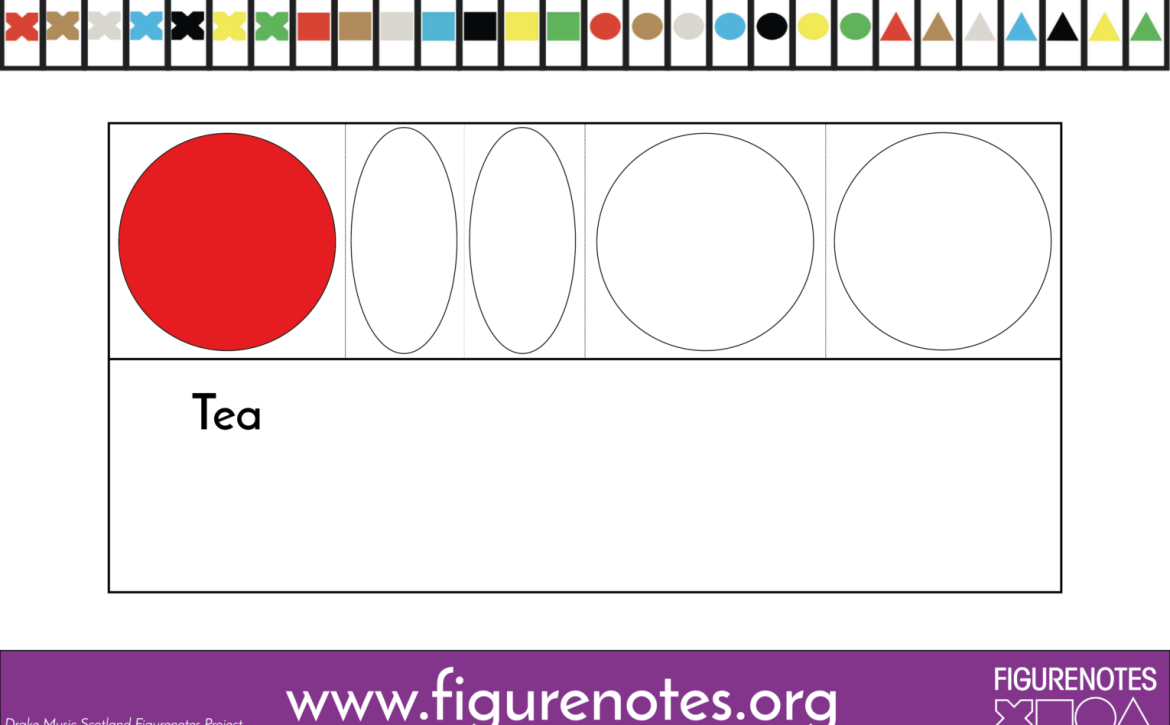
Rhythm is so intuitive with Figurenotes – the note is as long as it looks!
So how does it all fit together?
Our newest #FigurenotesChallenge aims to help you/your students understand the relationship between different rhythms through this gentle movement activity. This is the first in a series of videos designed to develop rhythmic skills whilst promoting a healthy activity you can do at home.
You can use our FREE supporting resources on rhythm to create your own rhythm words or movements for each rhythm. Make it your own, or play along as it is. You can use your instruments to play along, or use the movements suggested in the video. Whatever works for you or your students.
Go on and have a wee go! Then share your findings with us. Drop us a line at figurenotes@drakemusicscotland.org or share on your favourite social platform. Tag us @Figurenotes and use the hashtags #FigurenotesChallenge or #FigurenotesAtHome. We will post our favourites on our Twitter and Facebook pages.