Celebrating 20 years
As Drake Music Scotland celebrates 20 years of pioneering work, we hear from Chief Executive, Thursa Sanderson, on the role Figurenotes has played.
From its establishment in 1997 Drake Music Scotland’s primary purpose was to create music-making opportunities for disabled people of all ages. For the first 10 years this was primarily achieved through the use of accessible music technologies, giving those with limited mobility and co-ordination the means to control musical sounds and express themselves creatively. As well as working with physically disabled people, we also provided opportunities for those with learning difficulties. Many of these were able to play conventional musical instruments, but the main issue for us was how best to help them develop musical skills.
The ability to read music notation is a fundamental aspect of learning to play an instrument and joining in music making with other people. Notation presents a barrier for many learners – not just those with disabilities – and we hadn’t found a way round this. We relied on different approaches to music making, such as improvising, rhythm games, playing by ear, and creative composition using alternative notation such as graphic scores.
Essentially we recognised our own ‘teaching difficulty’ rather than seeing our participants as having a ‘learning difficulty’.
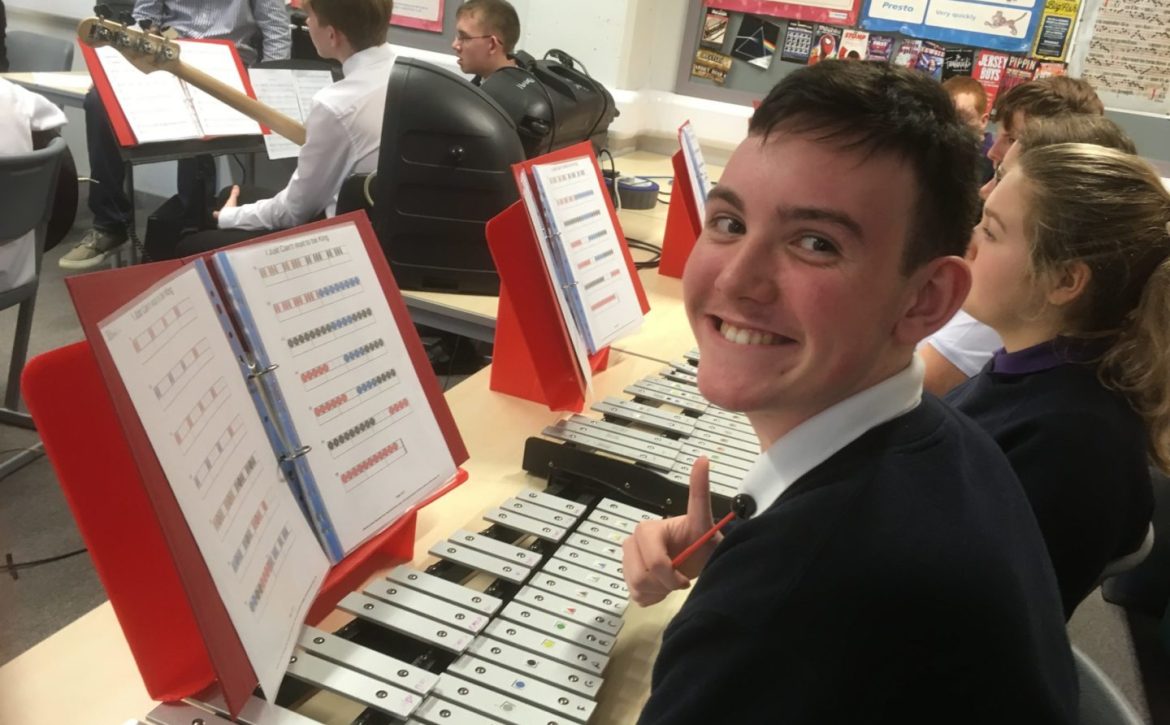
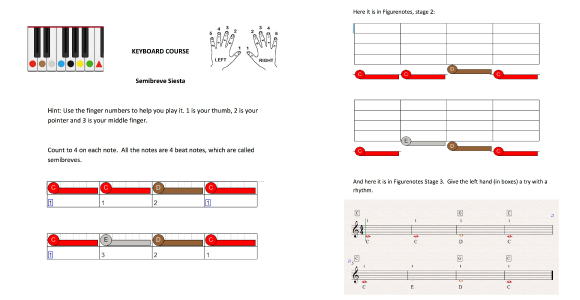
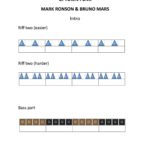
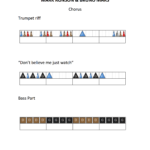
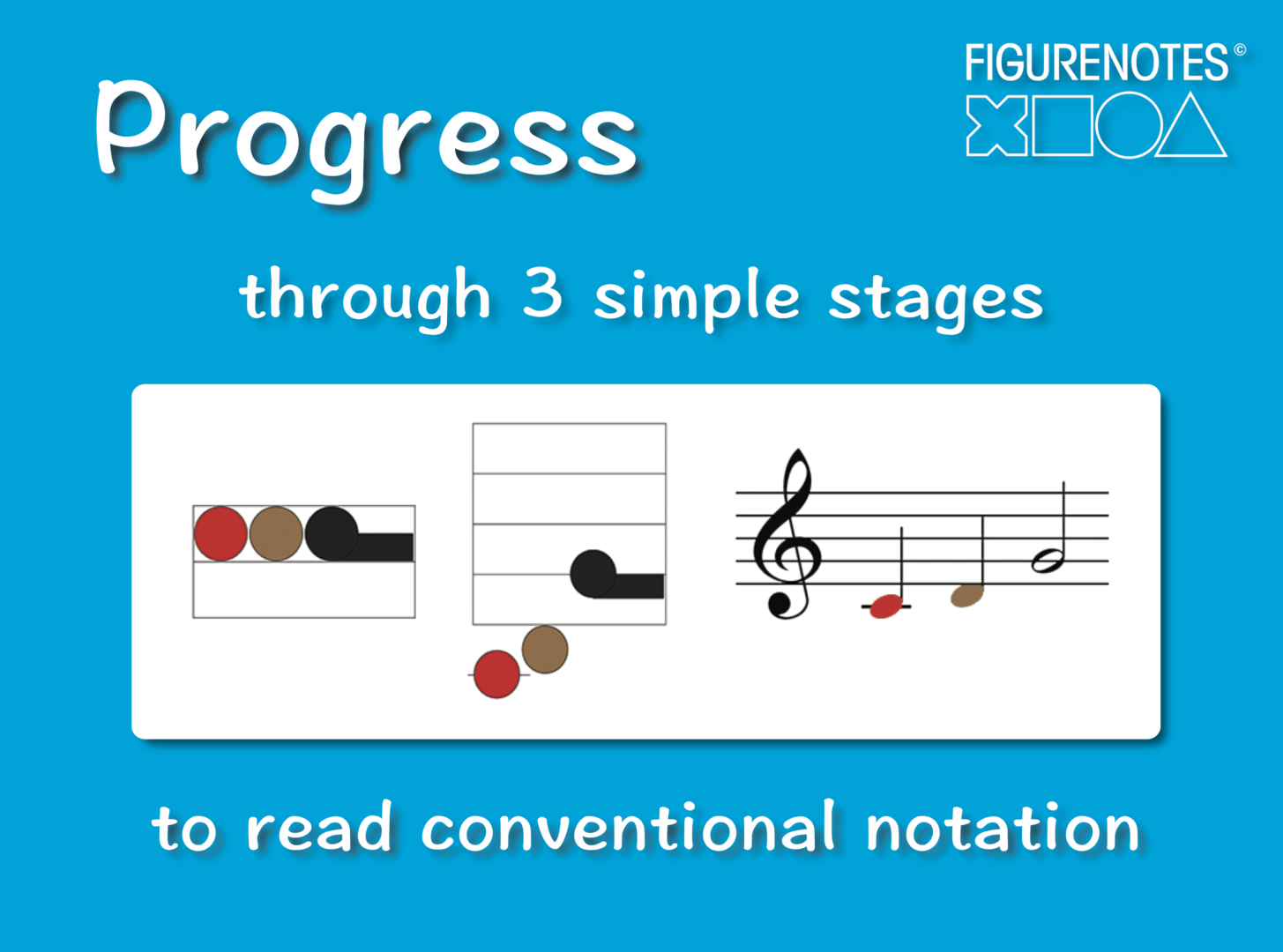
In 2008, we became aware of Figurenotes and, since that moment, this colourful notation system has had a major impact on our work. Our former Artistic Director, Brian Cope, went to Helsinki, where Figurenotes was invented and developed by Markku Kaikkonen and Kaarlo Uusitalo with their pupils at the Resonaari Music School. He returned to Scotland enthused by its simplicity and effectiveness, and we didn’t look back. Although other colour-based systems have been created, Figurenotes presents all the fundamental features of notation in a clear and accessible way, and at the same time allows learners to progress through three simple stages towards standard notation. Following our ‘Inspire’ pilot project, testing Figurenotes with a variety of learners from young children to adults, we needed no further convincing. Our mission was to introduce it to Scotland, make it more widely available by creating Figurenotes software and resources, and bring music leaders and educators on board with this revolutionary, but simple tool.
Over the last ten years, Figurenotes has had a pervasive and positive effect on all aspects of our work. As we reach the major landmark of our 20th Anniversary Concert, putting disabled musicians ‘Centre Stage’, it is enlightening to assess the impact it has had. Rather than being a dramatic ‘solution’ to everybody’s needs, there has been a gradual growth of confidence in our flexible methodology. A combination of the right kind of open-minded, creative and versatile people – musicians and music educators – with the best combination of tools, teaching practices and technologies to create a holistic approach that can be adjusted to meet the needs of any learner, seeing opportunities instead of obstacles, and allowing people’s potential and talent to be realised.
Highlights
We have had many successes with Figurenotes, both on a small individual scale, at organisational level and in terms of the wider sector both here in Scotland and further afield. Creating a list of our ‘Top Ten’ achievements with Figurenotes is nearly impossible, but here we highlight some of the major ways we have helped our participants realise their potential with the brilliant Figurenotes system over the last 10 years:
- Winning the award for Best SEN Resource at the Music Teacher Awards for Excellence
- This award was in recognition of everything we had achieved since launching Figurenotes resources in 2012. It was the first in what is now a much longer list of awards and accolades won by Drake Music Scotland.
- Collaborations between mainstream and special schools
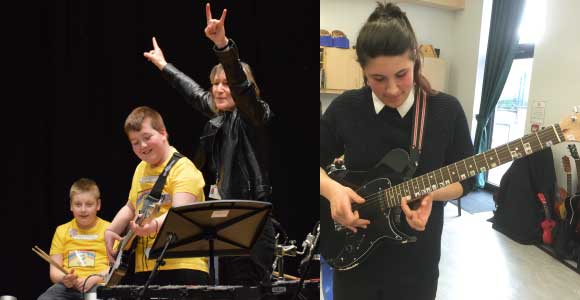
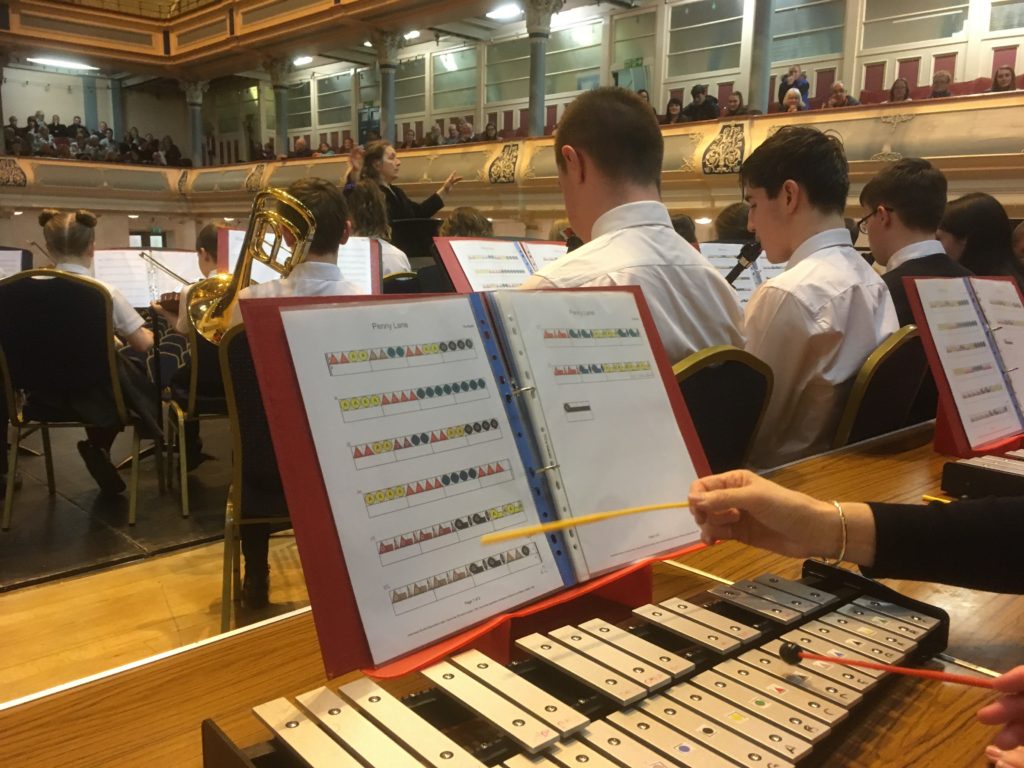
- Increasingly, Figurenotes is enabling pupils from all schools to play together in concerts and collaborations. Many of these pupils would not have had this opportunity without Figurenotes. One of the highlights was our Mambo concert in Angus that featured in the BBC Ten Pieces newsletter.
- Links with national organisations to increase accessibility and inclusion
- Our resources for BBC Ten Pieces, Friday Afternoons, and links with Sistema Scotland have given so many more people access to music making. It is great to see these projects increasing their focus on inclusion and accessibility.
- Figurenotes being used by professional composers
- Award-winning commissions include the Red Planet Suite by Lewis Forbes, and Kaleidoscope by Matilda Brown. Drake Music Scotland’s pioneering Digital Orchestra have used Figurenotes as part of their performance and composition. Highlights of these pieces include Same River Twice by Malcolm Edmonstone, Microscopic Dances by Oliver Searle, and Skein by Adain O’Rourke of Lau. You can see the premier of Skein at our 20th Anniversary Concert at the Queen’s Hall in Edinburgh, Saturday 5th May.
- Pioneering work linking Figurenotes with other technology, such as Thumbjam and Eyegaze
- By connecting Figurenotes with inclusive technologies, rather than purely on conventional instruments, Drake Music Scotland have allowed so many more musicians to flourish.
- Winning the 2017 Scottish Charity Award for Demonstrating Digital
- Recognising our work finding digital solutions to break down the barriers to music making for disabled people, including development of the Figurenotes software. Our music software is now used world-wide by teachers and students alike. A great tool for composition and for adapting pieces to the needs of the musician.
- Greenmill String Orchestra Pilot Project
- This research project helped us see the huge potential of Figurenotes and it’s effects. The orchestra frequently plays with top musicians such as Sir James MacMillan, Nicola Benedetti, and Colin Currie. Prestigious performances in both Holyrood and Westminster prove that learning with Figurenotes can take you a long way.
- Brilliant success stories
- From a pupil moving to a mainstream school to study music after learning with Figurenotes, to a pianist with Dyslexia who is now training to be a music teacher. We absolutely love hearing back from projects all over Scotland and further afield. Access to Figurenotes resources has helped brass projects in the favelas of Brazil, school work in Uganda, Israel, Australia, Europe and the USA; the list goes on.
- Tirelessly training teachers
- We have been training teachers and musicians to use Figurenotes to increase accessibility, inclusion, and success for years. Our Music Teacher’s Toolbox training days go from strength to strength, attracting people from Australia, Czech Republic, Sweden, among others. We have seen an increase in training requests from organisations, schools, and companies, which means more teachers using Figurenotes and more people gaining access to music making.
- We are looking forward to the biggest highlight of all: Centre Stage
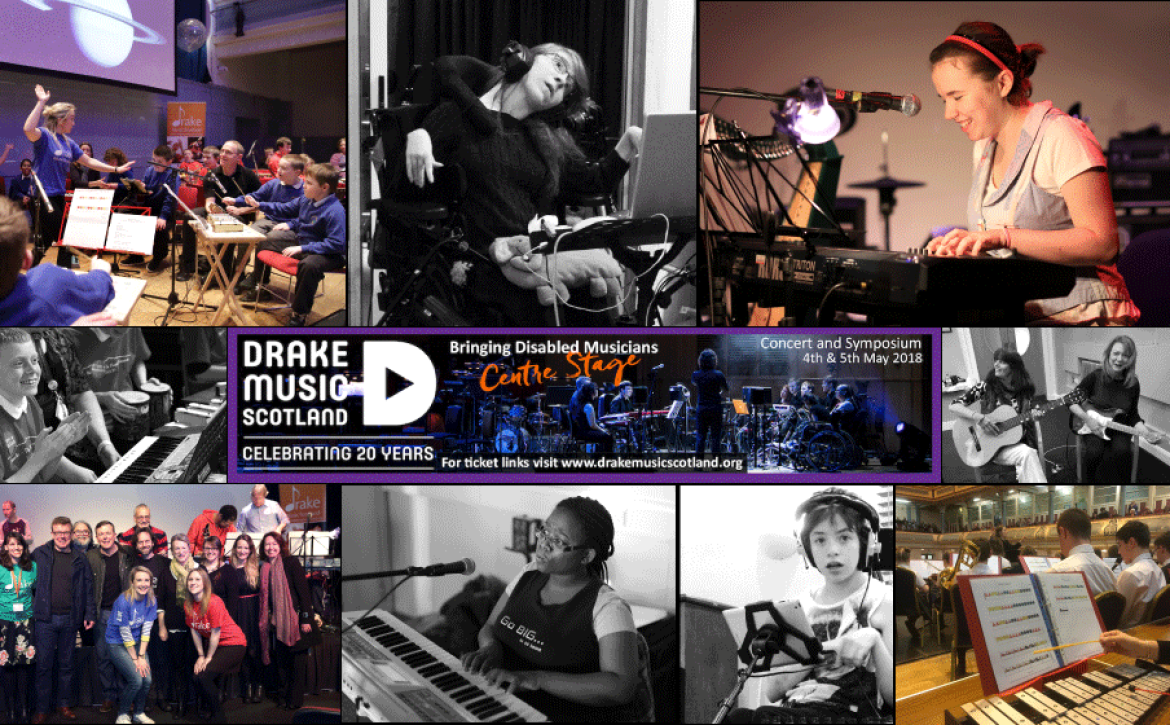
- Our 20th anniversary concert will put disabled musicians centre stage in one of Scotland’s most prestigious venues. A symposium and Figurenotes training event are also running over 4th and 5th May. Links to tickets below: