Guest Blogs

Guest Blog: A Short Flight to Standard Notation

Fiona Sharp uses BBC Ten Pieces and Figurenotes in perfect harmony, leading her groups to stage 3 Figurenotes. Learning the coloured note-heads is only one step away from reading standard notation.

For three years I have been leading Figurenotes focused projects with pupils in the Support For Learning Department at Arbroath High School. I have been fortunate to have the same pupils participate in the projects each year, which has enabled not only further development in Figurenotes, but also in their musical skills and abilities. This term the pupils have been progressing up to stage three Figurenotes, so colleagues at Drake Music Scotland and I have been coming up with ideas to help with this process.

The pupils are currently working on their own composition inspired by John Adams’ ‘A Short Ride in a Fast Machine’, taken from the BBC Ten Pieces list. The pupils decided they wanted their piece to be based on a machine that makes birds.

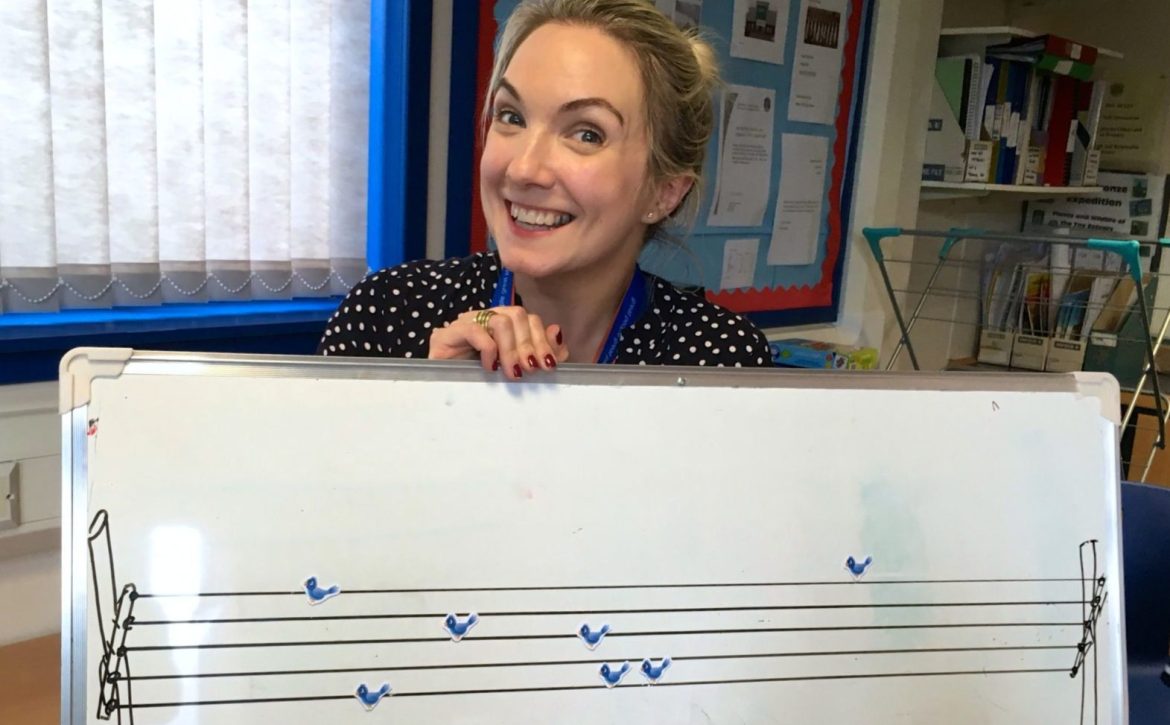
Using the well known concept of birds sitting on telephone wires, we drew out five staves on the whiteboard; the staves representing the wires. Using images of small birds printed onto magnetic paper, the pupils took it in turns to either place the bird magnet on a line or a space, or to drop the bird from a height to see where it would land. This proved a fun improvisation and composition game, and started to make the pupils aware of where the notes should be placed on the staves.

The following week I gave the pupils blank paper birds, which they coloured in using the Figurenotes colours. They then had to position their bird on the correct line or space depending on its colour. To help with this, I gave the pupils handouts showing the correct placement of each note. This increased their confidence to try, as they could check if they were placing it correctly.

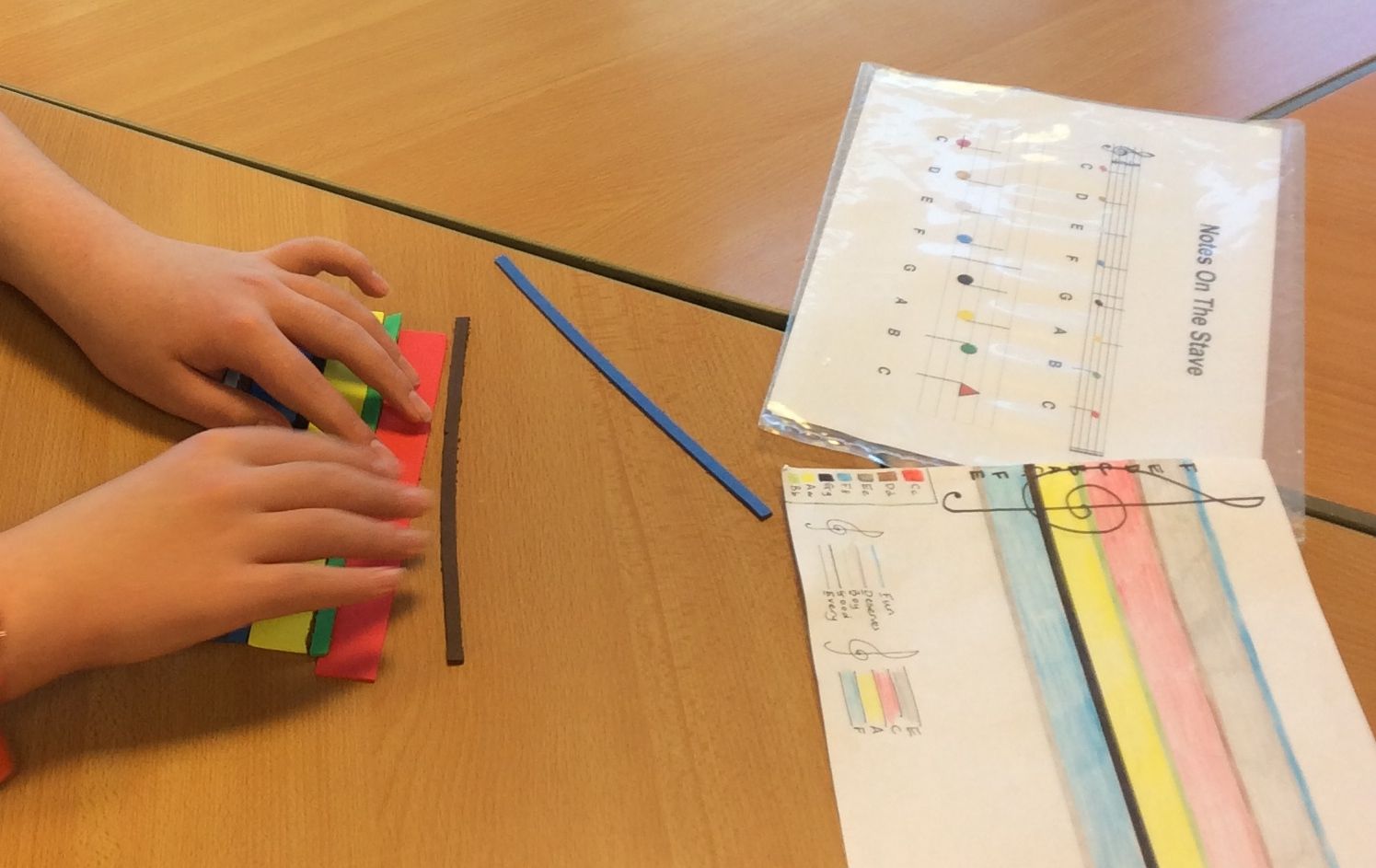
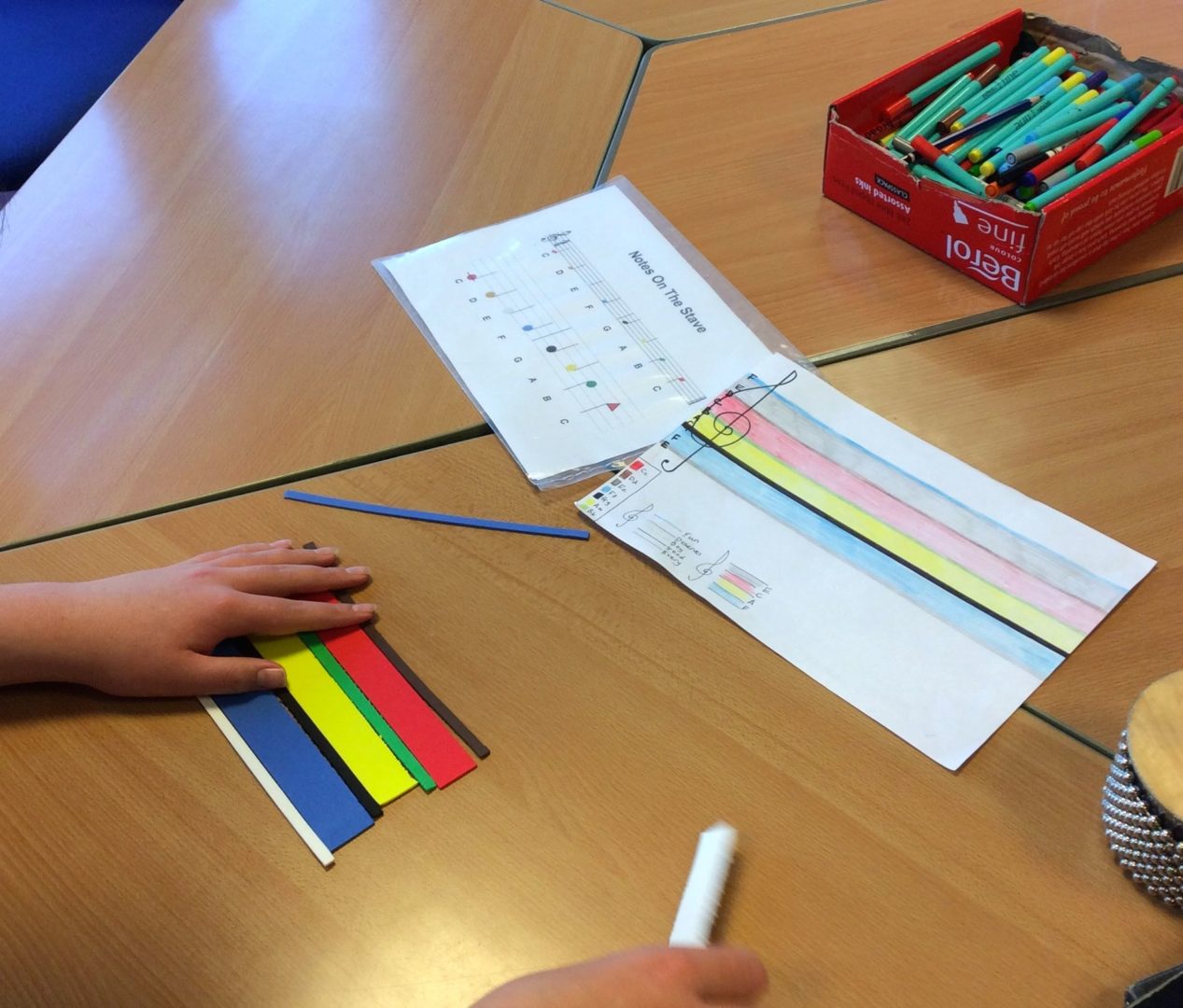
To take the progression even further, we played another game using large scale Figurenotes coloured lines and ‘spaces’, which they used to build up a stave. The students were then able to place standard notation onto the correct lines or spaces.

I feel having visual aids and games has really helped this particular group of pupils focus and engage in what they are learning, helping them visualise what standard notation looks like and where the notes are positioned. These games work well both in group and one to one settings.

Resources for these games can be found in the Resource Base section of the website.

Arbroath High School will be performing this piece on 23rd November. The project involves two ASN units, the Angus Schools’ Percussion Ensemble, and some brass players too. A brilliantly inclusive project.

If you would like a Drake Music Scotland musician to lead a project or staff training within your school or organisation, please contact info@drakemusicscotland.org.

Hands making the coloured stave using guides

The finished coloured stave with guides for that and conventional notation above

Uncategorised

Curiosity Award (and no cats)

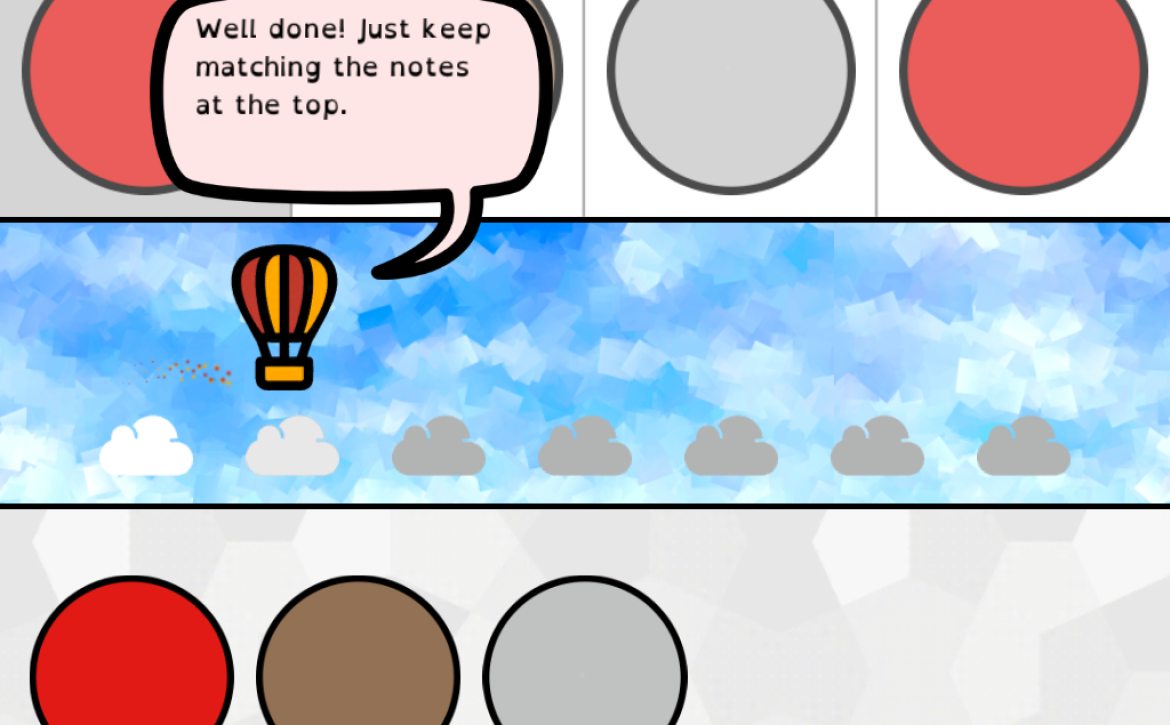
Drake Music Scotland, the charity behind this site, recently won a Curiosity Award. This has allowed us to make a demo Figurenotes app, which we hope will act as preparation before taking up an instrument. The app will develop musical skills in a game-like environment. We don’t know if this app will be made available to the public yet, as it is only a prototype for now, but we wanted to share this exciting news with you all. There is a sneak peek in the photo above.

Lauren recently presented at Light Bytes to tell them how the app is developing. Light Bytes and the Curiosity Awards are run by Creative Edinburgh, Creative Dundee, and We Throw Switches; and supported by Creative Scotland. The app has been developed by Alex Horowitz. We love how he has taken the simplicity of Figurenotes and made a beautiful journey through the clouds, helping you to improve your skills as you go. Fun, motivational, and educational. If you want to see Lauren’s presentation, it was sent out via Periscope on Twitter.

Guest BlogsInstruments

Guest Blog: But they’re the wrong colours!

Emily MacQuarrie tells us how she easily overcame the fact that the colours of tuned percussion don’t always match up with Figurenotes.

I am a music teacher at Drummond School Inverness, a school for pupils aged 3-19 who have additional support needs. All of our pupils have severe learning difficulties and many have severe and complex needs.

I first started using Figurenotes two years ago and it is now used in both the primary and secondary departments. In my experience, Figurenotes has allowed pupils to access music in new and creative ways. It enables pupils, regardless of learning disabilities, to read and play music. I have found it very successful, both on a one-to-one and a group basis, with pupils able to play pieces of music together. This would not have been possible without the use of Figurenotes. In addition, Figurenotes supports successful learning experiences and builds pupil confidence and does not lead to the frustrations and difficulties that pupils often experience when learning to read and play music.

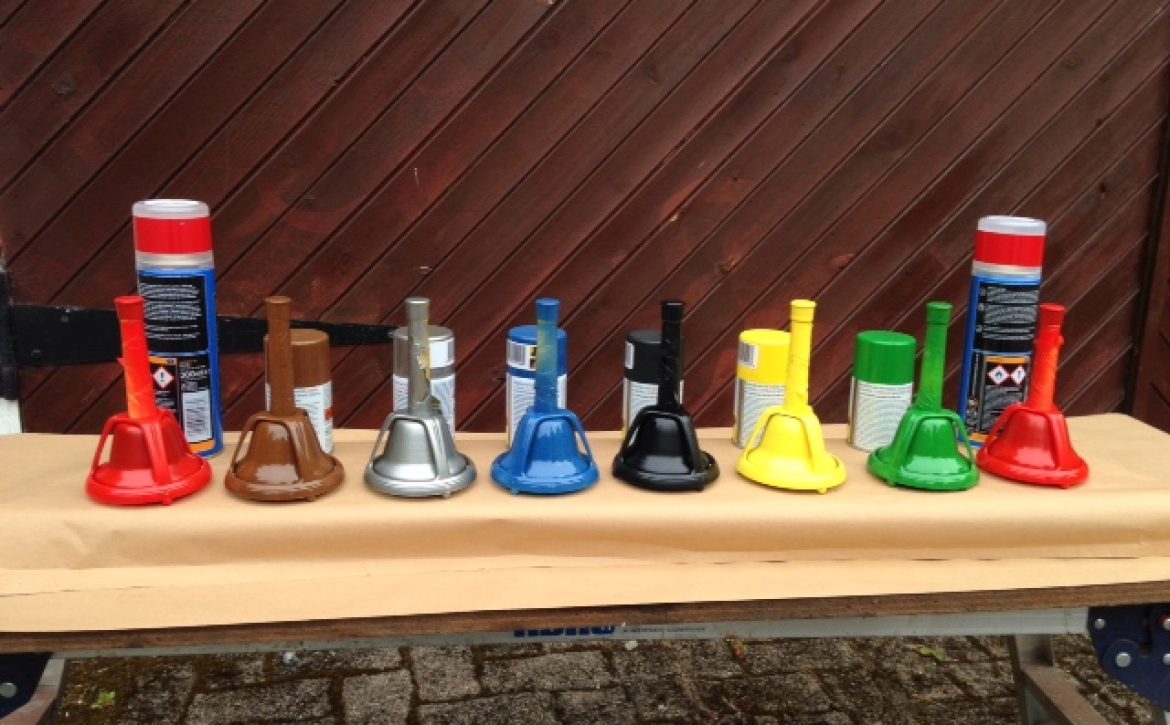
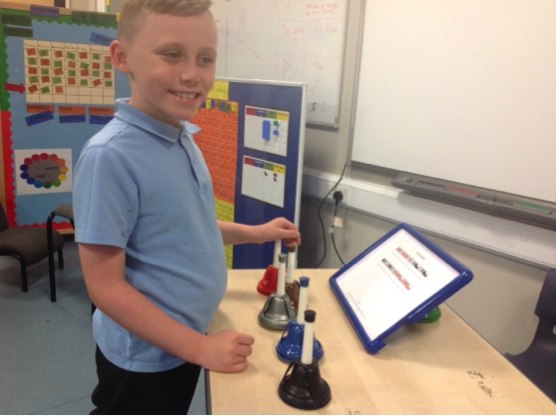
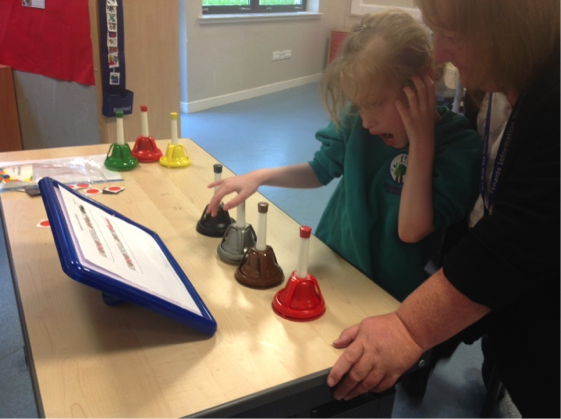
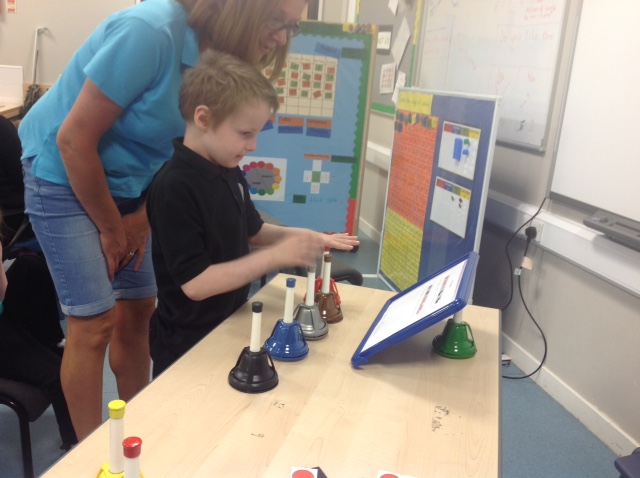
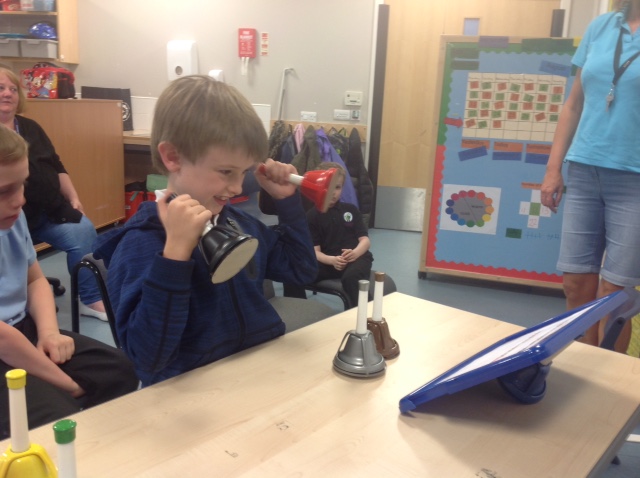
When teaching early years and lower primary I often use colourful tuned percussion, as it is much more visual and captivating for the younger children. A problem that I encountered was that the rainbow bells, boomwhackers, and chime bars are different colours to the Figurenotes colours, which can cause some confusion. Recently I have repainted my rainbow bells so I now have a Figurenotes hand bell set. This has enabled me to introduce Figurenotes into early years, which has been so beneficial. It is amazing watching the pupils’ sense of achievement when they have managed to play a melody they already know well using the hand bells or chime bars.

In order to repaint the hand bells, I bought plastikote spray paint cans in the Figurenotes colours. I taped up the white handles with decorators tape and sprayed each bell with three to four coats, leaving 40 minutes between each respray.

I also screwed plastic bottoms on the bells so that little fingers could not pull the spring mechanism. For this I used the single coffee filter cup lids fixed to the base using existing holes on the base of the bell.

Here are a few photographs of the bells being used in one of the classes at Drummond School:

1-bells

2-bells

img_3865

img_3858

Uncategorised

“If only all CPD left you feeling like this!”

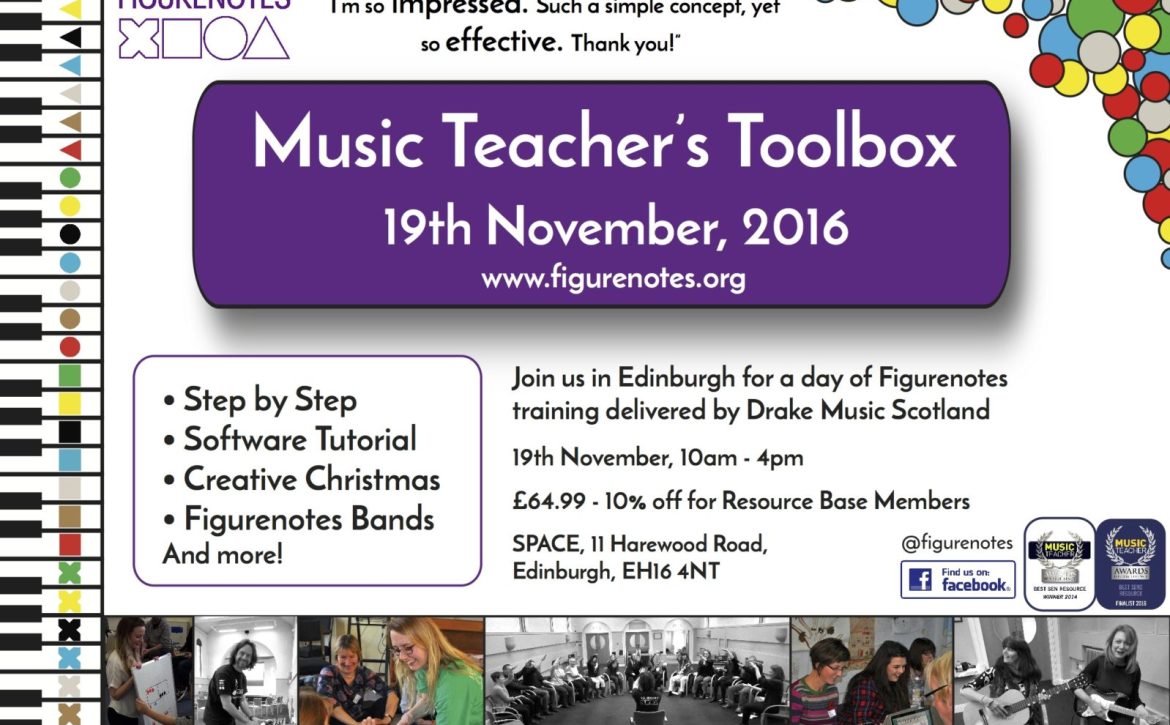
We can't wait until 19th November. Why? It is the next Music Teacher's Toolbox! *insert your own personal fanfare here*

These training days are packed full of inspiration, whether you are new to Figurenotes or an experienced Figurenoter. Perfect for freelance music practitioners looking for some CPD. Great for teachers in both mainstream and special schools who might be looking for a way of teaching music to a class with a mix of abilities and needs. Ideal for those organisations who want to offer CPD to their staff without organising their own training days. Make the most of Drake Music Scotland's experts.

Further details on the programme are available here. You can book online or send us a purchase order. Take a look at some videos from previous training and read what the participants have said. If you have any questions then please call 0131 659 4766 or email Lauren at Figurenotes HQ.

Are you a member of the Resource Base? Congratulations, you get 10% off! Use the code RB2016 at the checkout.

Places are limited and we always get fully booked, so secure your place now. We can't wait to see you all.

Uncategorised

“No stickers on the Steinway, please”

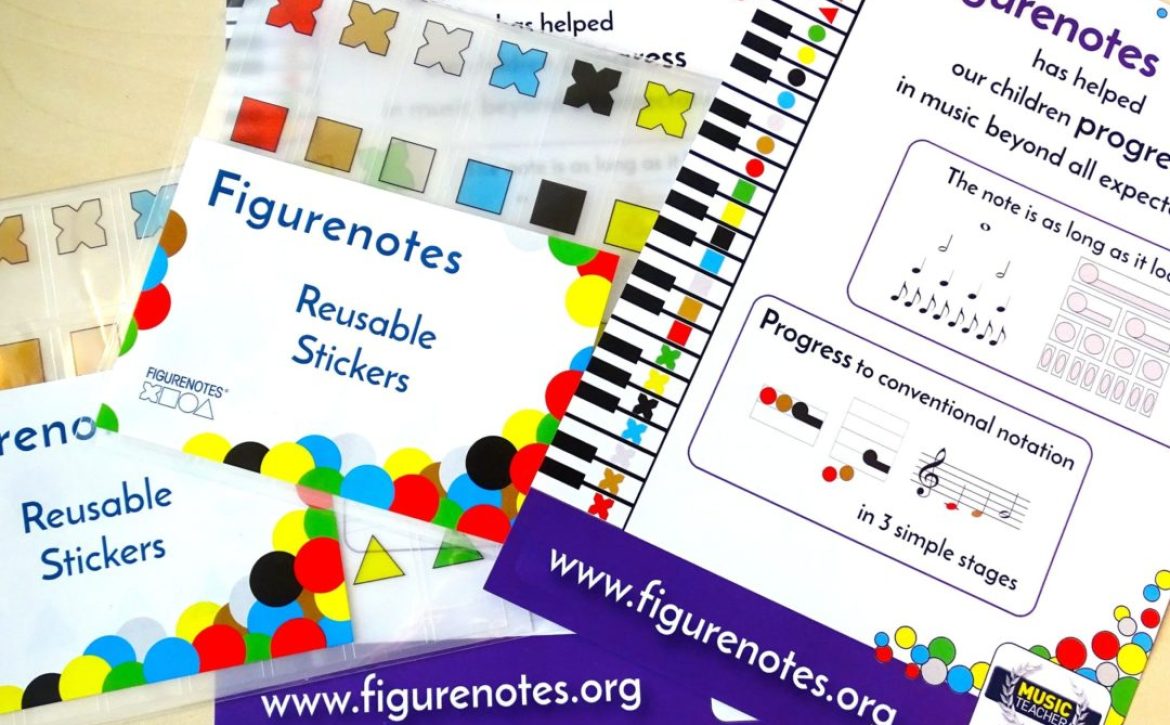
Ok, so your school may not have a Steinway, but I’m sure we have all run into this issue when using Figurenotes in schools. Those beady eyed Figurenoters among you may have seen that we now have Reusable Stickers in our online shop. These went down a storm at the ISME Conference at the end of July, as they are great for those teachers that may not be able to put stickers on school instruments, or don’t want to have stickers on their piano for all of their pupils’ lessons. Perfectly sized for piano, which makes them great for pitched percussion too, this sheet gives you four octaves of stickers. They are bigger than the usual Figurenotes stickers. The icons are printed onto plastic, making the stickers easy to remove from the keys and stick back onto the sheet. Be careful of those oily fingers on the back, as this will shorten the lifespan of the stickers. Reusable Stickers are now in the online shop for an introductory price of £9.99. Only a limited amount are available, so be quick to get yours before they are all snapped up.

Reusable Stickers #new #music #piano #percussion Perfect for #pianoteachers and #percussionteachers

A video posted by Figurenotes (@figurenotesmusic) on Aug 18, 2016 at 4:07am PDT

Uncategorised

BBC Get Playing!

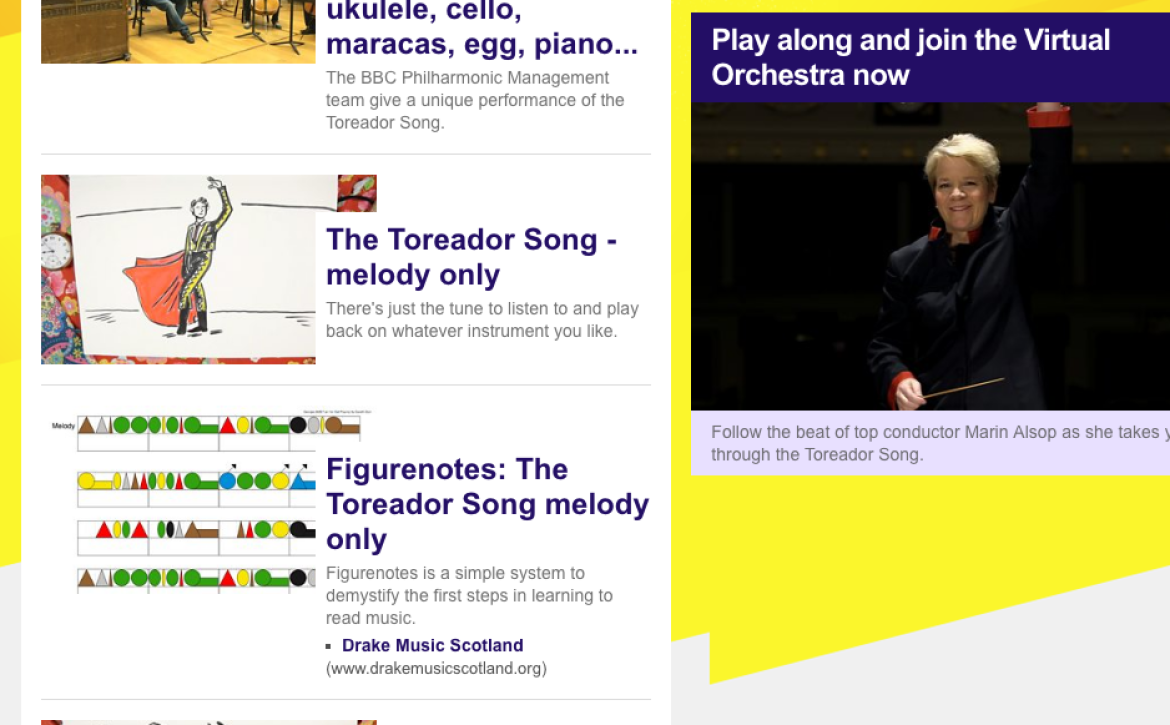
Have you ever wanted to be part of an orchestra? The BBC have launched their Get Playing initiative, which includes a virtual orchestra. You record your part in time with the conductor and they’ll do the rest. You could feature in the Last Night of the Proms!

Worried about reading the music? Don’t worry, we’ve Figurenoted the parts for you, so you can play too! Check them out on the BBC Get Playing website. You can play along with the conductor, or choose to play just the tune.

We can’t wait to see your entries! Deadline is 27th August.

Uncategorised

BBC Ten Pieces

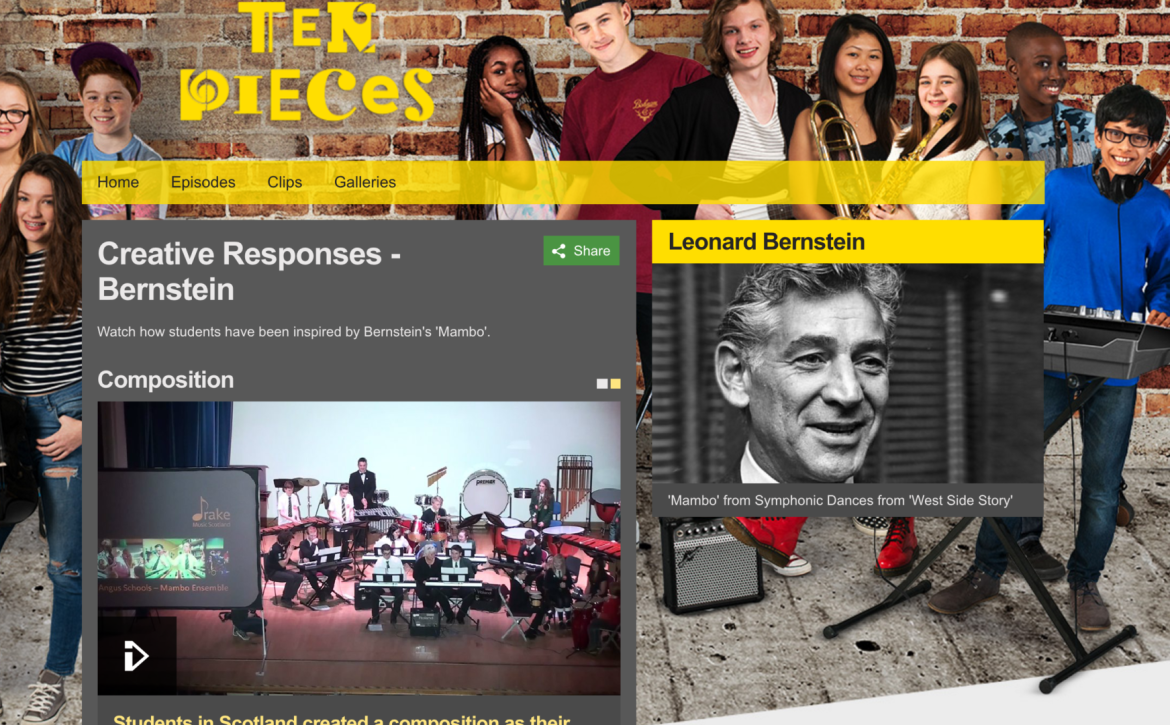
We now have a dedicated space on our Resource Base for BBC Ten Pieces. So, if you’ve been wanting to get involved, but weren’t quite sure where to start, or if you’ve been brimming with ideas and want even more, click on over to our Resource Base.

We have lesson plans, scores, creative activities, poetic inspiration, and more! All in wonderful, multicoloured Figurenotes.

These ideas can also fit into a class where not everyone uses Figurenotes. Just choose your resources carefully and edit the Figurenotes files using your software, should you want to.

We can’t wait to see what you come up with and create. Please do send us (and the BBC) your creative projects and performances. We love seeing videos and photos from your sessions. Make sure you have permissions before sending though.

Good luck!

Uncategorised

SQA Approved

Did you know that Figurenotes is SQA approved?

You can use Figurenotes for both performance and composition in SQA exams all the way up to Advanced Highers!

This means that accreditation can be opened up to a huge range of people that struggle with traditional notation, whether this is because of additional needs, such as dyslexia, or not. By allowing alternative forms of notation to be used and submitted, the SQA is leading in inclusive music accreditation and is recognising that music is music, regardless of how it is read.

If you would like the exam board that you use to start recognising Figurenotes as an alternative form of notation that can be used in accredited exams, please let them know. We would be delighted to follow up with specific information, but they need to know that teachers and pupils want inclusive accreditation.

This is something we should all be fighting for, regardless of whether you work in mainstream or special education. You never know when one of your pupils will need this support and recognition.

Uncategorised

Special Music Educators of the World, Unite!

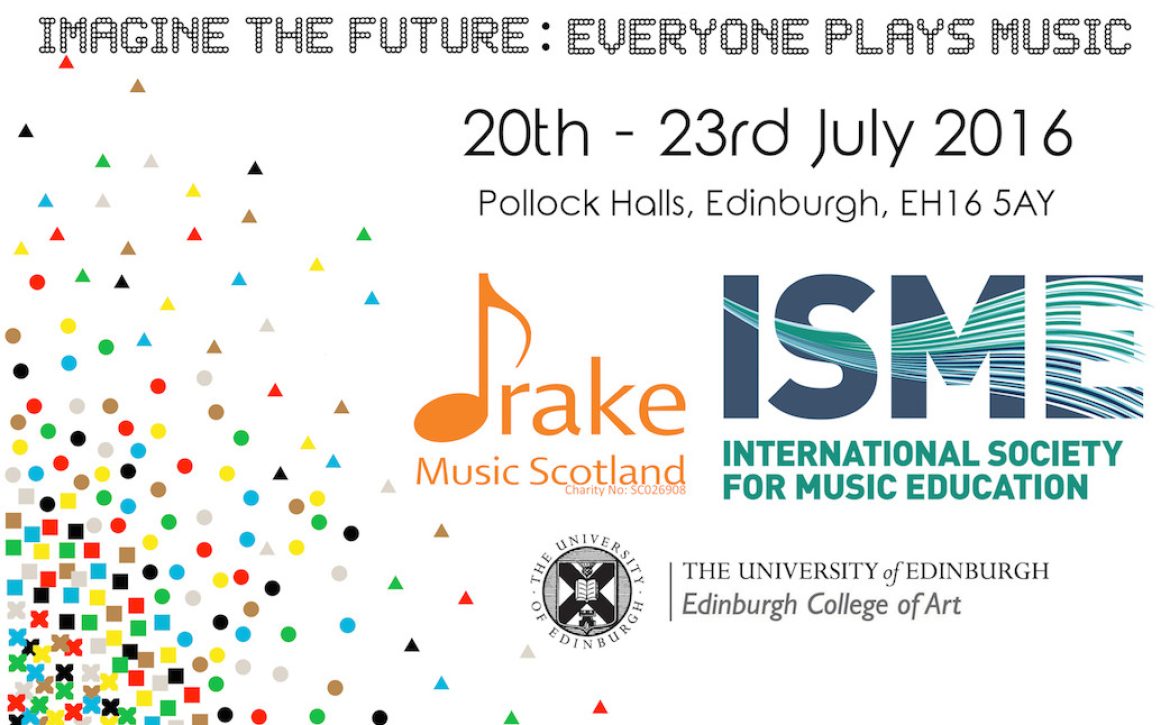
We are super excited about presenting with the Finnish creators of Figurenotes at the ISME pre-conference seminar on Special Music Education and Music Therapy! 

Figurenotes will have quite a presence at this incredible conference. You’ll also be able to get our event discounts on resources. There will be performances, workshops, presentations, and papers from international stars of the music education scene.

You can join us for some Figurenotes fun, and lots more besides, by registering online. You’ll need to be quick though, as registration will soon be closing.

If you have any questions regarding this ISME event run by Drake Music Scotland and Edinburgh University, please contact Emma Lines or call 0131 659 4766.

Guest Blogs

Guest Blog – The Magic of Figurenotes

Adam Featherstone, a teacher from Middlesbrough, tells us how he used music from Harry Potter to inspire a creative project with BBC Philharmonic musicians (pictured above with a musician from Priory Woods).

I started to use Figurenotes in March of 2015 starting with whole class electronic keyboards, using single note melodies. I quickly progressed to getting the coloured shape notation sticker packs and placing them onto any instrument I could find. This ranged from chime bars to adapting some of our guitars to play open chords.

I am the music teacher in Priory Woods which is an SEN school in Middlesbrough for students with a mixture of special educational needs aged 4-19. These range from PMLD to SLD, however I feel the Figurenotes approach is suitable to both primary and secondary teachers as a good way to introduce students to practical music making. The only difference would be to change the difficulty of the material used.

We have used Figurenotes in a variety of ways. One such example has been to progress our post 16 music option students s to play rock and pop songs. I have written out songs by Green Day and The Clash, mostly chords. As a result they may take part in our end of year school show and hopefully at a battle of the bands next year. Most recently I have set up an inclusive orchestra using a mixture of hard to reach pupils using technology such as ICT, eye gaze, and traditional music instruments. This has held Figurenotes at its core.

We have recently had the pleasure of welcoming 3 musicians from the BBC Philharmonic into school for a day of workshops before a performance in the afternoon. We started the day exploring a simple melody taken from Harry Potter. I transposed this for some of the musicians quite easily using the software. The musicians took a few minutes to get to grips with the coloured notation, but settled in very quickly.

We had a student conduct our students and BBC Philharmonic musicians to create a rather beautifully layered composition. This gave us some ideas about how to progress the day, as our next steps fed into group composition using the entire ensemble, with iPads taking the lead with solos using the app ThumbJam. We also had a student on an eye gaze machine taking a solo. He was delighted to be able to take part. These students responded fantastically to whole group integrated work. One BBC Philharmonic musician conducted whilst the other 2 took solos on flute and trumpet during the piece and gave encouragement to the pupils.

Every person on that stage was valued as an equal and had an integral part to play, whatever their ability or experience. Each musician used Figurenotes. I hope to develop this ensemble at the start of the new school year, adding more ICT, samples, instrumentation and student musicians.

Adam sent us a lovely email saying “Without Figurenotes it would not have been possible. Thank you.” Thank you to Adam for sharing the ways in which he has used Figurenotes. If you’d like to share your ideas then please get in touch.

Find Adam on Twitter @eponymousdrums

#lmsmart_search_6a48e32d4cce9:hover { color: rgba(30,40,69,1) !important; }#lmsmart_button_6a48e32d5074b { color: rgba(7,47,96,1); }#lmsmart_button_6a48e32d5074b:hover { color: rgba(7,47,96,1); }#lmsmart_button_6a48e32d5074b { border-color: rgba(30,40,69,1); background-color: rgba(249,232,20,1); }#lmsmart_button_6a48e32d5074b:hover { border-color: rgba(30,40,69,1); background-color: rgba(0,166,214,1); }#lmsmart_button_6a48e32d5220d { color: rgba(7,47,96,1); }#lmsmart_button_6a48e32d5220d:hover { color: rgba(7,47,96,1); }#lmsmart_button_6a48e32d5220d { border-color: rgba(30,40,69,1); background-color: rgba(249,232,20,1); }#lmsmart_button_6a48e32d5220d:hover { border-color: rgba(30,40,69,1); background-color: rgba(0,166,214,1); }