Figurenotes

Guest Blogs

Teaching Figurenotes Online part 1 – F Sharp Music Practice

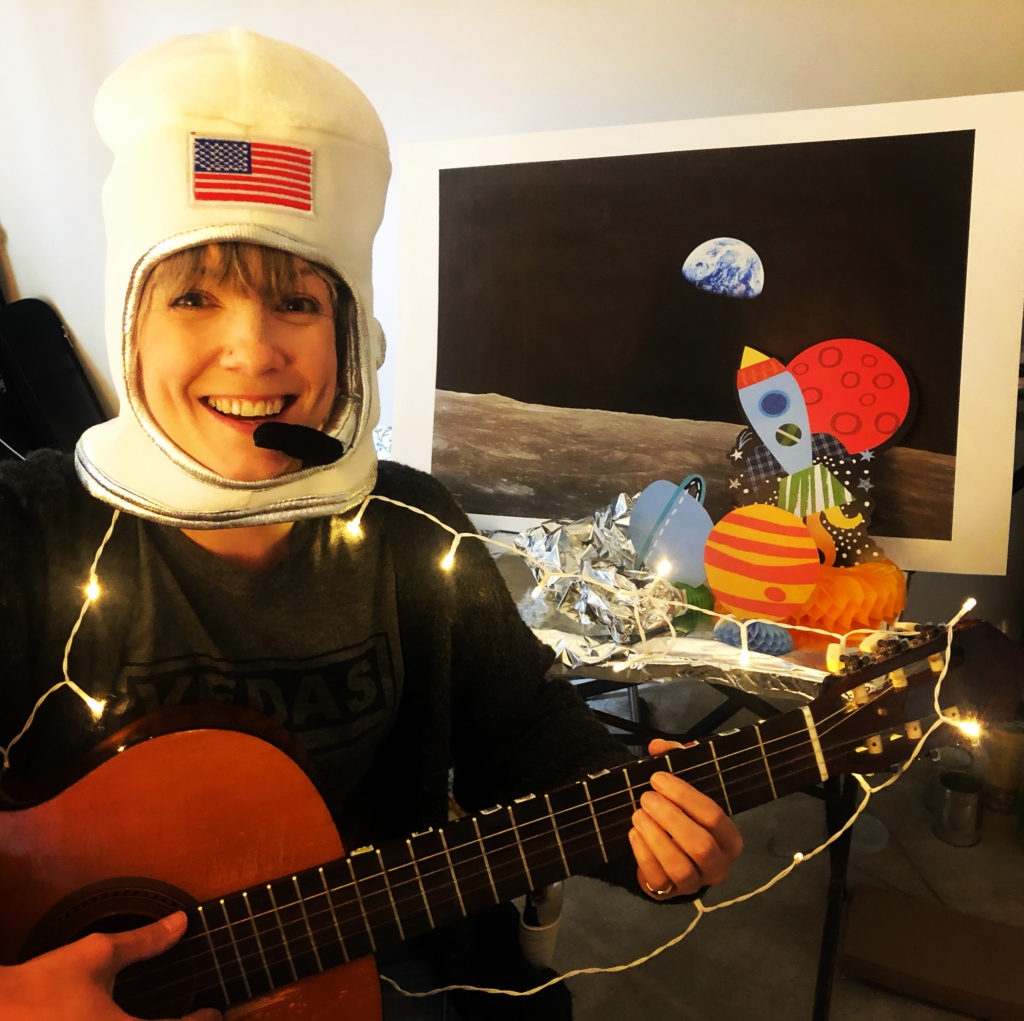
Fiona Sharp of F Sharp Music Practice has had great success with her online music sessions during 2020 and into the new year. As many musicians worried about their future work opportunities, Fiona has continued to provide high quality sessions for many organisations including PAMIS and Drake Music Scotland. She has also delivered training sessions on how to get the most from online delivery, including advising on a new online project for schools with the RSNO. Here she gives us a brief insight into her practice.
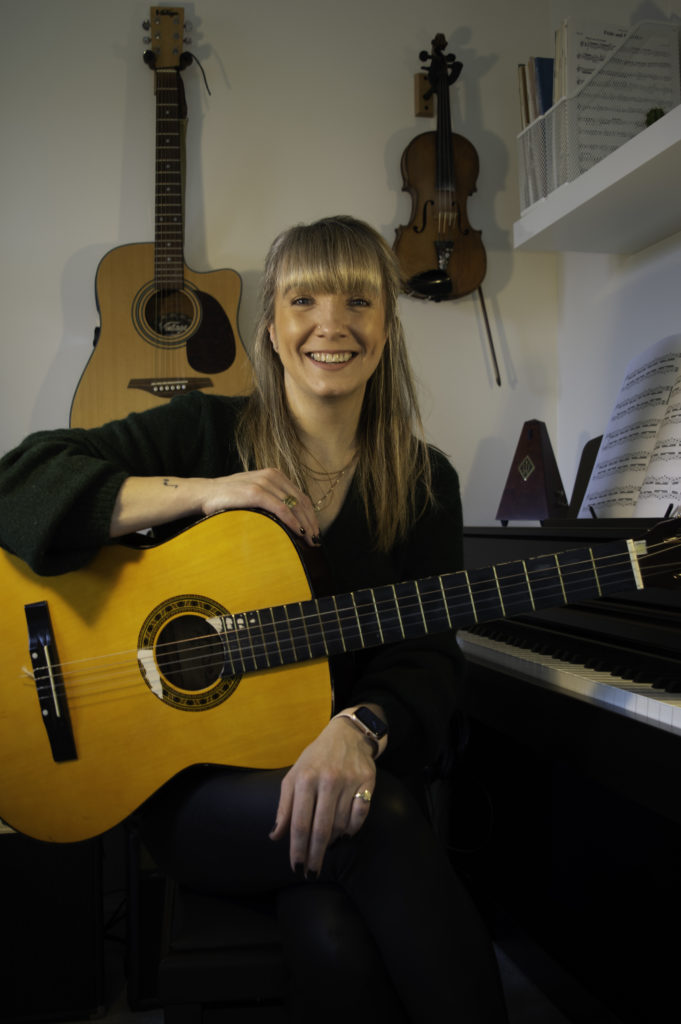
Fiona Sharp of F Sharp Music Practice (above)

I was concerned like many music teachers, practitioners and specialists at the start of lockdown how music tuition could be achieved solely on an online basis, especially when working with pupils who have Additional Support Needs. Over the past few months I have been astounded at the level of development made with many of my clients and pupils and in particular their progress with Figurenotes.

I have tried various ways of using Figurenotes online and I have detailed below the activities and methods I have found to work particularly well.

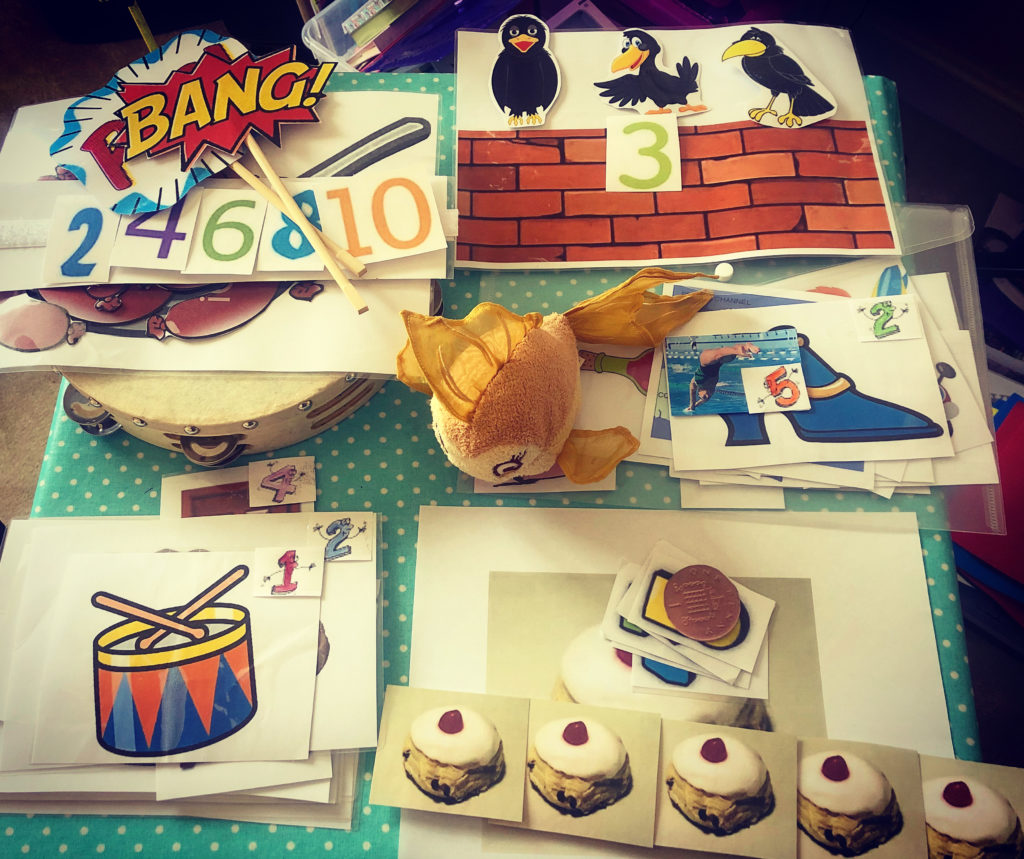
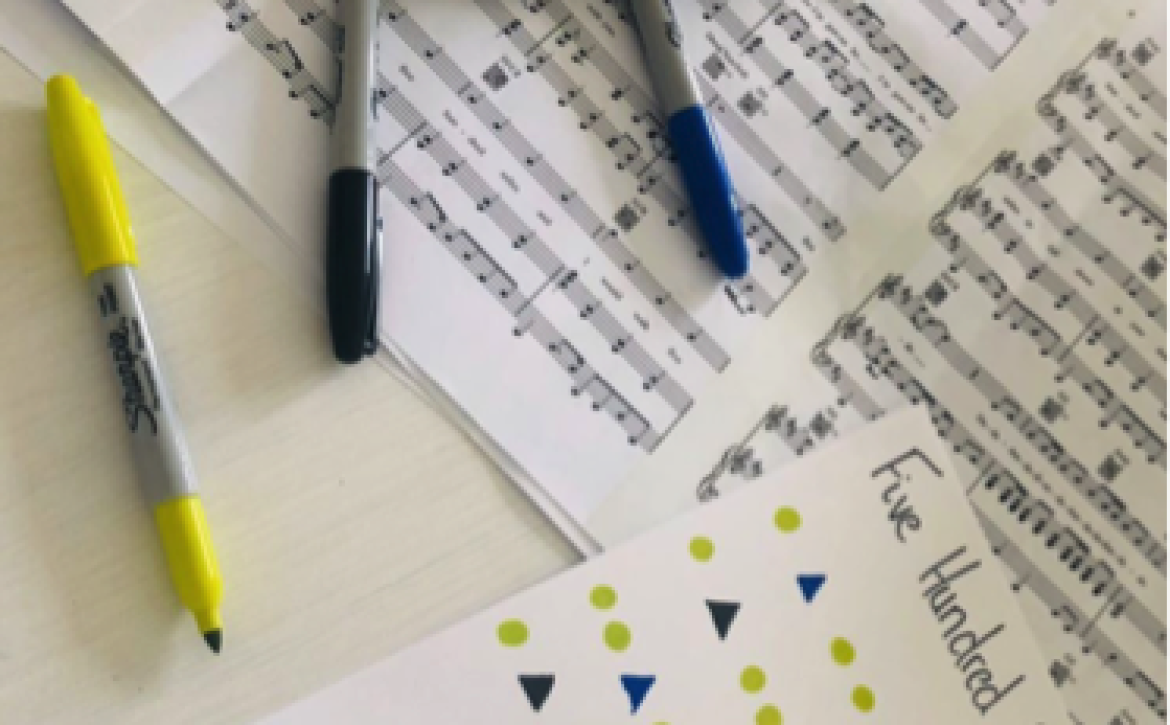
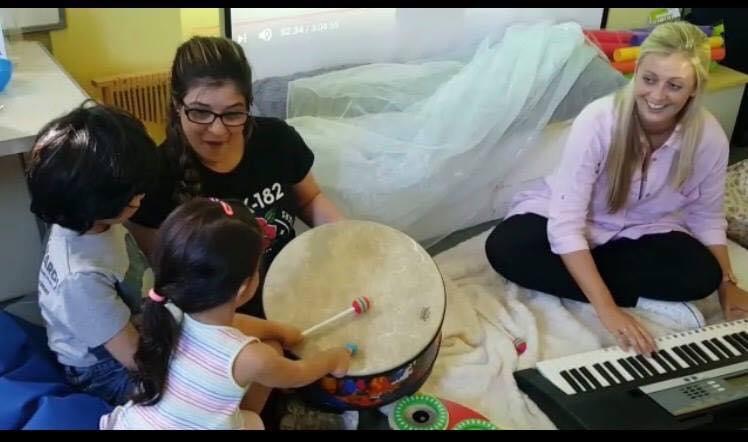
Something I have found to work well when using Figurenotes online for teaching is emailing sheets of Figurenotes notes for the pupils to print and cut out so they are able to make up their own songs, unless the pupils already have their own Figurenotes magnets. I usually start my online sessions asking the pupil to choose 10-15 cut out notes, either showing me the note or telling me what colour and shape it is. They can either lay the notes out in front of them, or as I tend to do, I put the Figurenotes magnets on a board, which I then hold up to the screen for them to see.

To vary the exercises I sometimes change the shapes they have chosen and get them to play the squares with their left hand, and the circles and triangles with their right hand. I also do chord work using the magnets/cut outs as well as exercises focusing on hands separately and hands together.

Themes can be fun to make the sessions a bit more interesting, for example themes about the sea, weather and emotions are popular ones, then finding songs or making up musical activities to go along with that theme.

The sea is always a good theme. You can get pupils to put lentils or rice in a plastic tub with a lid and slowly rock it from side to side so it sounds like the waves. Try the ocean drum tutorial in the video below. You can make up a short sea shanty using the Figurenotes magnets or cuts outs, and there are plenty of sea-themed songs which you can play using Figurenotes:

  • My Bonnie Lies Over the Ocean
  • Bobby Shaftoe
  • Row Your Boat
  • Skye Boat Song

Overall, my experience so far working online has been positive. I have noticed I am having to describe and communicate a lot more than I would normally in a music session, but I have been very surprised by the level of development my pupils have had since teaching online. I have come to the conclusion that it could be due to fewer distractions. For pupils on the Autistic Spectrum this has been particularly evident, and I have been quite amazed at the level of concentration and engagement they have during their session. I feel many of my pupils have achieved a lot more in a half hour session than they would normally with me sitting next to them. I have also noticed they have to work things out for themselves more than normal as I am not there to physically support them or show them what to do. I have been very impressed and pleasantly surprised by the level of development made with each pupil through online music sessions.

Uncategorised

New Musescore Plugin for Transition Between Stages

We’ve got a special Christmas treat for members of our Resource Base – a new Musescore plugin!

Subscribers to our Resource Base have long been able to download a plugin for Musescore that allows you to change the noteheads to Figurenotes colours with one click, giving you stage 3 Figurenotes notation at the touch of a button. Now we have created a transitional tool allowing you to do even more.

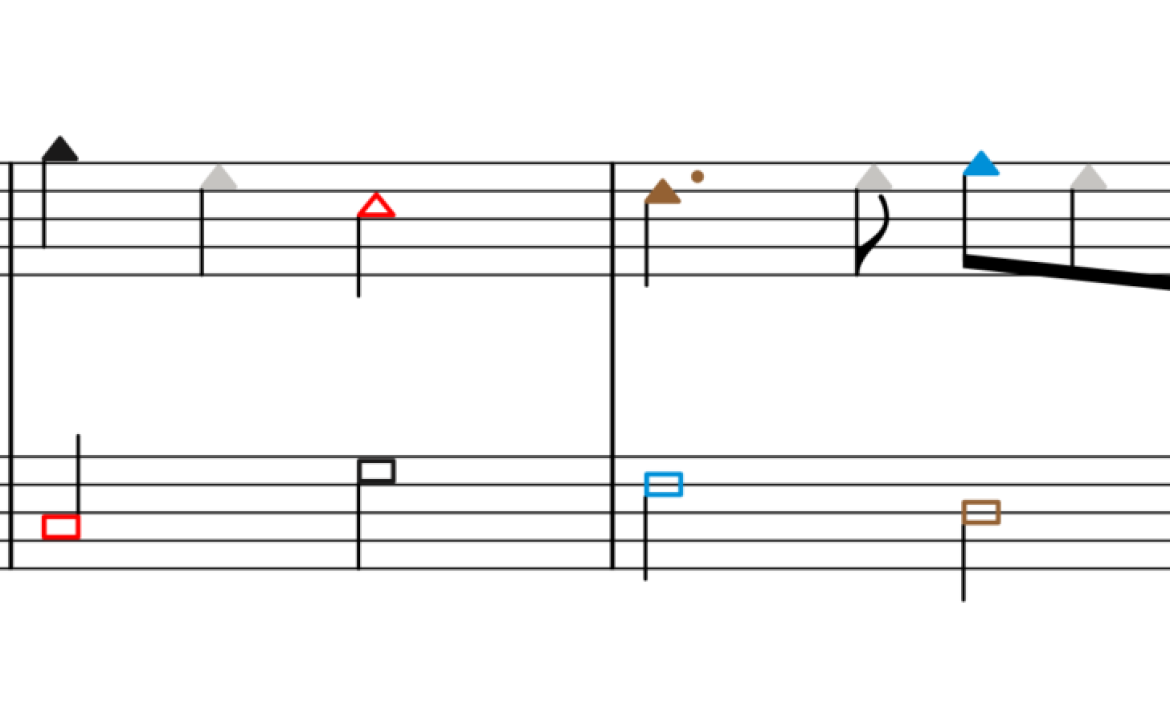
If you want to ease your pupils into stage 3 notation more slowly, you can now use shaped noteheads with Figurenotes colours with our latest plugin.

Using the new plugin to create shapes and colours
Using the plugin just for coloured noteheads

Using shaped noteheads in this way allows pupils to adjust to the new stave appearance more gradually. Shapes can help reassure players that they are in the right octave, while still progressing their rhythmic reading.

Write your piece in Musescore or import it from the Figurenotes software. After highlighting the piece, click on the plugin in your Musescore menu to change the piece to either stage 3 or the new transition stage. Easy!

Once you’re logged in, you’ll find the new plugin under ‘Software Resources’, along with a Sibelius plugin and instructions on installing the new plugin.

Not a Resource Base member? Sign up today for only £23.99 a year – that’s less than £2 per month!

Membership will give you access to a huge bank of tunes, lesson plans and resources you can adapt to suit the needs of your pupils using the Figurenotes software for mac or PC.

Note: This plugin is currently only compatible with Musescore 3. We are working on a compatible version for Musescore 2 and hope to launch it soon.

In the meantime, why not sign up to our mailing list to keep up to date with all things Figurenotes and get your hands on our free resources bundle.

Uncategorised

Happy 10th Birthday Figurenotes Software

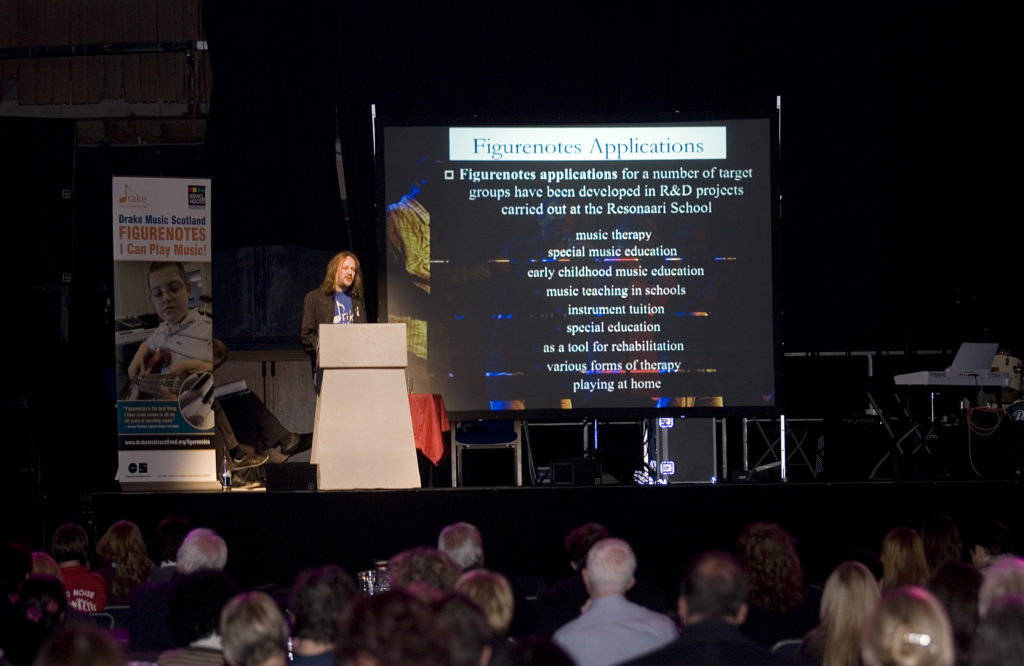
Ten years ago today, Drake Music Scotland unveiled the prototype Figurenotes software at their ‘I Can Play Music’ conference at Glasgow City Halls.  Drake Music Scotland look back at some of the highlights of this momentous day…

The I Can Play Music Conference on 26 November 2010 at Glasgow City Halls was the biggest and most ambitious event Drake Music Scotland had planned up to then – a full day’s programme of keynote plenaries and specialist break out sessions catering for 200 delegates, presenters and performers from across the UK and beyond.  

Our key presenters were the inventors of Figurenotes themselves, Markku Kaikkonen and Kaarlo Uusitalo, who had travelled direct from Resonaari music school in Helsinki to be our guests of honour. They set the tone for the day early with their opening presentation Making music should be a basic human right – Figurenotes is helping to place the joy and delight of making music in reach of all.

Image of Markku presenting at the conference

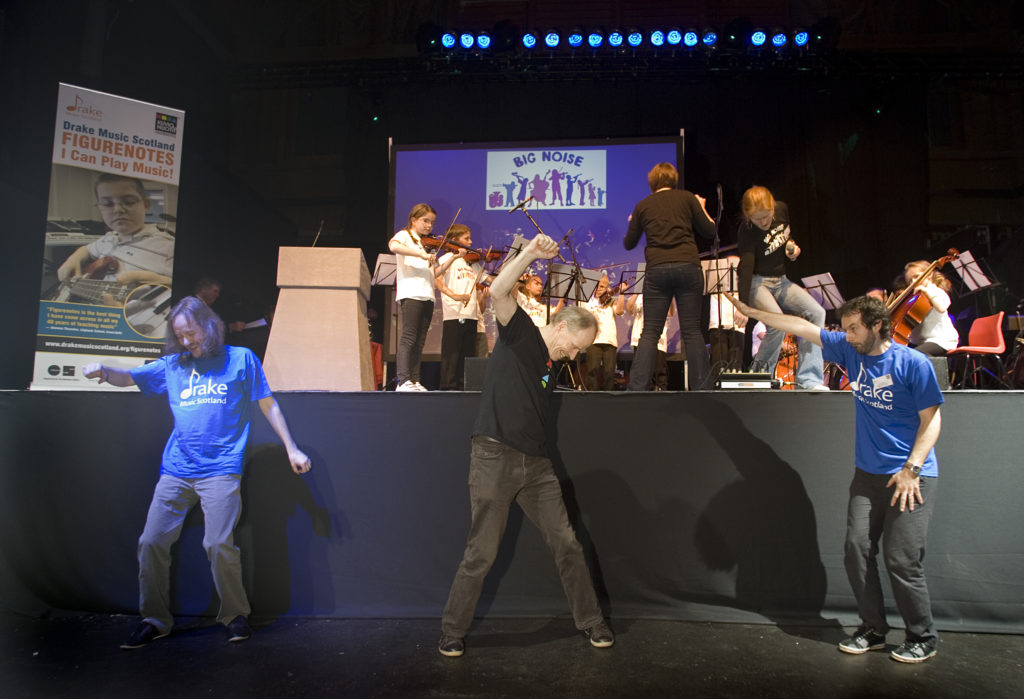
Markku and Kaarlo, ably assisted by Drake Music Scotland’s Artistic Director Pete Sparkes, followed this with an audience participation session which got everyone on their feet and highlighted how physical, and above all fun, making music can be!

Markku, Kaarlo, and Pete dance energetically in front of a group of young string players

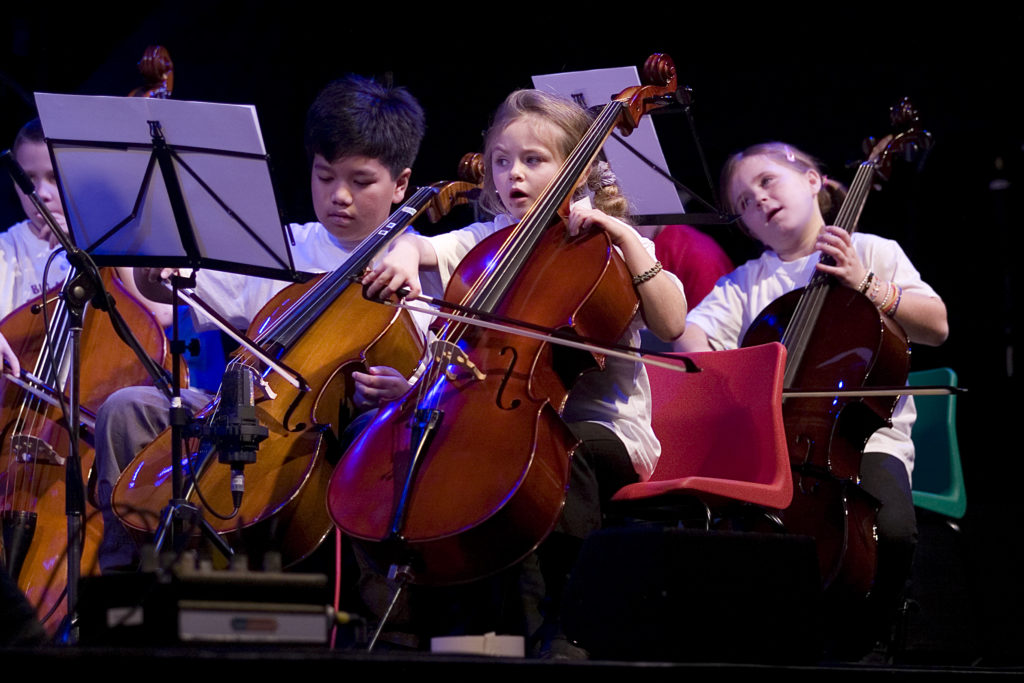
The accompanying music was provided by the children’s orchestra from Sistema Scotland’s Big Noise Project in Raploch, Stirling who used Figurenotes to learn to play their string instruments.  Sistema Scotland was one of our first project partners and their performance showcased how Figurenotes can support children with additional support needs to join their ensembles and ensure that no child is excluded.

The cello section of a string orchestra playing some music

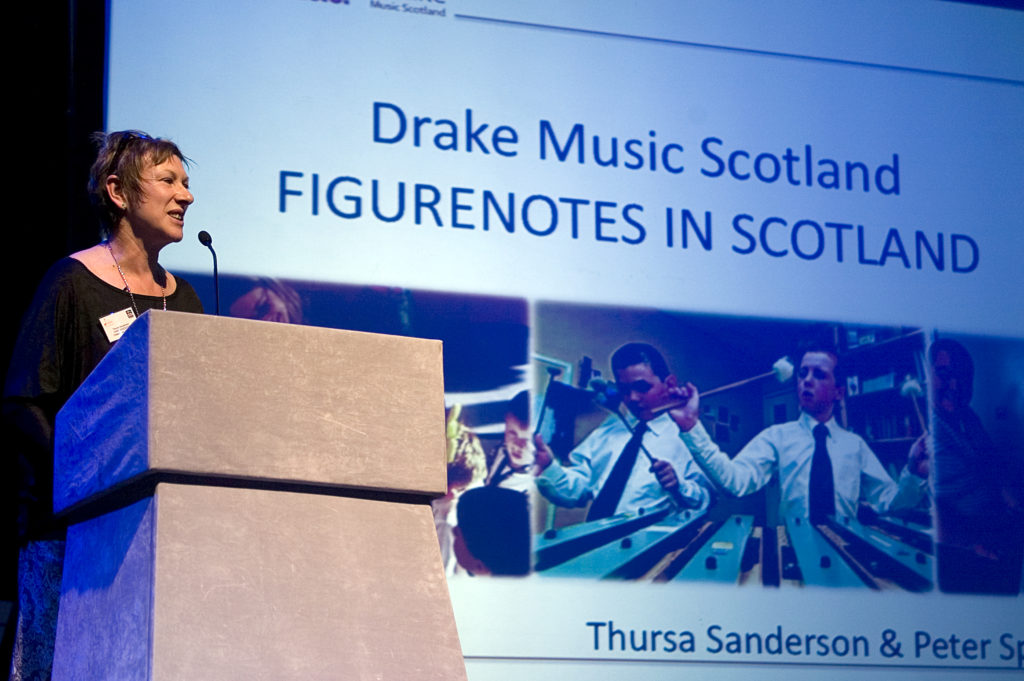
Our afternoon session led by Chief Executive Thursa Sanderson and Artistic Director Pete Sparkes unveiled the first software version of Figurenotes, which we created with support from Scottish Arts Council’s (now Creative Scotland) Inspire Fund.  The beauty of a software version is that it allows teachers and learners easy access to preparing sheet music and individual instrument parts.  The digital version also means it can be shared instantly and with anyone, anywhere in the world. This has long been available for standard notation, but was revolutionary for an accessible notation.

Thursa Sanderson presenting at the conference in front of screen reading 'Drake Music Scotland - Figurenotes in Scotland'

The various breakout sessions during the day gave us an opportunity to showcase the work of our wonderful Figurenotes ambassadors – teachers and academics who have been inspired by the system to explore its teaching potential and benefits to all types of learners. These included:

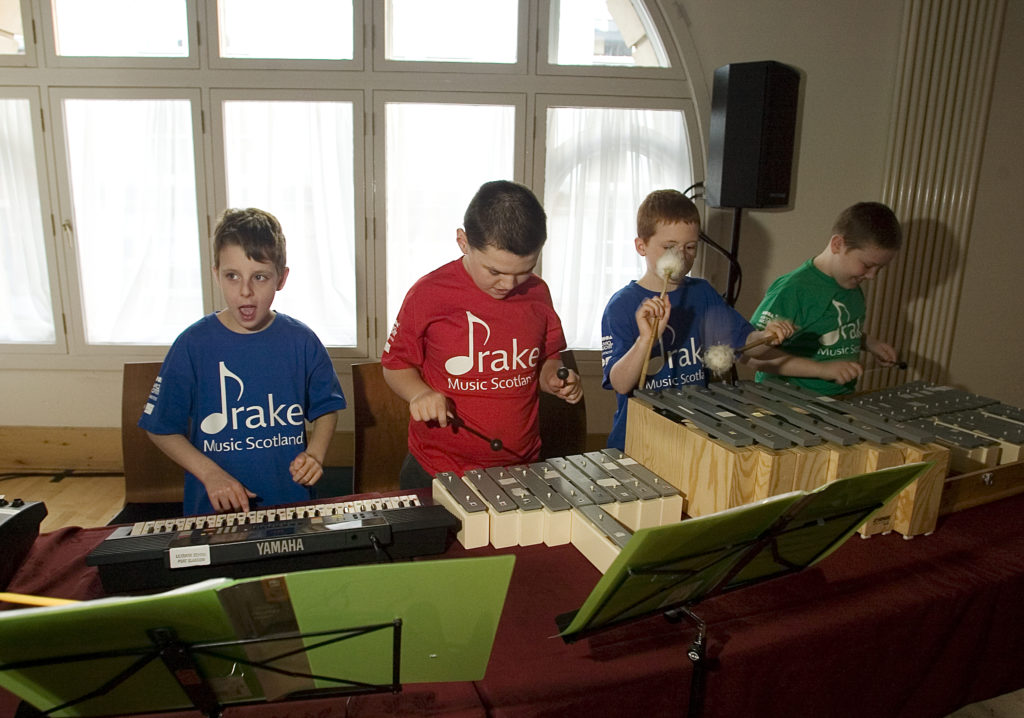
  • Inverclyde music teacher Annona Thornton who outlined the benefits of Figurenotes for special schools with her experience using it with pupils with additional support needs in Lillybank School.
4 children from Lillybank School perform on keys and pitched percussion
  • Jill Henderson who highlighted how and why Figurenotes is particularly successful with learners with autism
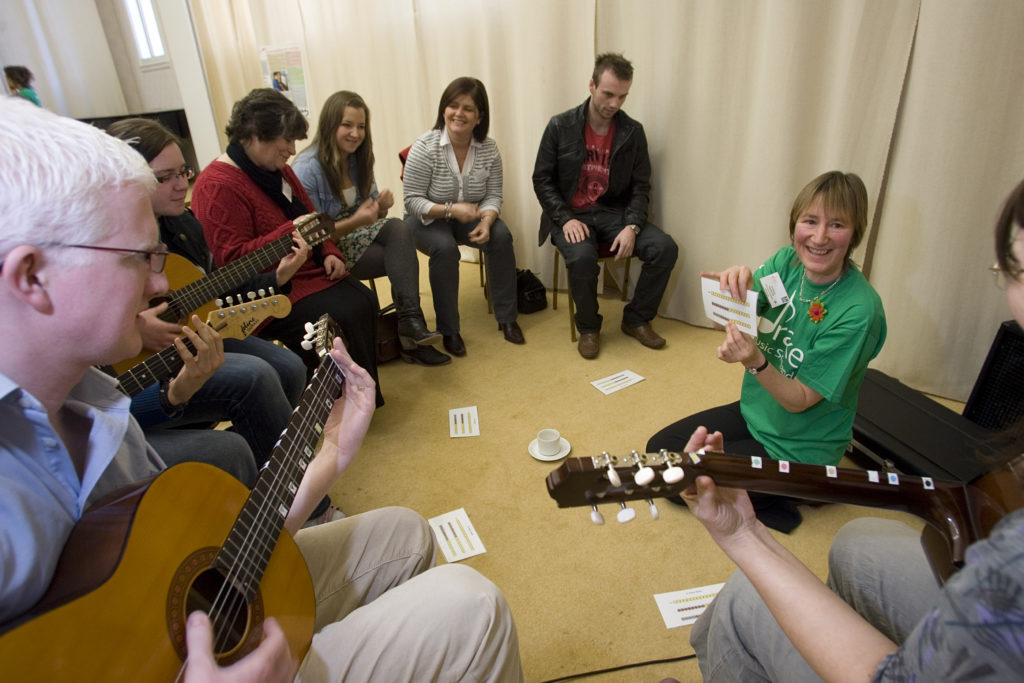
Jill demonstrates to a group of teachers, most of whom are playing guitars
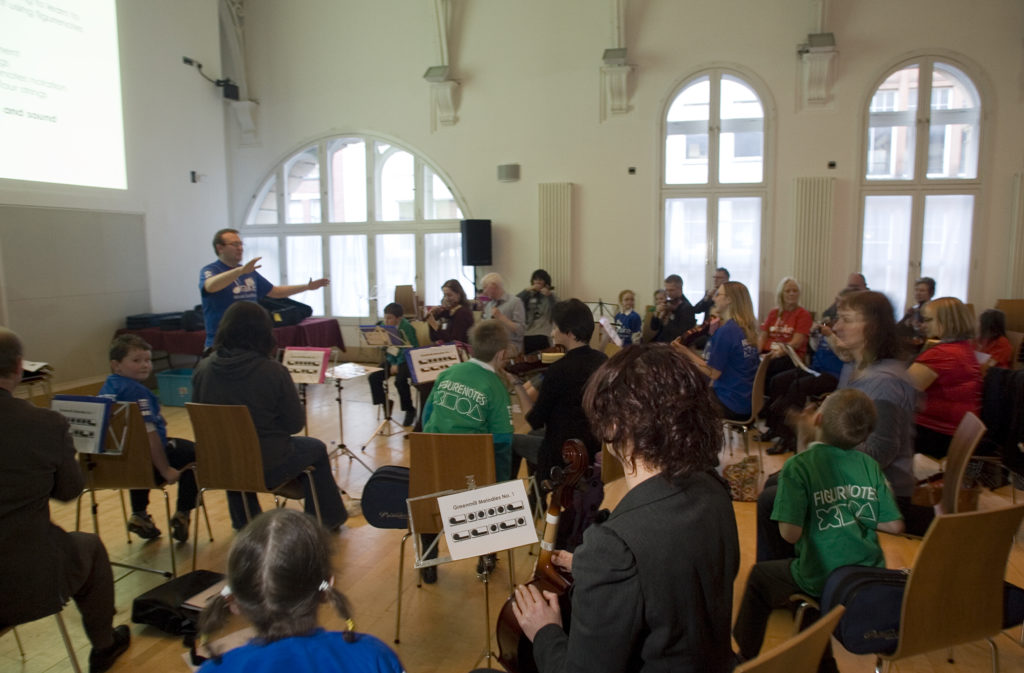
A string orchestra of young children with a conductor

 “Really inspiring – really interesting – really well organised – Bravo.”

Anthony George, City of Edinburgh Council

“Excellent conference which has given me lots of inspirational ideas and enthusiasm to try out in my classroom.”

Alison Strachan, Arbroath Academy

Ten years on, our work with Figurenotes has gone from strength to strength, reaching over 20 countries across the globe and supporting over 10,000 learners to play music for the first time.

And, although the Covid-19 pandemic scuppered our plans to hold a tenth anniversary conference this year, we are not resting on our laurels. Our latest Figurenotes software development is currently taking place after a delay earlier in the year due to the pandemic, and we are busy with plans for further development to all our Figurenotes resources, so that it remains a key inclusive tool for at least the next ten years and beyond.

Find out more about what Figurenotes can do for you

Guest Blogs

Emmeline McCracken – ELM Music Therapy

In our latest guest blog, Emmeline McCracken shows us how she uses Figurenotes in her work as a music therapist.

Hello everyone,

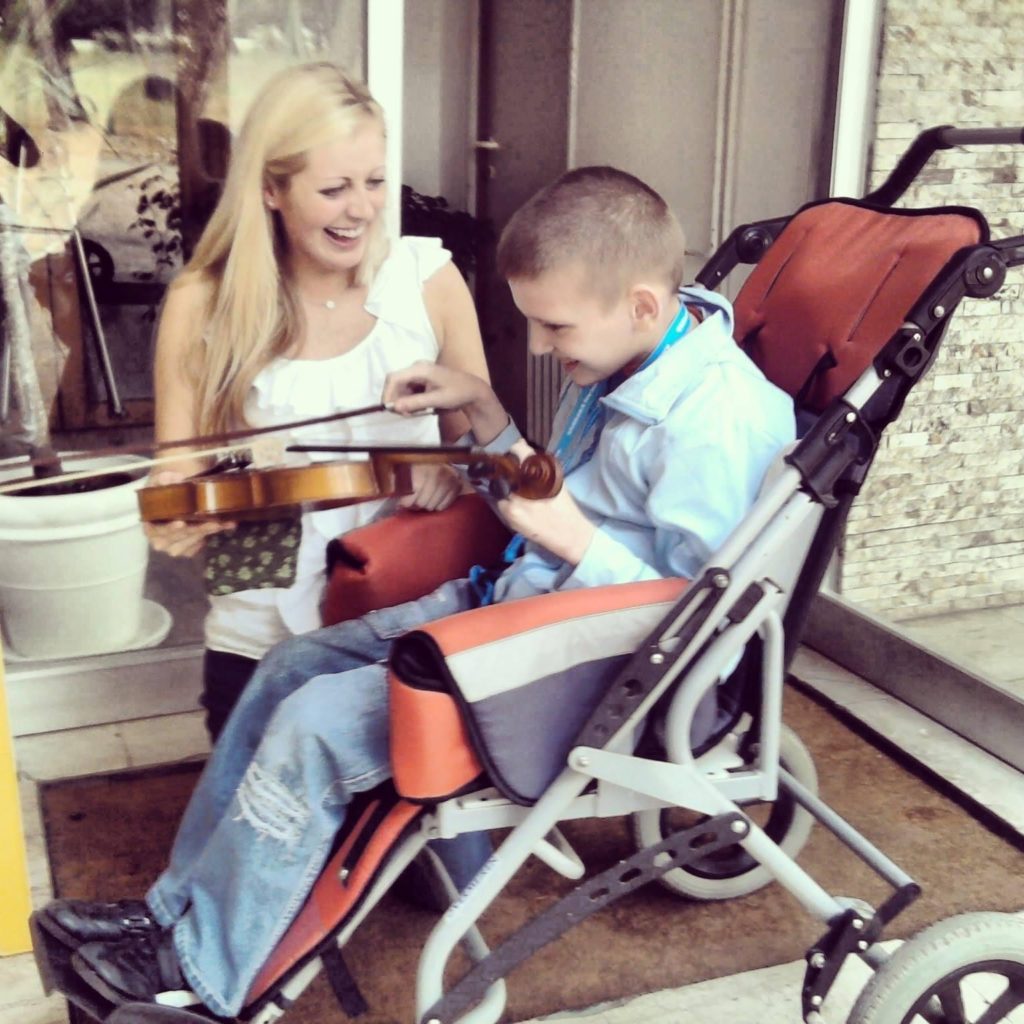
My name is Emmeline and I am a music therapist. I work for my own company, ELM Music Therapy, primarily with children who have profound and multiple learning difficulties and those with terminal illnesses.

Although music therapy is very different from teaching someone to play an instrument, this can sometimes play a part in my therapeutic sessions. Often children will be keen to learn to play the piano with me as this is the instrument I use most frequently. Sometimes through learning some tunes together this can give a client confidence and also relax them into more therapeutic work. Often learning something can seem less daunting than the therapeutic process itself and can open many doors for the therapeutic work to take place. A few examples of this may be;

  • Composing our own words to a learnt song.
  • Moving into free improvisation.
  • Relaxing a child enough for them to open up or share emotions.

As I work primarily with children with profound and multiple learning disabilities the use of Figurenotes has been invaluable in this teaching process. It has really allowed the children to quickly learn to play simple/familiar songs at the piano and allowed us to progress into other therapeutic processes. The matching of colours and symbols seems to be particularly appealing to many of the pupils on the autistic spectrum with whom I work and is quick and easy for them to grasp.

In my other work at the Royal Aberdeen Children’s hospital the quick and easy to grasp concept to allow children to learn and play tunes has been lifechanging. My work here is often not progressive as there can be children I only meet once on the ward and others who are long-term patients. It is wonderful to see not only the children’s but also their family’s faces light up around them as they perform songs they have learnt that day through the use of figure notes at a time when often the rest of their lives are unpredictable and out of control.

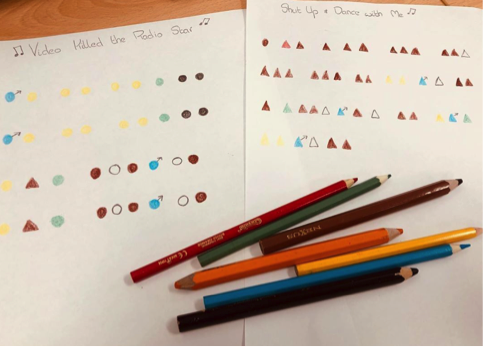
Here are some examples of children’s favourite songs that we have quickly written out in figurenotes.

Although I do not use Figurenotes in the same way as many others I find it very beneficial to my work and I hope that other music therapists will too!

“Figurenotes, Figurenotes, play what you see!”

Thanks to Emmeline for sharing her experiences. If you are interested in writing a guest blog, please get in touch with the Figurenotes team to share your ideas.

Uncategorised

Updated Sticker Design

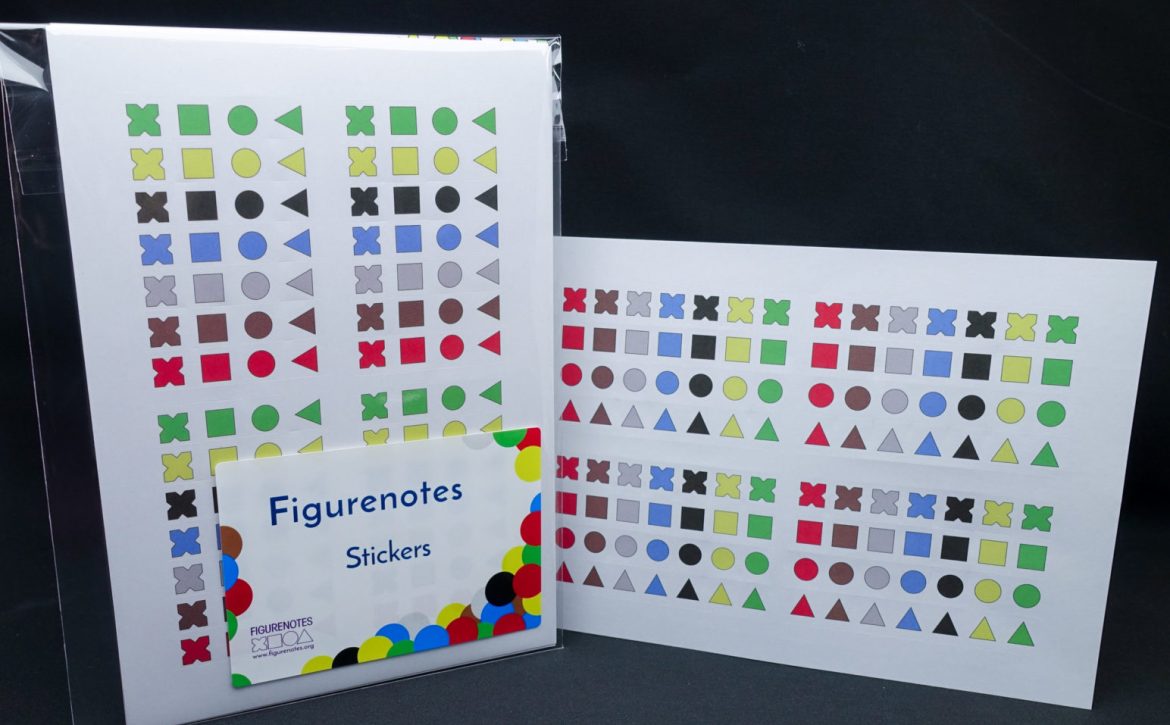
If you’ve ordered Figurenotes Stickers recently, you might have noticed a slight change in their design. The same shapes and colours as before, but without the shadows.

We think this makes the shapes clearer and easier to see on the instrument – and you seem to agree! Thank you to everyone that has helped us with testing and feedback.

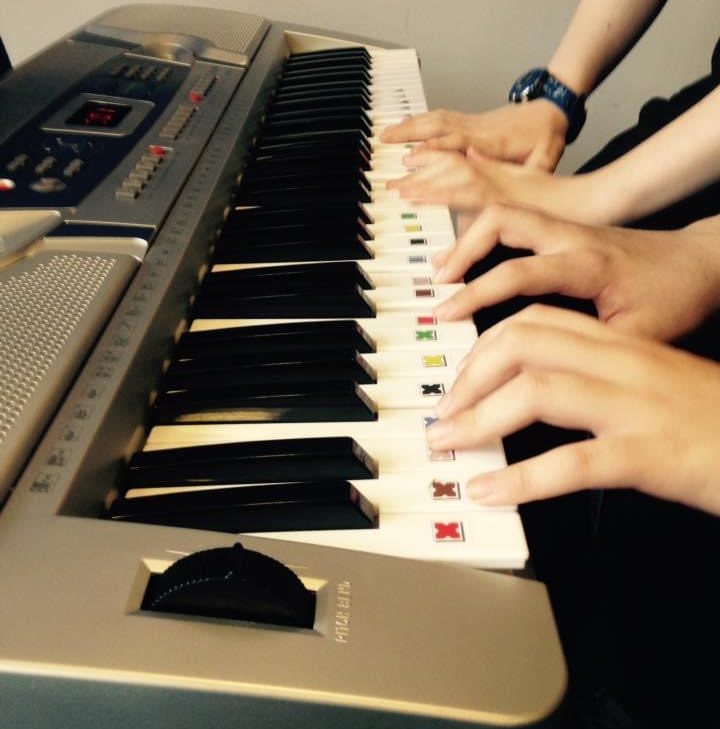
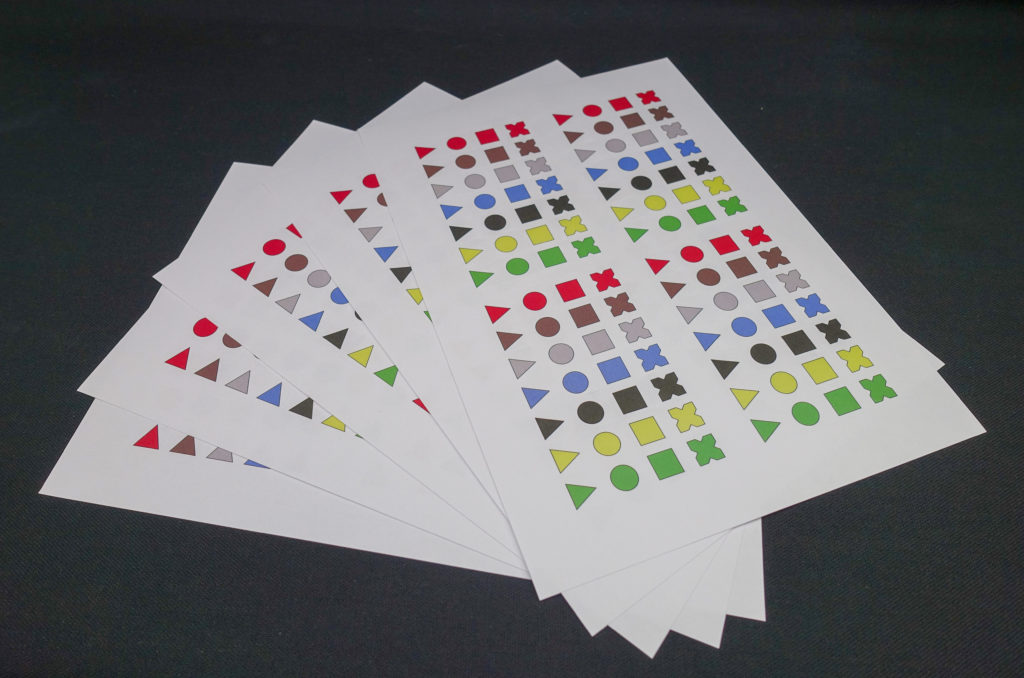
Each sheet of Figurenotes Stickers gives you enough for 4 keyboards; you can use them on other instruments too. For the best deal, get our Figurenotes Stickers Value Pack.

Not sure how the stickers work on your instrument? Check out our handy instrument guides and sticker charts, available on our Resource Base under the Instruments tab.

Uncategorised

Resume the Routine

How can Figurenotes help as schools plan to return next week?

Teachers, pupil support assistants and practitioners do incredible work all year round supporting our young people’s learning. We know that things will look very different when schools return next week, so at Figurenotes HQ we have been putting together some useful resources for delivering music sessions in the classroom.

Created in conjunction with Drake Music Scotland, these resources and supporting videos are aimed at sensory groups of all ages and could perhaps fill the gap whilst visiting specialists may not yet be permitted to access your settings. For those of you that have previously had a visit from a Drake Music Scotland musician, some of these tunes may be familiar to you, like this one below.

Familiarity is great for our young people transitioning back into formal
education settings. Something familiar and achievable can encourage your young
people to feel safe, nurtured and sets them up for success after a long and
sometimes worrying break from routine. You can pop these songs on whilst
singing is not allowed, use the Figurenotes parts to play along or use the
Powerpoint presentations for lesson inspiration.

You can find these resources and more under the Lesson Plans tab on our Resource Base. For new customers, visit the Figurenotes website where you can sign up to our Resource Base for just £23.99 a year (that’s less than £2 per month). For those returning, we will be adding more to the lesson plans tab so keep coming back to check them
out.

Happy Figurenoting!

Uncategorised

Power Up Your Practice

Lockdown has brought different challenges to different people. You may have discovered that you’ve got tonnes of time to practise. Maybe you’re juggling multiple responsibilities and need to make your practice time as efficient as possible. Or you might find that having lots on your mind means you can’t concentrate very well at the moment.

We are here to help! We have loads of tips to help you increase motivation to practise and make your practice time more effective. Do you have any more tips to share? Let us know by email or social media.

Let’s get motivated

Make like Mr Motivator and get yourself pumped for practice! Getting started is the hardest part, so set a regular schedule for yourself. It will soon become as easy to fit in as brushing your teeth.

Try setting an alarm for starting your practice – the same time each day, if you can, or work out a time for each day of the week. Put this in your calendar and set up reminders.

Ever heard the term ‘eat the frog’? If you’re finding your practice hard, start doing it first thing in the morning. Getting it done early means you can relax for the rest of the day without worrying when you’ll fit it around your other commitments (those TV shows won’t binge themselves).

Try a practice challenge. We have charts available all the way up to 100 days on our Resource Base. Set your goal and give yourself a prize at the end of it. There is a special covid-19 day practice chart in our free resources bundle.

Making it count

Now we’ve got going, how can we keep our focus and make our practice really effective in the time available?

Make your practice goal-focused. Be specific. Instead of thinking ‘I’m going to practise this piece’, think ‘I’m going to improve my dynamics in this middle section’. Write down a short list of goals for each practice. This is best done at the end of the previous practice session, as it means you can open your book and get cracking without having to plan and think too much.

Don’t always start from the beginning. If you start in the same place each time, you’ll get really good at that initial bit. Your brain will soon become tired and you will stop in the same difficult places each time. Start with the hardest/least familiar section.

Practice makes permanent! In order to improve, you need to work on playing things more times ‘right’ than ‘wrong’ (‘right’ being the way you want it to sound, rather than the way you’re unhappy with). Find your small tricky section – really reduce it down to the specific bit you need to work on. Repeat this until you can play it 3 times in a row exactly how you want it. Made a mistake? Go back to zero. Once you’ve managed 3 in a row, can you do 5 in a row? 10? Go wild!

Slow down. Your brain and body need time to process. Practise slowly and you’ll reap the rewards!

If you practise something slowly, you forget it slowly. If you practise something fast, you forget it fast.

Itzhak Perlman – violinist

Rewarding yourself

Life is hard enough at the moment. Be kind to yourself and take stock of what you’ve achieved, rather than focusing on the things you’d like to improve. Managed to improve your bow hold? Great! Is your intonation much better than 6 months ago? Look at you go! Is your ear so good that you notice when your tone isn’t AMAZING? Well, look who is one step closer to their virtuoso career!

Put on a concert for friends and family – this might be over the internet, phone, or even through the window. There aren’t many concerts happening at the moment, so you’ll really brighten someone’s day. It is a great practice goal to aim for too.

Give yourself a treat for all your hard work by playing something really fun at the end of your practice session. It makes all the technical work worth it.

Send us your videos and we’ll share our favourites on social media. Tag us @figurenotes or use #FigurenotesAtHome. We’d love to hear more of your practice tips too!

Uncategorised

Got Rhythm? #FigurenotesChallenge

Rhythm is so intuitive with Figurenotes – the note is as long as it looks!

So how does it all fit together?

Our newest #FigurenotesChallenge aims to help you/your students understand the relationship between different rhythms through this gentle movement activity. This is the first in a series of videos designed to develop rhythmic skills whilst promoting a healthy activity you can do at home.

You can use our FREE supporting resources on rhythm to create your own rhythm words or movements for each rhythm. Make it your own, or play along as it is. You can use your instruments to play along, or use the movements suggested in the video. Whatever works for you or your students.

Go on and have a wee go! Then share your findings with us. Drop us a line at figurenotes@drakemusicscotland.org or share on your favourite social platform. Tag us @Figurenotes and use the hashtags #FigurenotesChallenge or #FigurenotesAtHome. We will post our favourites on our Twitter and Facebook pages.

Uncategorised

Somewhere Over The Rainbow Project #FigurenotesChallenge

On Thursday 30th April at 8pm, musicians all over Scotland are going to pick up their instruments and show their appreciation for our NHS and other frontline workers by having a great big play-along!

This national event named the Over The Rainbow Project has been organised by MEPG (The Music Education Partnership Group) and will encourage musicians in Scotland to play “Somewhere Over The Rainbow” together. Instrumental Music Teachers all over Scotland will be providing parts and backing tracks for a range of instruments and in a variety of keys. You can find parts and backing tracks – including Figurenotes resources HERE.

Want to get involved? Then we’ve got you covered! We have Figurenotes parts available as part of our FREE RESOURCES BUNDLE and will be posting scores on our Facebook and Twitter channels in the run up to the event.

We would love to hear your renditions so please share them with us. You can post them on your chosen social media platform and tag @Figurenotes and use the hashtag #FigurenotesChallenge or you can email them to us directly at figurenotes@drakemusicscotland.org

Uncategorised

New Music Scotland Awards

Figurenotes projects have led to nominations in FOUR categories of the Scottish Awards for New Music 2020.

Diversions, written by Ben Lunn, was performed by Drake Music Scotland’s Digital Orchestra and Hebrides Ensemble. The Queen’s Hall in Edinburgh was the setting for this accessible concert of new works.

Figurenotes was used by some members of the Digital Orchestra alongside their colleagues using standard notation. These fantastic musicians created some phenomenal new music that has been duly recognised in four categories:

The RCS Award for Contribution to New Music in Scotland

The ISM prize for Collaboration

The RCS Award for Making it Happen

The SMIA Award for Creative Programming

We wish Ben Lunn, Hebrides Ensemble, Drake Music Scotland, and the Digital Orchestra all the luck in the world for the award ceremony. We have everything crossed for you!

#lmsmart_search_6a3da02a58d57:hover { color: rgba(30,40,69,1) !important; }#lmsmart_button_6a3da02a60876 { color: rgba(7,47,96,1); }#lmsmart_button_6a3da02a60876:hover { color: rgba(7,47,96,1); }#lmsmart_button_6a3da02a60876 { border-color: rgba(30,40,69,1); background-color: rgba(249,232,20,1); }#lmsmart_button_6a3da02a60876:hover { border-color: rgba(30,40,69,1); background-color: rgba(0,166,214,1); }#lmsmart_button_6a3da02a623af { color: rgba(7,47,96,1); }#lmsmart_button_6a3da02a623af:hover { color: rgba(7,47,96,1); }#lmsmart_button_6a3da02a623af { border-color: rgba(30,40,69,1); background-color: rgba(249,232,20,1); }#lmsmart_button_6a3da02a623af:hover { border-color: rgba(30,40,69,1); background-color: rgba(0,166,214,1); }