
Uncategorised

Uncategorised

Pick-a-Brick (and other tips)

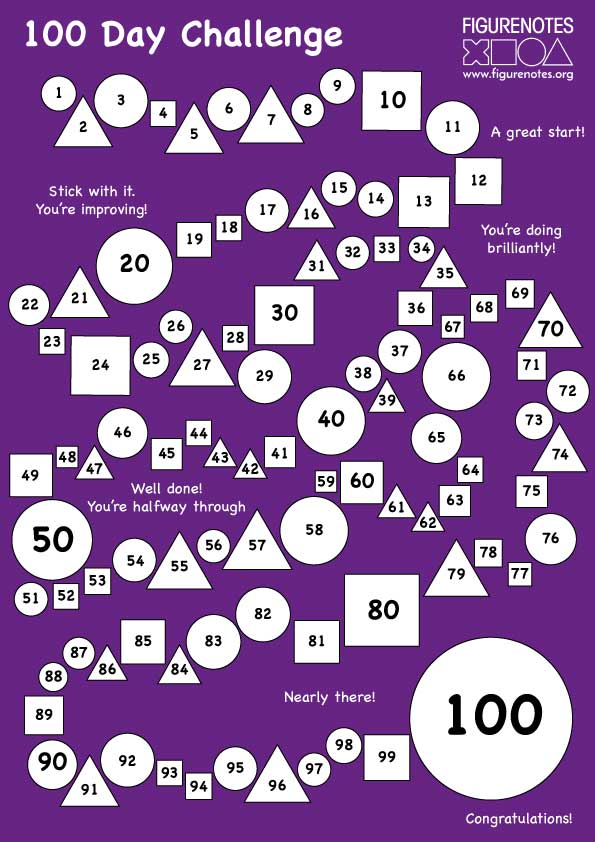
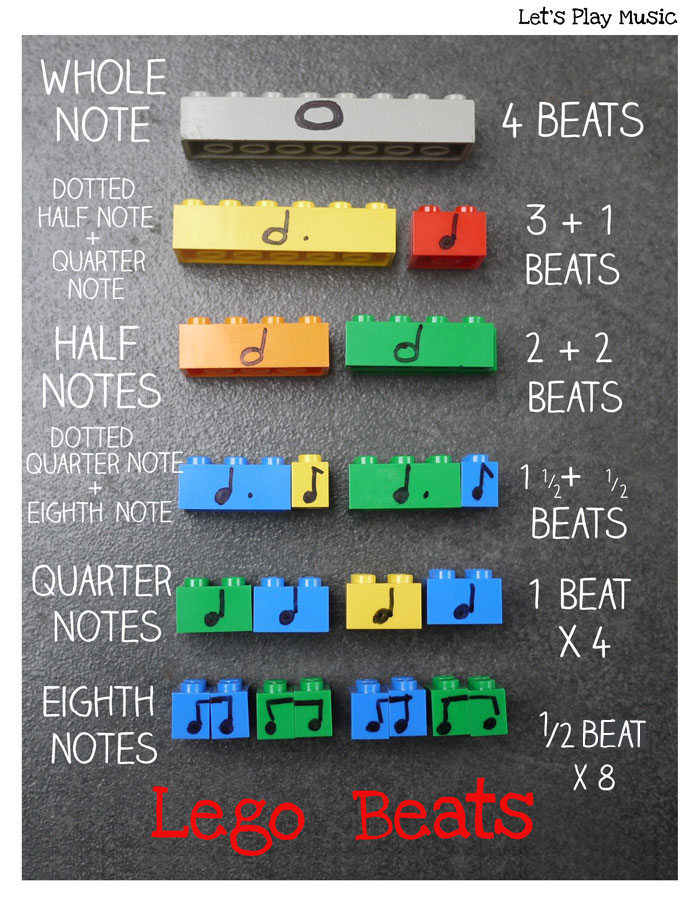
I know you teachers are a committed bunch and spend much of your holiday time thinking about next term and updating your lesson plans. With that in mind, I’d like to give you a little inspiration for your upcoming lessons. If this feels too much like hard work right now, save this blog and come back to it when you’ve finished lazing by the pool. Image of lego blocks with rhythms written on them with a marker pen.1. Have you ever created music using Lego? Use the different sizes and colours of the bricks to create Figurenotes tunes. You can then develop this activity to learn rhythm in standard notation. Maths teachers have been using this method for years! Did you know that you can buy individual lego bricks? This means you can create a pack  directly suited to your needs. All the Figurenotes colours are available from the lego site,  just make sure to order all the different sizes you’ll need. This is a great way to teach dotted rhythms, key signatures, and general rhythm reading skills in both Figurenotes and  standard notation. You could always put a call out for unused Lego in your local community too. There are some great templates for Lego music making on Pinterest. You could create some card versions, either large for whole class work, or small for  individuals and small groups. If your pupils are young or have difficulties with motor skills, you might want to start with Duplo. 2. Poly-pockets – you know, those transparent, plastic pockets used in ring-binders – make great miniature whiteboards. Pop a worksheet or empty score inside and use dry-wipe markers to fill them in. You can get dry-wipe markers in Figurenotes colours from IKEA if you want to create a tune or use colour within the worksheet. These poly-pockets can then be wiped clean, ready for the next pupil/class. If possible, it would be amazing to have small magnetic whiteboards for each pupil, but this is a good standby for when budgets are tight. If you want to share your pupils’ tunes, you can take photos of them and project them using Powerpoint for the whole class to play. What are the learning points you would like us to create worksheets for? Let us know in the Facebook group: Figurenotes – Let’s Make Music. We want to put many more up in the Resource Base and want them to be relevant to you. 3. Art Attack! You will need: paper plates, masking tape, paints in Figurenotes colours. There are so many games you can play using just these items, which can then progress further into note naming and reading standard notation. Take a look in the Resource Base, under ‘General’, for the Progression Games sheet. We love games and think they offer brilliant stealth learning opportunities. Paint the paper plates in Figurenotes colours – you can either keep them as circles, or cut them to the desired shape. Lay out a Figurenotes score using the masking tape, either on the floor or a table. Start with 4 bars and see if you can compose a tune using your paper plates. Try playing this tune on your instrument. You can take it to stage 2 by creating a masking tape stave and placing the plates in the appropriate places. Turn this into a quiz or a composition exercise. To take it to stage 3, write the note names on the back of the plates. Place them in the correct positions with the coloured side up. Then get your pupils to name the note before turning the plate over to see if they were correct. Let us know what other games you would play using these items in the Facebook group: Figurenotes – Let’s Make Music A map to track progress of the 100 day challlenge4. 100 Day Practice Challenge – All of my pupils love a challenge, when presented to them as such. If it is just a hard thing to do, then they aren’t playing ball, but as soon as it is a ‘challenge’, they are motivated to try. In order to build good habits and develop practice skills, we need to encourage pupils to practise consistently. The 100 Day Practice Challenge can be a great incentive to build those skills. You can do this in smaller chunks, should you or your pupils prefer, breaking it down to a week to start with and then develop from there. Some teachers create charts or use apps to record the practice sessions. Put landmarks within the timeline, such as gaining a sticker on your chart at 25 days. It is useful to have ideas for practice focus, as well as things to practise when you are away from your instrument. You could even make this competitive within your classroom or studio. Use one of the Figurenotes 100 Day Challenge maps or create your own. Colour in each shape in a Figurenotes colour to show you have completed your practice for that day. Get a sticker from your teacher every time you reach a number ending in zero. There is a bundle of sheets on the Resource Base, including 2 types of chart and some practice ideas for when you are with and without an instrument  – so holidays won’t get in the way of you achieving your goal! Take a look in the Worksheets section. Not a member of the Resource Base? Get unlimited downloads for a whole year for just £23.99. You also get a discount on our award-winning training days. The next Music Teacher’s Toolbox training is on Saturday 18th November, 2017. Book now!
Uncategorised

Thumbjamming with Figurenotes

At Drake Music Scotland, the charity behind Figurenotes, we love using Thumbjam. Obviously, we love using Figurenotes too, so we wanted to find a way to combine the two. Our Associate Musician, Clare Johnston, came up with a brilliant way to use Figurenotes with Thumbjam on the iPad.

Clare is a bit of a Thumbjam virtuoso. Watch her perform her beautiful composition for three voices on Thumbjam.

For Clare’s full instructions on how to combine Thumbjam with Figurenotes, take a look in the Resource Base.

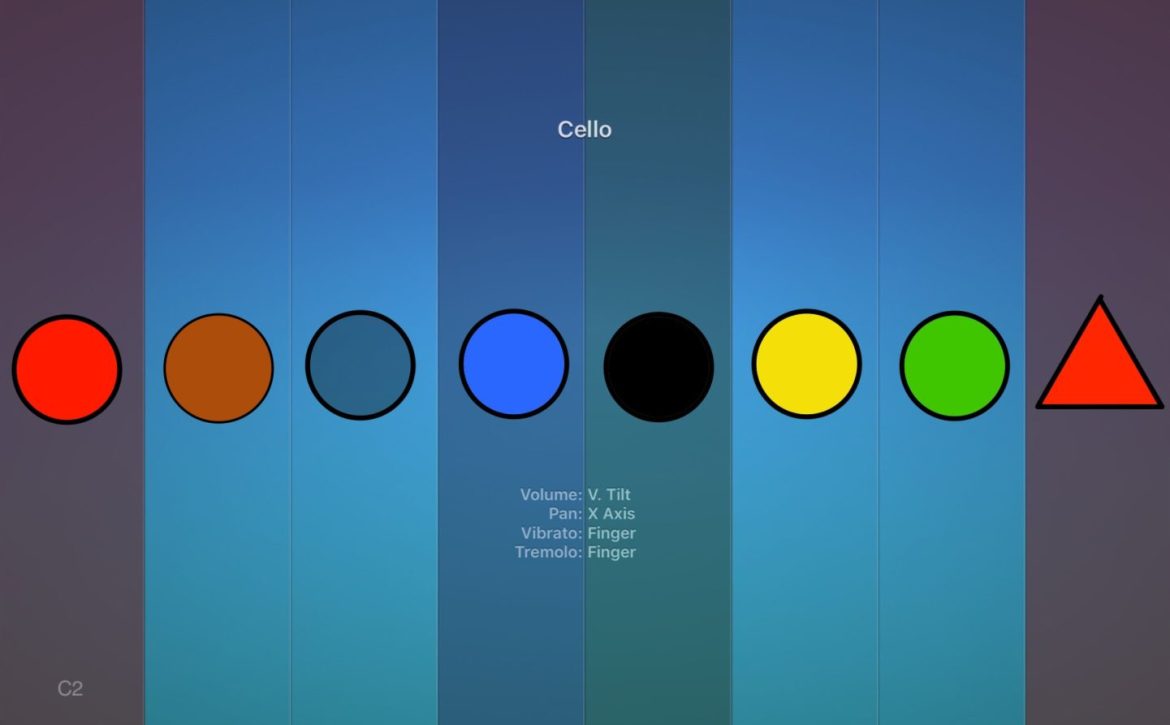
Clare created an underlay, which can be used with Thumbjam to show Figurenotes, just like in the image above. In order to do this, you will need a graphics editor capable of layers and transparency. Clare’s tutorial uses Adobe Draw on the iPad (free), cutting out the need for extra costs and an additional Mac or PC.

Set Thumbjam to the correct scale, octave, and span that you’ll be using for your piece; take a screenshot of this. Open the image in Adobe Draw so that it fills the whole screen. By creating new layers and adding a blue tint, Figurenotes shapes and colours, and setting them in the correct place on the screen, Clare has come up with a way to incorporate Figurenotes notation into Thumbjam performance. Once this process is complete, the original screenshot image is deleted, leaving you with an underlay for your Thumbjam screen.

Before moving across to the Thumbjam app, check whether the underlay image fills the whole screen by opening it using your Photos app. Then you are ready to move your underlay into Thumbjam.

  • Open Thumbjam
  • Go to the Preferences menu
  • Click on Options
  • Scroll down to Background Image
  • Click on Custom
  • Find your underlay image and click to use

The Figurenotes shape will disappear when you play that note, so some players may take some time to get used to this. They reappear as soon as you release the note.

Now marvel in the brilliance and simplicity of Figurenotes with Thumbjam. You could create several of these images for setups you use often, which means you can choose from a library of images without having to complete this process every time you want to combine Figurenotes with Thumbjam. Store the images on your iPad and you can call them up whenever they are needed. Remember you can get full, detailed instructions on the Resource Base.

Thank you, Clare!

Uncategorised

Music Teacher’s Toolbox – book your place now

You can now book your place on our award-winning training:

Music Teacher’s Toolbox – Saturday 18th November, 2017, 10:00 – 16:00.

Whether you are an experienced Figurenoter or you are just starting out, you will leave with a head full of ideas and inspiration.

There is so much to be gained from our expert trainers from Drake Music Scotland, and from each other. Come to network, find support, and gain new ideas to incorporate into your own work. This day is perfect for those teaching ASN/SEND, as well as those in mainstream education.

“Immensely useful. Gained loads of confidence, motivation, and success! Loads of ideas as to how to implement this work within our charity. Everyone was extremely helpful and enthusiastic. Thank you so much. A very interesting and informative day.”

We can’t wait to see you there! 

Places are limited, as we feel these days work best with small groups, so book now to avoid disappointment.

Join us in Edinburgh for a full day of Figurenotes training for £64.99. Resource Base members get a special price of £58.49 by using the code RB2017. Join the Resource Base to get this special price, as well as access to our online library of resources with unlimited downloads. You can get access for a whole year for just £23.99.

Uncategorised

Exclusively for Resource Base Members

Our award-winning training is back!

Due to a flurry of recent training enquiries, we thought we should open booking for November’s Music Teacher’s Toolbox. This time around, Resource Base members get exclusive access to pre-sale booking. Only a limited amount of places will be released, so make sure you grab yours early.

All members of the Resource Base will be sent an email on 25th May containing a link to the online booking form. Complete this form to reserve your training place. Payments can be made when places go on general release on 1st June. Contact Lauren if you don’t receive an email and feel you should have; please remember to check your junk folders first.

You can also use your Resource Base members’ discount code, RB2017, to get 10% off.

The programme is still being finalised, so if there is anything you’d like to see then please let us know in the booking form. We love to tailor these days to the people coming along, so get in early to get the most out of this award-winning CPD.

Not a Resource Base member? You can sign up here, getting access to our library of downloadable resources, discounts, and access to pre-sale booking.

We can’t wait to see you for some more Figurenotes fun!

Uncategorised

Snarky Puppy Workshop

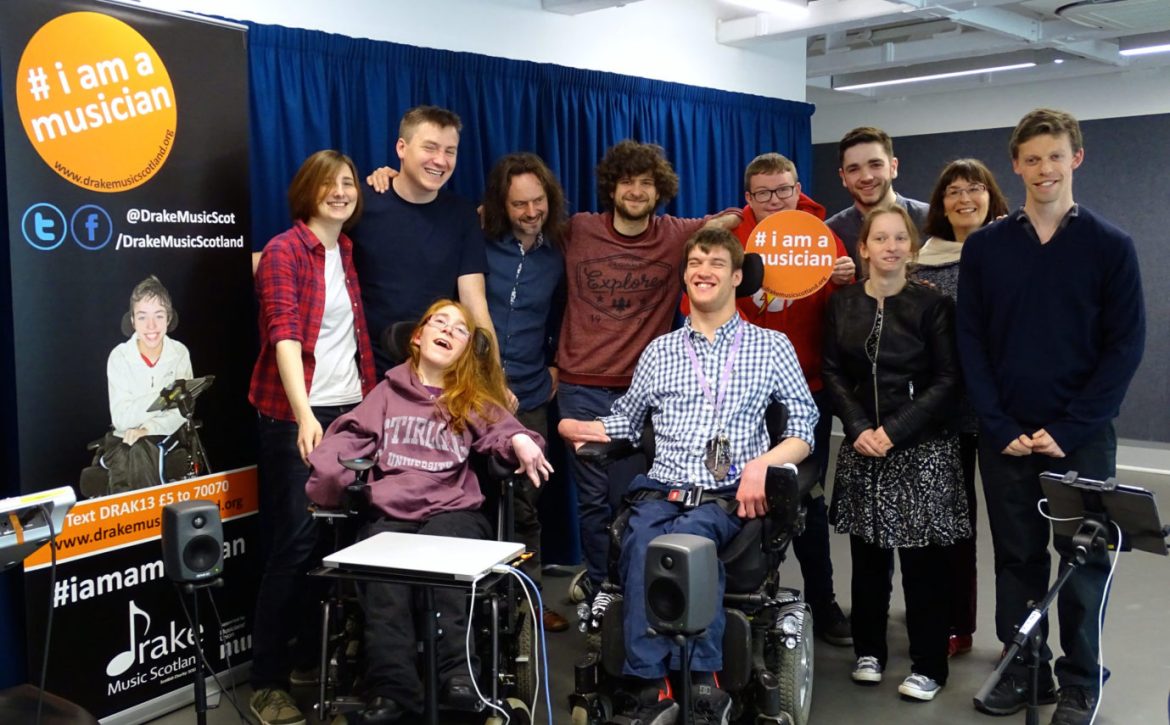
It’s not every day you get to workshop with a Grammy award winning musician. Michael League from Snarky Puppy kindly gave up his morning in Glasgow to work with members of Drake Music Scotland’s Digital Orchestra. This group uses all kinds of technologies to compose, play, and perform music: Notion and switches, iPads, synths, and more. Some of the members use Figurenotes, which helps them to compose patterns and ideas, creating a score to aid performance. The members of Digital Orchestra had a brilliant time. The importance of interesting bass lines and how they can change the feel of the music was a big learning point. They also learned a lot about improvisation and cues, as well as how to lead and follow. Leading a band that uses improvisation on a daily basis, this is something Michael is very experienced in. He had some really interesting nuggets of information to pass on. Thanks for a brilliant time, Michael. It was lovely to see such a mix of instruments working so well together. Everyone was really starting to see where their sound could be used within the piece, learning to lead and follow one another. If you haven’t seen Snarky Puppy live yet, pop it on the bucket list. They are phenomenal.
Uncategorised

Get Creative

Creativity needs nurturing. Parents and teachers often put the focus on technique and ‘getting it right’. I admit that I often get bogged down with this when teaching my violin pupils. Lots of older pupils get nervous when asked to compose or improvise, which can be a hangover from the ‘getting it right’ approach, prevalent in schools and at home. They are self-conscious and worried about getting something wrong. If we do not let pupils’ creativity flourish, then how can they be expected to put their own emotion and musicality into their playing? How can we expect them to be brave and create?

Figurenotes is made for creativity, with its many colours and shapes. We can use these colours to help pupils tell their own story through music. Below is one way in which this can be done in the classroom, but easily adapted for small groups or 1:1.

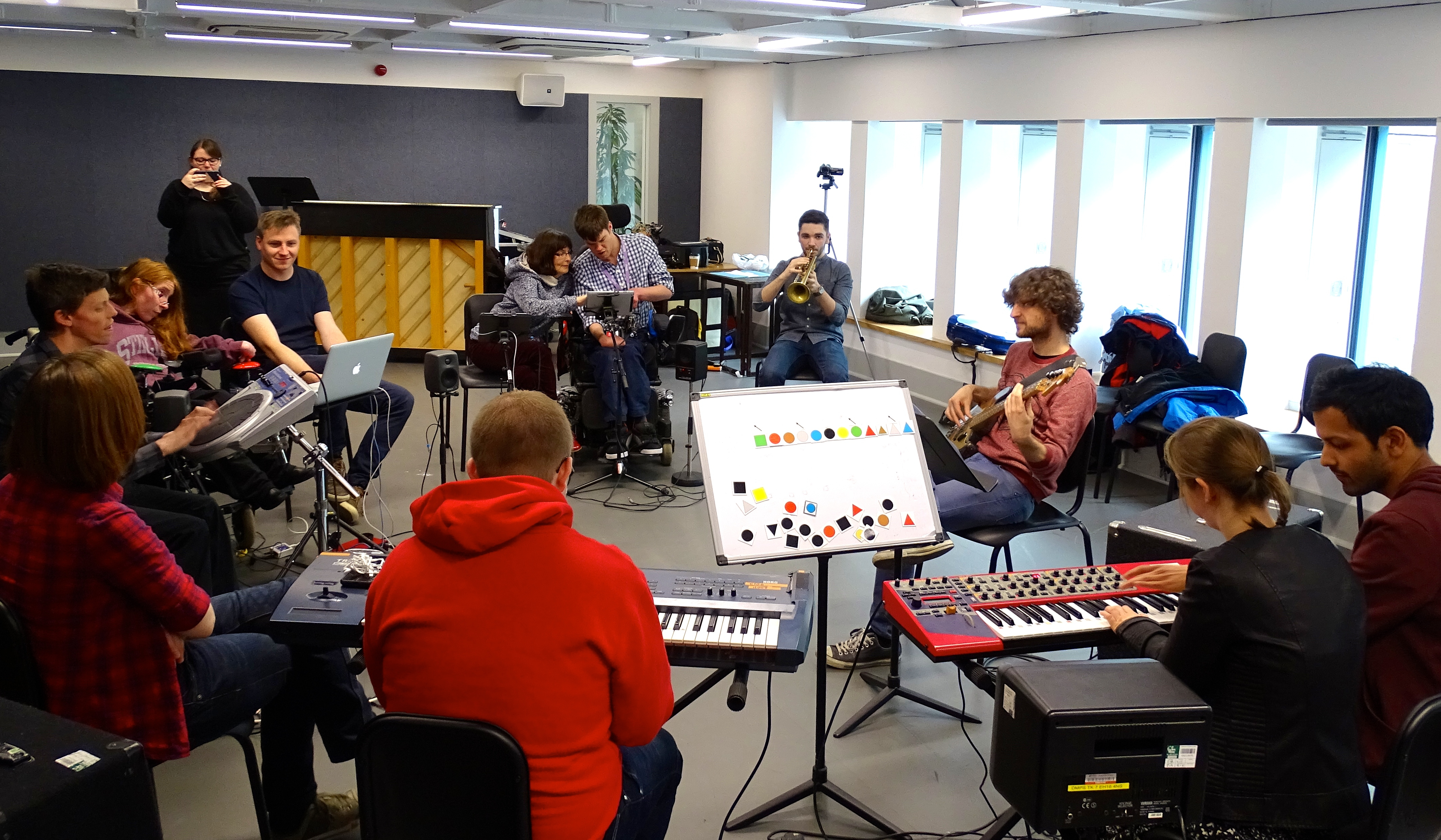
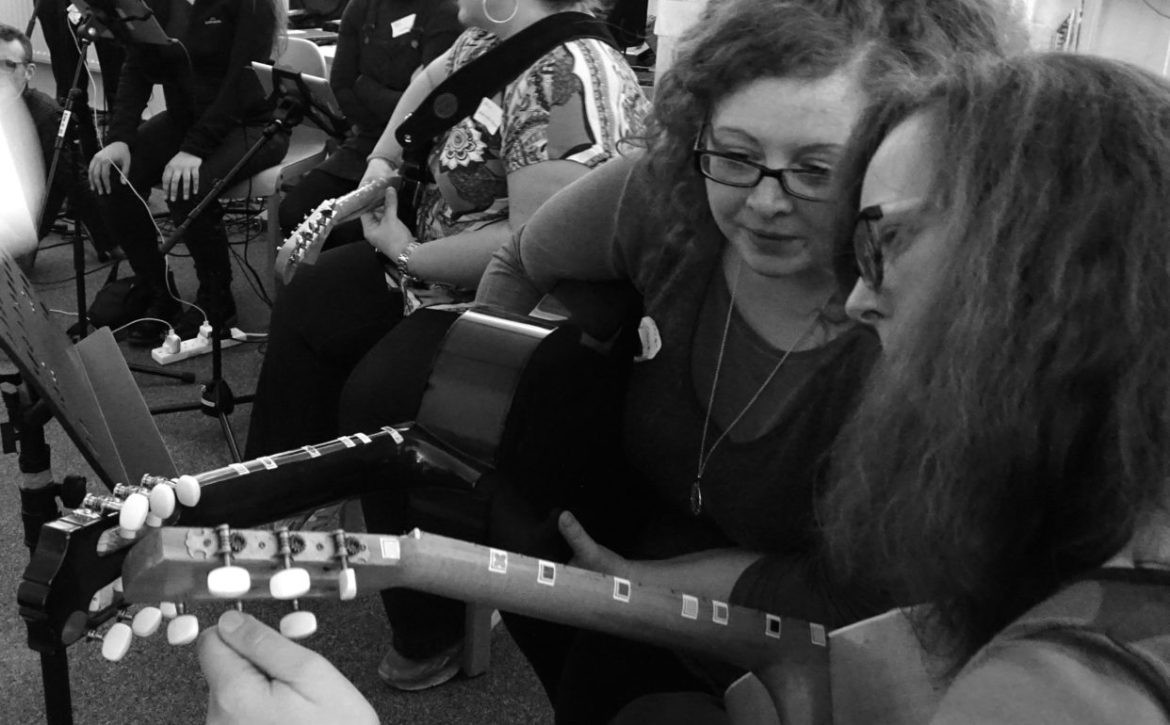
Set up your workspace into pods containing Figurenoted instruments, such as chime bars, keyboards, guitars, and hand percussion. You can adapt the complexity of these instruments, depending on how advanced the pupils are.

Divide your class into small groups. Each group is given a printed image, selected at random or picked by a member of the group, which they take to their pod of instruments. Give each group a time limit to come up with a piece of music based on the image they have. Half an hour is often a good length of time.

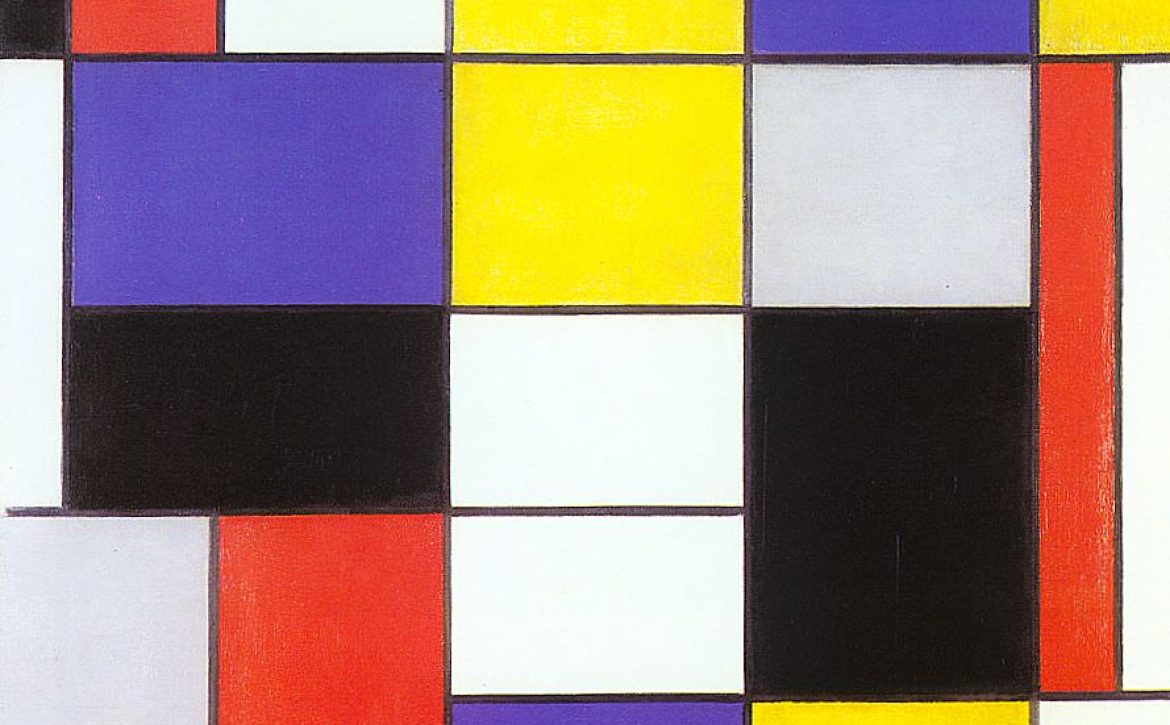
There are so many paintings, photographs, and other artworks online that you could use as inspiration. Abstract art is often best for this activity. Look out for images containing Figurenotes shapes and/or colours. Print them as large as you can, laminated, as the group may be using it as a graphic score.

We find that some groups want to use a magnetic whiteboard with Figurenotes magnets and whiteboard pens. This is an easier way to record exactly what they mean to play. A conductor could be chosen, who would guide the group through the performance by pointing at the appropriate section of the image/whiteboard/score.

Then it is performance time! Let each group show the image they have used, perform their piece, and then discuss the reasoning for their composition. Were they matching the colours? Did they pick up a mood from the image that they tried to conjure in the music? Nurture their reasoning and ask questions about how and why they chose to do certain things. Was it a happy piece? Did they change dynamic at any point? Why?

Depending on the ability of the class, you can develop this activity using more complex images, instrumentation, or moving on to poems and film.

We have often used this activity to train teachers and support workers and have found that they are initially terrified. Once they have a little guidance on how to unpick the image – find the colours, find the mood, play with sounds – they have flourished. The pride at the end of the session is always my favourite thing about this exercise.

To make this a multi-disciplinary exercise, try painting images first, or taking photographs of colourful patterns found in nature or in your school. You could integrate maths by discussing tessellation and using Figurenotes shapes to do that. You could write poems or stories and develop music for them. Creating your own sources of inspiration can help from a copyright point of view too, as you need to make sure the images chosen are in the public domain. A quick Google search of colours, shapes, and abstract art should give you a few results, but you can take a look at the National Galleries’ website for inspiration. Search for contrasting images and the emotions often associated with the colours – bleak grey, bright red, calming blue, harsh black, optimistic yellow, etc. Mondrian is a perfect start for nervous pupils, as much of his work is a Figurenotes score in itself!

Try this out with your pupils and share your results with us in the Facebook group. Keep it simple at the start in order to keep fear and nerves at bay. You can build up later, once you’ve gauged what level your group is at when it comes to unleashing their inner composer!

Uncategorised

These Boots Were Made for Progressing

“It has been so awesome! Having fun just reminded me to be using Figurenotes more. Loved it all!”

“Renewed enthusiasm with new ideas and different ways of working. Excellent day. Great fun. Well done!”

“Thank you so much for a brilliant and inspiring day! Loads of questions answered. The presenters were great!”

We had an absolute ball at the Music Teacher’s Toolbox on Saturday 25th March. Thank you to all those that travelled from across the world to be with us. The record for most miles travelled firmly lies with our Australian participant.

During these CPD days, we like to solidify what we’ve learned throughout the course in a big play-together at the end. This group played a cracking rendition of Nancy Sinatra’s These Boots Are Made For Walking, with everyone trying all the instruments available, from bass guitar to keyboards, ipads to percussion. This will be made available through the Resource Base, for those that couldn’t make the course. We whizzed through some Ray Charles, a bit of Stand By Me, and even managed to slip in The Police during a mash-up.

Fiona Sharp showed us how to move from Figurenotes to standard notation, bring creativity and fun into the process. Emma Lines helped bring numeracy into our music lessons by exploring pulse and rhythm, with repertoire from BBC Ten Pieces. Lauren Clay led a hands-on session, walking everyone through the Figurenotes software to enable them to make their own resources. All of this was topped off by rhythm games, which got very silly indeed (sheep noises galore), forming Figurenotes bands, and more.

Feedback has been wonderful, as always. Remember to save the date for the next edition of Music Teacher’s Toolbox. The next one will be Saturday, 18th November 2017. Sign up to our newsletter to be the first to find out when booking opens. We always get fully booked, so make sure you get your place before they all get snapped up. Everyone on the waiting list for March 25th will have the opportunity to book first for the November date.

Thanks to everyone that came and made it such an enjoyable day. Remember that lots of the resources will be available to download from the Resource Base.

Uncategorised

What’s in your Toolbox? More places!

You booked it – we made it bigger! Due to a rush of bookings, we have decided to release more places for our Music Teacher’s Toolbox on 25th March. Get in quick before we run out of space again. You’ll get expert guidance on using Figurenotes with different instruments and in different scenarios. You’ll learn how to get your students to progress to reading standard notation. Whatever your teaching situation, there’s a way for your music lessons to incorporate inclusive, cross-curricular learning using Figurenotes. Want to create your own resources? You’ll be guided through the software, allowing you to tailor your resources to your pupils’ needs. With warm up ideas, games, and personalised advice, you’ll leave inspired and ready to shake up your teaching. It is also a great chance to network and share good practice. Take a look at the full programme and complete the booking form, so that we can tailor our sessions according to your needs. You can also pay online or request an invoice at checkout. Get in touch if you need to send a purchase order. We’d love to have you there, but you’ll need to book soon, as we always get fully booked!
Uncategorised

New Resources with that Friday Feeling

Friday Afternoons Logo - coloured dots below those wods

We are delighted to announce an exciting new partnership with Snape Maltings (formerly Aldeburgh Music).

Their Friday Afternoons project encourages children and young people to sing. Since 2013, there have been more than 80,000 participants, from all around the world. New songs are commissioned annually, with the most recent compositions from Jonathan Dove, creating a song bank of repertoire for children and young people’s voices.

To add to their inclusive resources, Friday Afternoons has asked us to produce Figurenotes scores for some of the newest songs. Five of Jonathan Dove’s songs are now available in Figurenotes. Both stage 1 and stage 3 are available to download free from the Song Bank, allowing your pupils to progress towards reading standard notation.

If you’re heading to the Music Education Expo on Friday 10th February, make sure you visit the Friday Afternoon stall (M1) at 3pm for the launch.

The resources make reading music more intuitive, particularly when it comes to rhythm. Figurenotes is ideal for class teachers who want to get their whole class singing and playing together, whilst letting students progress through their reading at their own pace. The system is truly inclusive, so those with ASN/SEND can access the same resources as the rest of the class, removing those barriers that can exclude some pupils. Get your whole class started on Figurenotes and let each pupil move onto the next stage when they are ready.

To find out more about extra resources and training, sign up to the Figurenotes mailing list. Like us on Facebook and Twitter.

To learn more about Friday Afternoons, take a look at their Facebook and Twitter.

If you want to improve the delivery of your sessions, making music truly inclusive, come to our Music Teacher’s Toolbox for excellent training. Our award-winning CPD is delivered by Drake Music Scotland on 25th March, 2017. See the full programme here.

Uncategorised

A Special Launch in London

Are you visiting the Music Education Expo this Friday?

Make sure you’re at stand M1 at 3pm. 

We are launching some exciting new resources in partnership with Friday Afternoons.

Snape Maltings (formerly Aldeburgh Music) is hosting the launch at the Music Education Expo with a visit from Emma Lines from Drake Music Scotland, the charity behind this site.

Visit the Friday Afternoons stall (M1) at 3pm on Friday 10th February

Look out for another blog post on Friday explaining the resources and more about the Friday Afternoons project.

To find out more about resources and training, follow us on social media using the buttons below.

#lmsmart_search_6adc3dfacbdba:hover { color: rgba(30,40,69,1) !important; }#lmsmart_button_6adc3dfad3a4a { color: rgba(7,47,96,1); }#lmsmart_button_6adc3dfad3a4a:hover { color: rgba(7,47,96,1); }#lmsmart_button_6adc3dfad3a4a { border-color: rgba(30,40,69,1); background-color: rgba(249,232,20,1); }#lmsmart_button_6adc3dfad3a4a:hover { border-color: rgba(30,40,69,1); background-color: rgba(0,166,214,1); }#lmsmart_button_6adc3dfad617f { color: rgba(7,47,96,1); }#lmsmart_button_6adc3dfad617f:hover { color: rgba(7,47,96,1); }#lmsmart_button_6adc3dfad617f { border-color: rgba(30,40,69,1); background-color: rgba(249,232,20,1); }#lmsmart_button_6adc3dfad617f:hover { border-color: rgba(30,40,69,1); background-color: rgba(0,166,214,1); }