Guest Blogs

Guest Blogs

Guest Blog: Creating a Figurenotes Curriculum

Mark Browne and Jill Reeves have been using Figurenotes to great effect at Craigmarloch School, so we asked them to share their experience.

Figurenotes has revolutionised music here at Craigmarloch School. Its visual style and literal colour-matching logic has engaged pupils at all ages, stages and levels, and it has become integral to learning across the school. At Craigmarloch, a school for young people with a wide range of Additional Support Needs, music is a key part of the curriculum for every young person (aged 4 -18). As a teacher new to the school, and enthused by the possibilities of Figurenotes, I have been keen to embed Figurenotes within a curriculum that enables learners to achieve early to second levels of Curriculum for Excellence. I have seen for myself the difference that it has made to learning here and it has opened the door for young people to experience a much greater variety of music making experiences.
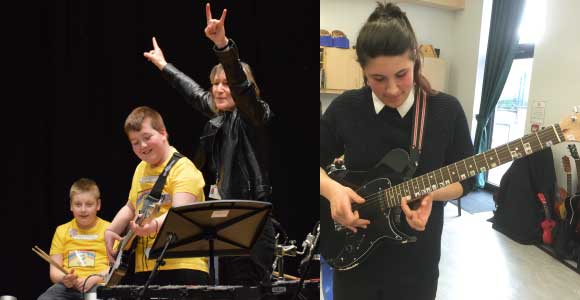
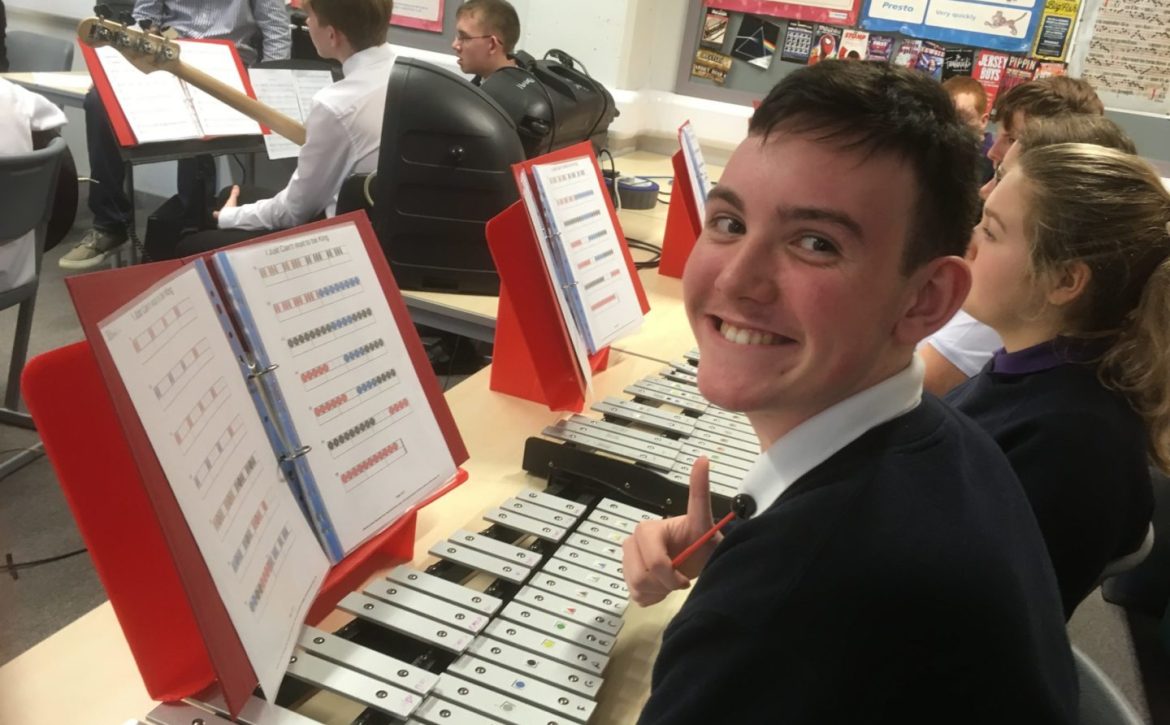
Craigmarloch students rock the guitar!

The first challenge of this was setting up the classroom and the instruments to be ready for young people to use Figurenotes from the start of the current school year. Of course, there have been colour coded notation schemes in existence before – the evidence of this was there in the many stickers that embellished the keyboards and glockenspiels throughout the classroom. In order to “launch” Figurenotes effectively, these needed to be painstakingly removed and replaced, a long and laborious process involving nail varnish remover and lighter fluid! Actually it turned out that metal polish worked best, so perhaps this is a useful “hot tip” for anyone yet to begin their journey into the realm of Figurenotes!

Having done this, it was time to create new resources designed around the new notation system. The first of these was a keyboard course that I hoped would (a) encourage young people to start with a secure hand position on notes C to G and (b) enable pupils with a range of abilities to be able to play together even at an early stage in their learning. With its three distinct stages, Figurenotes seems custom built for differentiation and this has meant that more able pupils would be able to see the progression to standard notation. So I began the process of composing simple keyboard pieces – with silly titles like “Semibreve Siesta” – and printing them in all stages of Figurenotes. The course comprises seven pieces – the first four of which can be played together – and move to an arrangement of the Largo from Dvorak’s New World Symphony. All pieces involve fingers 1 to 5 in the right hand and gradually progress from a first piece using four beat notes only to the final piece using a range of different note lengths.
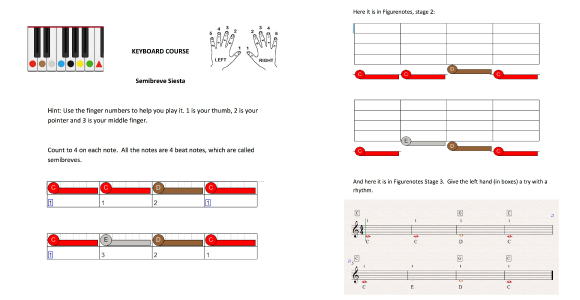
Worksheet with a tune made up of semibreves using C, D, and E. This progresses to stage 2 Figurenotes, then stage 3.

Mark’s worksheet to teach semibreves in 3 stages of Figurenotes

Figurenotes has also been embedded into more diverse schemes of work. A unit on riffs and ostinatos was produced, using Figurenotes exclusively. A study of Mars from the Planets involves clapping the opening rhythm using Figurenotes – a challenge to create, using a 15 beat bar; not the way Holst wrote it of course, but effective and accessible – while later on in the unit, differentiated parts for Billie Jean and Smoke on the Water were produced.   One of the most popular recent songs in the school, Uptown Funk, forms the final group performance of the book. The different riffs are presented separately with a final “solo” keyboard version using Stage 3 of Figurenotes.
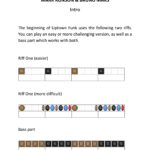
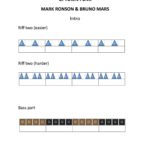
Doing this can all be achieved by simply using the Figurenotes software, but if you want to get your musical examples into a booklet format, using the screenshot tool in Microsoft Word and selecting screen clipping means you can do just that. This enables you to add (for example) pictures, words of explanation, cross-referencing numbers linking to Experiences and Outcomes (!), or artistic use of borders and shading. The same method can be used to insert music onto PowerPoint, especially useful if you are guiding learners through a unit and are using Figurenotes to exemplify particular concepts.
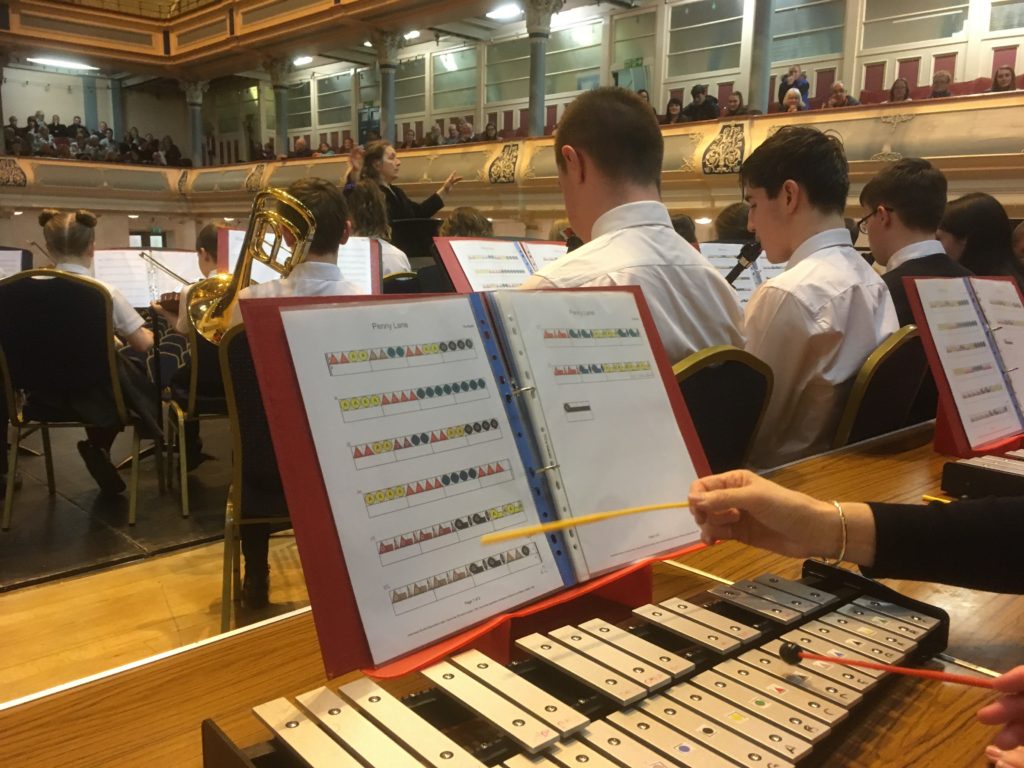
Performing with Port Glasgow High School

None of this seems revolutionary in any way, but I hope this has shown how Figurenotes can be used as an intrinsic part of the music curriculum, rather than as an add-on extra. At Craigmarloch, standard notation still forms part of the music curriculum, particularly for more advanced learners, so it was important to me that any new notation system would form part of a logical progression to reading and understanding standard music notation. With its different stages, Figurenotes does offer this, and it gives all learners – with or without Additional Support Needs – an accessible way to enjoy, and benefit from, a diverse range of musical experiences.

Mark Browne – Music Teacher, Craigmarloch School

We’ll make all of Mark’s resources available through the Resource Base, so you can download them and get cracking. Don’t forget to order your stickers for the classroom and download the software to help you create resources of your own. Thanks for sharing, Mark.
Guest Blogs

Guest Blog: Focus on Composing 3 – Composing at Hampden

In part 3 of her series of guest blogs, Matilda Brown lets us peek behind the scenes at her work with pupils from Hampden Primary School. You can see tips and ideas of how to get to this step by reading parts 1 and 2 of this series.

Part 3 – Composing at Hampden

Fun with colours, fun with shapes…an unstoppable urge to play that tune again

As mentioned throughout this series, I am working with two groups at Hampden Primary School. I showed both groups an example of how to make a simple Figurenotes tune. I chose 3 notes in front of the pupils, from middle C (red circle) to the C above (red triangle). I moved the order of them around and played these different orders on the keyboard until, as a group, we were all happy with the order of the notes/colours/shapes of the tune.

This introduction was useful, as the pupils recognised the colours and shapes from their warm-ups and were very comfortable with the task. They seemed to identify how to make up a tune using colours they were already familiar with. The pupils voluntarily wanted to choose their own 3 colours. I played some of their tunes on the keyboard and put my own accompaniment to them. It was a lot of fun and very easy.

Over the weeks we have selected two songs we would like to develop. Group 1 loves their animal song and group 2 created exciting words for our Pirate Song. Group 2’s piece is more developed. We have recorded our own samples, using our voices saying some Pirate words, sounds and rhymes. We have put these recordings on switches and created an exciting sea soundscape using switches and percussion.

Composing our first tune with Figurenotes

Most pupils chose colours, then played them on the piano or xylophone. I was really impressed with how quickly they follower their colours. They moved the colours around until they decided on the pitch order they liked best. We introduced rhythm, note length, and timing after this initial process.

One pupil improvised to the Pirate Song’s chord structure, which meant he chose his notes by playing them, then looked to see which colours matched the notes.

Below are three examples of how different approaches work with different pupils. If you come across disinterested and distracted pupils, connect with what they like to do or are doing at that moment. There is always a way to connect.

Abigail

When working one to one with Abigail, I didn’t think she would stay in the room without her peers, and I certainly didn’t expect her to choose colours. She was very happy and enjoyed seeing all the coloured stickers laid out in front of her.

We sang the song we had been working on in our group work. This helped to engage her in the harmony of the composition. The task gained momentum quickly. The more colours she selected, the more excited she became. We made two tunes and she chose her favourite. Expression was brought in when Abigail decided her tune was going to be loud and represented an elephant. She wanted the tune to be played slowly, with the last note sustained.

Cameron

Cameron usually likes to observe and listen, rather than take part. In our one to one session, I told him all he had to do today was pick a colour. Without further prompting, he said ‘grey’ and pointed to it.

“How many colours do I have to pick?”, he asked. I said he could choose as many as he liked, but I could see that this confused him. I suggest we pick 3 to start with. He chose 3 colours, put them on the piano, then played it perfectly. It was amazing. Cameron has never played piano before and doesn’t usually join in the group straight away, so this was excellent.

Paul

Paul created his Figurenotes tune through improvising on the piano. We played and sang the Pirate Song, that he had helped to write in the group. This helped centre him in the right harmony and sound. I suggested that his improvisation would work best for this song if he used the white keys on the piano. He played for a while, taking this on board.

We then selected the notes/colours he seemed to use the most in his improvisation. We used the coloured icons, so Paul could move them around to create his tune. He added more and finally came up with his tune and a structure with the song.

There are many ways to connect with pupils’ creativity and get composing. The pupils I was working with have ASN/SEND, but everything I have discussed can be used for mainstream pupils too. Get composing with your pupils, regardless of the setting. You’ll be amazed at what can be achieved using Figurenotes as a tool.

Did you miss parts 1 and 2? Read all our guest blogs, full of advice and teaching inspiration. 

Guest Blogs

Guest Blog: Focus on Composing 2 – A Composer’s Perspective

Last week, composer and community musician, Matilda Brown, laid out how she introduced Figurenotes and the idea of matching to her music groups. If you missed it, you can read about it in last week’s blog post. In part 2 of the series, Matilda tells us about Figurenotes from a composer’s perspective. 

Part 2 – A Composer’s Perspective

Fun with colour, fun with shapes, mosaic patterns…a tune to make

I find it very simple to compose with Figurenotes. I not only write tunes with pupils, but I also use Figurenotes for my own compositions. It’s good to use different methods of writing, it keeps you fresh and makes you hear things differently – and colours make it fun!! I remember the comedy writer and director (Father Ted, IT Crowd, Black Books) Graham Lineham saying to make the writing process fun by using colour and big pieces of paper – to kid yourself you are having fun, because the idea of writing something from scratch can be very daunting and tedious.

Sometimes this is what I feel when writing in standard black and white notation. Figurenotes makes it easier for me to make sketches and short tunes that can be developed later. It can get “serious” sometimes working with standard notation and it can make you write things you think you should be writing rather than what you really want to write. It can over-complicate an initial fun and exploratory process.

Pupils, with a number of ways to learn, can work with Figurenotes immediately. It makes composing fun, simple, and rewarding straight away. For example: Choosing 3 colours, any 3 colours, playing them back, moving them around until you like what you hear is fun and creative. As facilitator, it’s then up to you to create the next platform in which the pupils can develop their tunes. Introducing rhythm and how the spacing of Figurenotes works, how to make notes longer and shorter, how arrows can give you even more options for notes, and how chords can fit with tunes.

You not only need to be able to help the pupils find their tune, but you need to be able to “hear” what the pupil is composing. That is what makes a good facilitator – waiting long enough until you know what they are trying to achieve and then helping them move forwards, whether that is deciding which key or mode fits their tune, or finding chords that might work well as an accompaniment.

If you find too much freedom with the pupils a little daunting for yourself as facilitator, you can give the pupils a specific palette to work from (e.g. the notes that fit the mode or scale of a song or piece of music you have already created in a group, or the tonic note to start and end the tune if necessary) Then it is simply a matter of building and developing the tune or chords from there.

It’s just like how many composers work; adding or taking away until you have the tune you desire. You must work intuitively with the pupils and observe all their choices when composing with them.

If the composer/pupil likes to work in a more theoretical and considered way right from the outset, through processed composition perhaps, Figurenotes allows you to do this too. You can choose colours first and create patterns from the colours before you even hear them.

But most of all, keep it fun!

Next week, Matilda will be showing us how she develops creativity and composition skills in her pupils at Hampden Primary School. You can see the rest of our guest blogs on our Figurenews page.

Guest Blogs

Guest blog: Focus on Composing 1 – Introducing Figurenotes

In a new series of guest blogs, Matilda Brown, composer and community musician, gives us an insight into how she uses Figurenotes with pupils. Matilda uses her work in special schools to demonstrate particular ways into using Figurenotes, which work wonders with beginners of all ages. Look out for part 2 and 3 over the next couple of weeks. 

Part 1 – Introducing Figurenotes to Group Music

Fun with colour, fun with shapes

I love getting to know my new music groups through fun warm-ups, singing songs, conducting games, and improvisation. No matter what level of musical experience the pupils have had in the past, this kind of group work creates an inclusive environment where everyone’s musical say is important. This practice also helps the pupils become aware of each other in the space, get to know each other’s likes and dislikes, and how it feels to put sounds together in practice for playing in a band.

Where does Figurenotes come in?

Figurenotes can become part of this initial process. Here are a few example of how I introduce Figurenotes to groups:

  • Colour Song Warm-up – Introducing colour through a song. Pupils love singing about their favourite colours.

Benefits: Introducing Figurenotes colours through a song can really help pupils to become comfortable working with colour in the future.

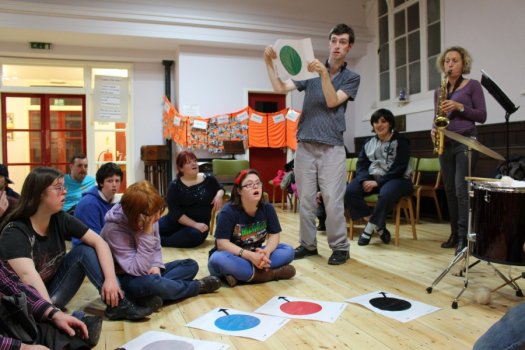
  • Play What You See – Pupils choose a colour. They then choose an instrument and match the instrument to their colour. When their colour is held up by the conductor, they play their instrument.

Benefits: It’s fun! This starts to introduce the pupils to following colours and can help with following a Figurenotes score. You can also introduce call and response technique.

  • Two Colour Conductor – Each pupil selects an instrument. The pupils are split into two groups; each group selecting a colour. For example, Group 1 is red (C) and group 2 is blue (F). When the conductor holds up the Figurenotes red circle, group 1 will play their instruments. You can introduce a chime bar that matches these pitches, so that your pupils start to recognise the pitch of the colour.

Benefits: Pupils begin to hear red as C and blue as F, as well as practising following both colour and the conductor. They also have to be aware of what the others in their group are playing, try to play together musically, whether playing to a beat or playing without a beat.

I develop this game by using different Figurenotes shapes to introduce octaves. I also use guitar chords C and F, for example, as an accompaniment. This helps the pupils hear the pitch of the note with the chords.

There are many other ways to use Figurenotes in warm-up exercises. You could focus on rhythm, learning about rests and sustaining notes. This is easily done using a short rhythm in a Figurenotes bar/box.

Examples from my work in Hampden Primary:

I work with two groups at Hampden and we use some of these warm-ups in our groups.

Group 1 love using their bodies to move to music. They like copying a leader/conductor. After working like this to a simple backing track, I assigned each pupil a colour. They would move their bodies when the conductor held up their colour. This was fun and gave them freedom to move to the accompaniment any way they liked. The pupils were learning about following colour and playing in turn. Their bodies became the instruments to simple Figurenotes notation.

In my second group, Paul was the conductor and he wanted to know how long to hold up the colour for. This was a great question! We decided that Red would be played for 1-5 seconds and Blue would be played for 2-8 seconds. The pupils love counting, so I started to introduce different length notes and rests.

After getting to know my groups, we start to write our own songs and structured pieces of music. It’s also productive to schedule in one to one composing and performing sessions, creating new tunes or finishing songs we started as a group. This is when I use Figurenotes a lot. I’ll explain more on this subject in part 3.

You can read the next stage of Matilda‘s blog, A Composer’s Perspective, next week. The final blog will explore composition with her groups at Hampden Primary School. 

Guest Blogs

Guest Blog: Figurenotes Collaborations

Sam Dook from ‘Carousel’, a disability led arts organisation in Brighton, tells us of the joys of collaboration and composition, along with some great advice on which resources to use to get you started.

For the last two years we have explored implementing Figurenotes in our music projects. It has proven to be very successful; perfect for supporting artists with learning disabilities to create and notate original music, as well as learning to play instruments. We have found Figurenotes to be incredibly inclusive, it enables people of all abilities to participate in group musical activities.

using-figurenotes-flashcards

Project participants use Figurenotes flashcards to explore sound  

When using Figurenotes in sessions, it is very useful to have a selection of colourful resources to work with. One of the first resources we used was the ‘Five Note Row’ (available from the Figurenotes Resource Base). I would thoroughly recommend this resource. It is a great way to quickly see how a simple bass line and melody can be created through a simple choice-making process. When trialling this resource, I found it worked brilliantly to assign the playing of the bass line part to one person or group, and the melody part to another person or group. This makes for a great teamwork exercise too.

We have also experimented with creating our own Figurenotes resources. A pack of laminated flashcards is really useful if working with larger groups. You can get flashcards of colours and chords from the Resource Base. The latest resource I tried to develop was a set of handheld cards in Figurenotes colours, including a joker card.

Figurenotes Cards

Handheld Flashcards

The idea was to use these cards in the early initial assessment stage of implementing Figurenotes in a project. The cards were a perfect size for a simple colour-matching exercise or a game of snap, both of which will inform the facilitator of individuals’ abilities to match the colours, which is an integral skill needed when working with Figurenotes scores etc.

We are still thinking of variations of games you could play with these cards. One idea would be a game whereby at some stage in the game you would make a musical part from the hand that you are holding by laying the cards out and playing the sequence. I think there could be many ideas on these kind of themes that would make for fun, engaging ways to explore music using Figurenotes. You can pick up the resource here:Figurenotes Cards.

One piece of advice, if you are making your own resources, is to use the same shades of the colours that are already present on official Figurenotes resources, as the colour shades work much better if they are universal across all the resources.

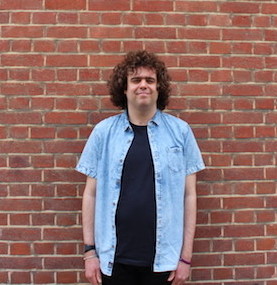
A new project of ours, called ‘The Carousel House Band’, aims to further explore Figurenotes. The band is embarking on a variety of commissions, collaborations and challenges to test the flexibility of the system. The band’s most recent collaboration was with learning disabled singer Daniel Wakeford, who is known to many as one of the stars of the Channel 4 programme ‘The Undateables’. Daniel is a talented singer and songwriter.


Daniel Wakeford

The band wanted to explore writing an original Christmas song with Daniel. We used Figurenotes as a way of exploring creating chord sequences.

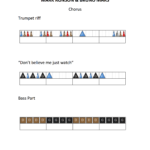
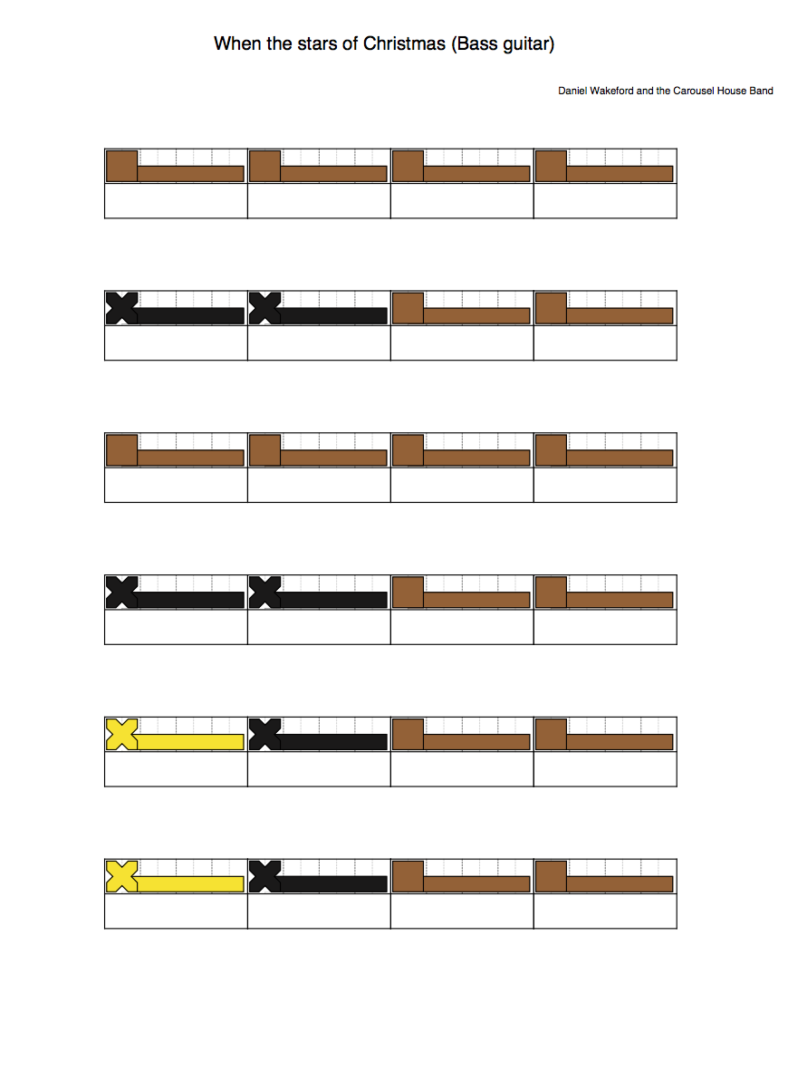
Daniel wrote original lyrics and explored melody and composition with the band. ‘When the Stars of Christmas’ was the result of this collaboration. You can hear it here. The bass guitar score is at the end of this blog.

The band performed the song live to an audience at the Blue Camel Club, a learning disabled led club night in Brighton

bcc-dec16-by-paulmansfield-013

The Carousel House band with Daniel Wakeford

The Carousel House Band will continue to explore using Figurenotes in different settings throughout the year. I am writing a regular blog about the journey of the project.

Learn more about Carousel and their work in Brighton here.

figurenotes-score-for-bass-guitar

Guest Blogs

Guest Blog: Figurenotes in Uganda (via Canada!)

We wanted to start 2017 with some positivity, so when Bern MacLeod emailed to tell us how they’ve been using Figurenotes in a project in Uganda, we thought we should share it with you all.

How do I tell the story of Figurenotes in Uganda?

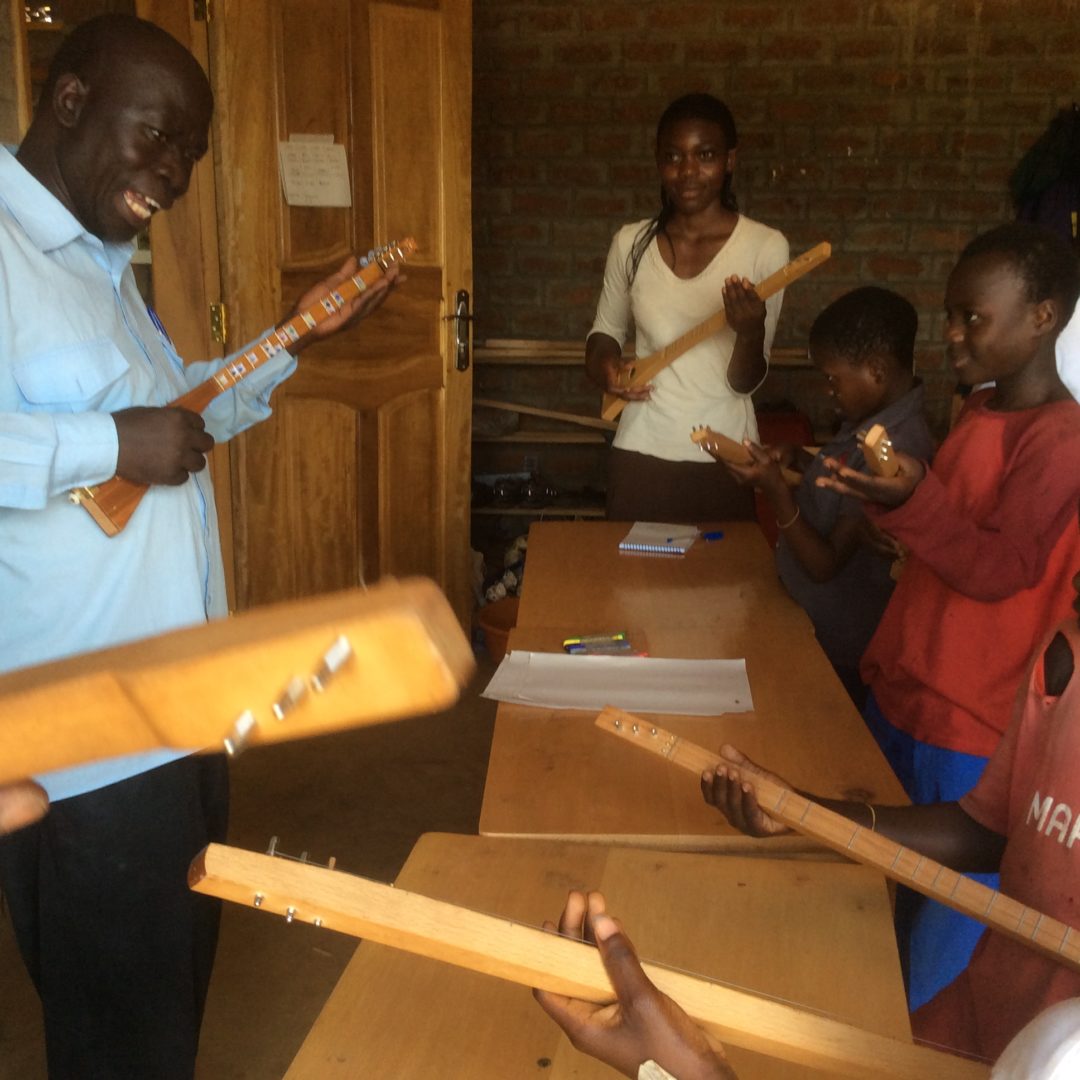
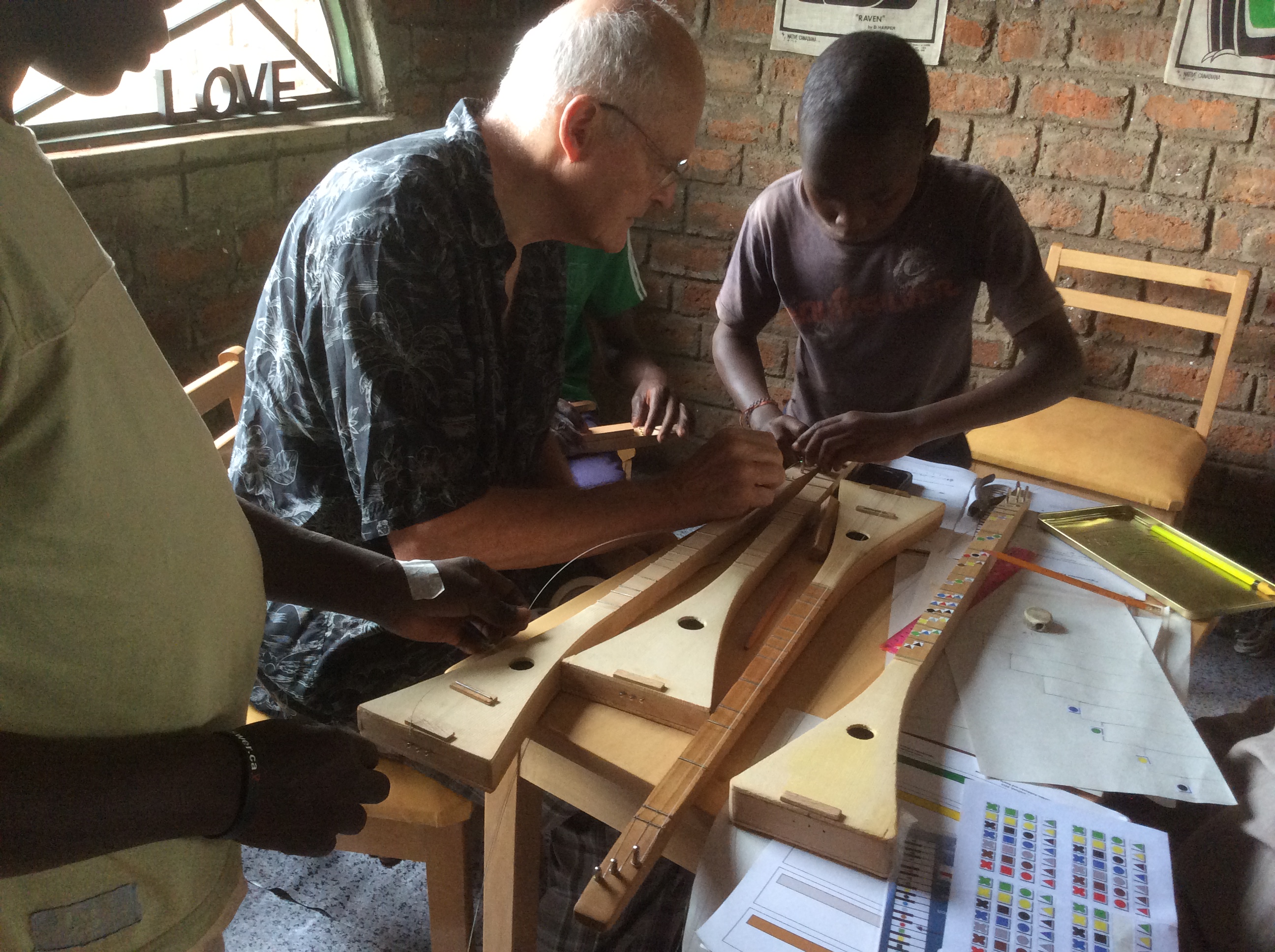
 In 2015, we conducted workshops where 22 orphan students from the countryside used the tools and jigs that we brought to Mbale in Uganda to make their own 3 stringed diatonic stick dulcimer. All of them successfully made a dulcimer. We then contacted a wonderful Ugandan musician who immediately took to using Figurenotes to teach the children.

 Over the past year a 30 piece orchestra has been formed at one primary school. All of the students have learned to read Figurenotes and all are able to play the dulcimer. Some of the children play drums, shakers and thumb pianos, as well as Ugandan harps and violins. You can see some of the progress in the photos and videos below.

Figurenotes was very useful since many of the students are not fluent in English   and there are many local dialects. In fact, teaching in Figurenotes improved their English. The teacher, Mr Ogarima Johnson, is writing a book on his experiences with Figurenotes.

 img_0530

We have refined the process of making a dulcimer into a kit, which requires the students to do a minimum of woodwork, while retaining their pride in constructing their own instruments. In a small community in British Columbia we had students construct, finish and tune their dulcimers and learn ‘Twinkle, Twinkle, Little Star’ and ‘Row, Row Row, your Boat’ over two full days. Because the dulcimer is diatonic in G and open tuned, it is difficult to play a clashing note. As the students progress, we can add frets to permit a number of keys to used.  

 The joy and pride of the students is a wonderful experience. There is a better description of this in loveistheanswer.ca under the music project education heading. I would be very interested in hearing from others teaching students of other cultures and languages as well as anyone who wants to have children make their own instruments.


Bern MacLeod and Judy Storr

Vancouver BC

Canada

We hope Bern’s story has inspired you to start 2017 with positivity and enthusiasm. Happy New Year!

img_0317

Guest Blogs

Guest Blog: A Short Flight to Standard Notation

Fiona Sharp uses BBC Ten Pieces and Figurenotes in perfect harmony, leading her groups to stage 3 Figurenotes. Learning the coloured note-heads is only one step away from reading standard notation.

For three years I have been leading Figurenotes focused projects with pupils in the Support For Learning Department at Arbroath High School. I have been fortunate to have the same pupils participate in the projects each year, which has enabled not only further development in Figurenotes, but also in their musical skills and abilities. This term the pupils have been progressing up to stage three Figurenotes, so colleagues at Drake Music Scotland and I have been coming up with ideas to help with this process.

The pupils are currently working on their own composition inspired by John Adams’ ‘A Short Ride in a Fast Machine’, taken from the BBC Ten Pieces list. The pupils decided they wanted their piece to be based on a machine that makes birds.

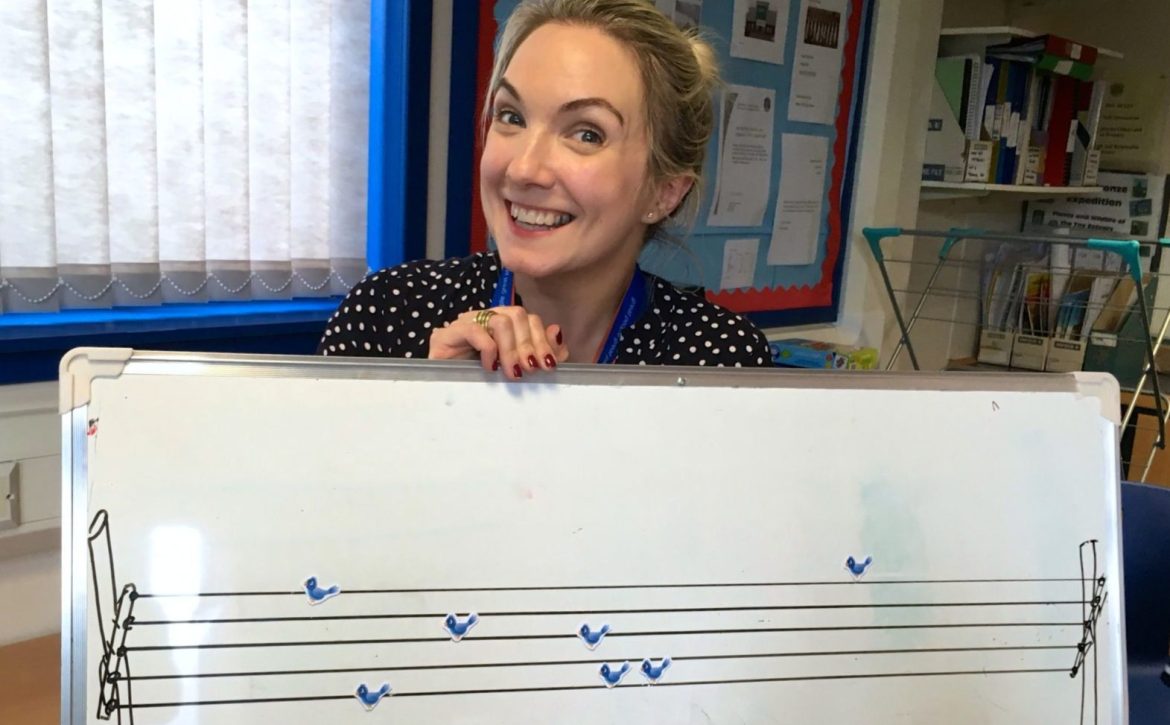
Using the well known concept of birds sitting on telephone wires, we drew out five staves on the whiteboard; the staves representing the wires. Using images of small birds printed onto magnetic paper, the pupils took it in turns to either place the bird magnet on a line or a space, or to drop the bird from a height to see where it would land. This proved a fun improvisation and composition game, and started to make the pupils aware of where the notes should be placed on the staves.

The following week I gave the pupils blank paper birds, which they coloured in using the Figurenotes colours. They then had to position their bird on the correct line or space depending on its colour. To help with this, I gave the pupils handouts showing the correct placement of each note. This increased their confidence to try, as they could check if they were placing it correctly.

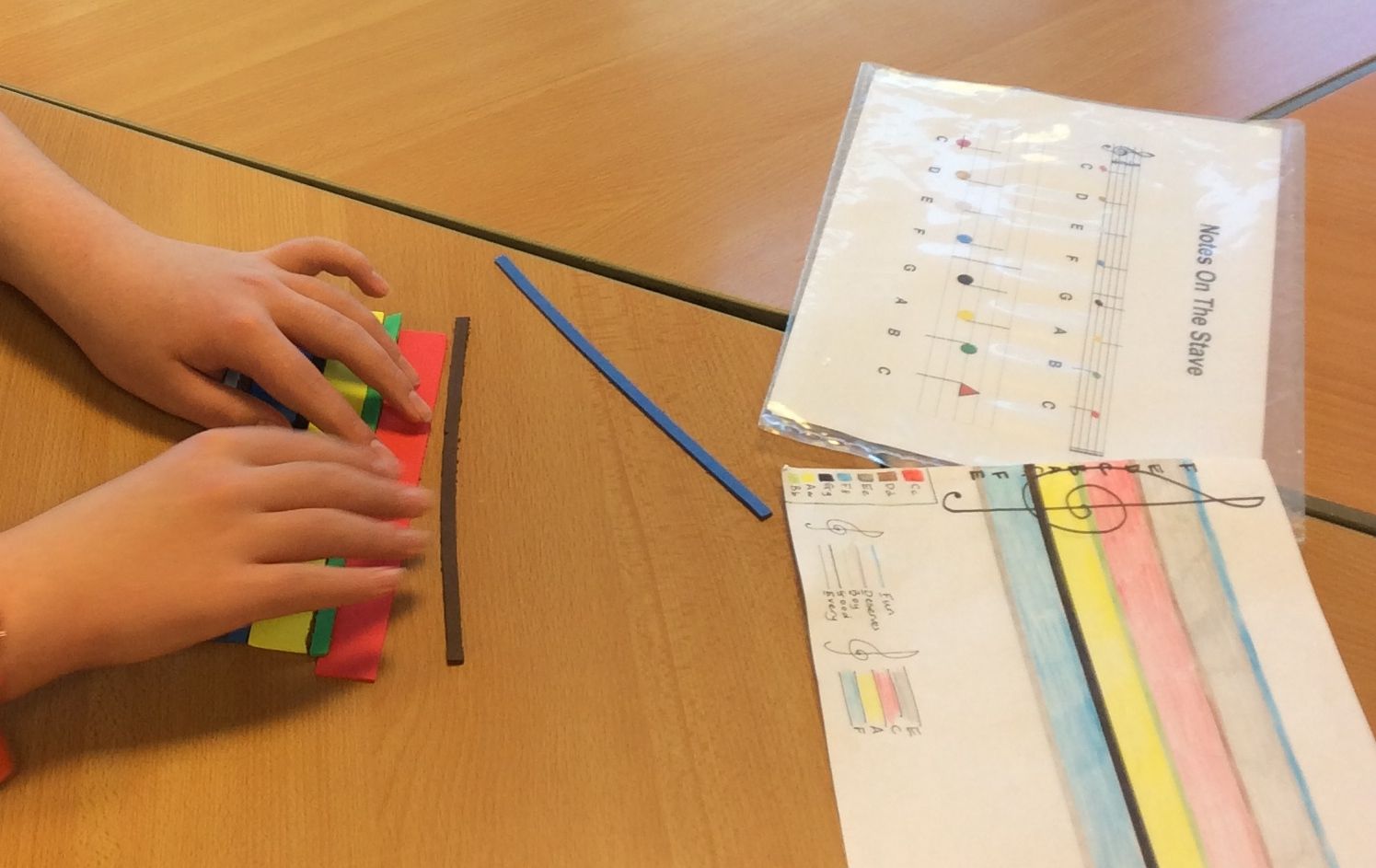
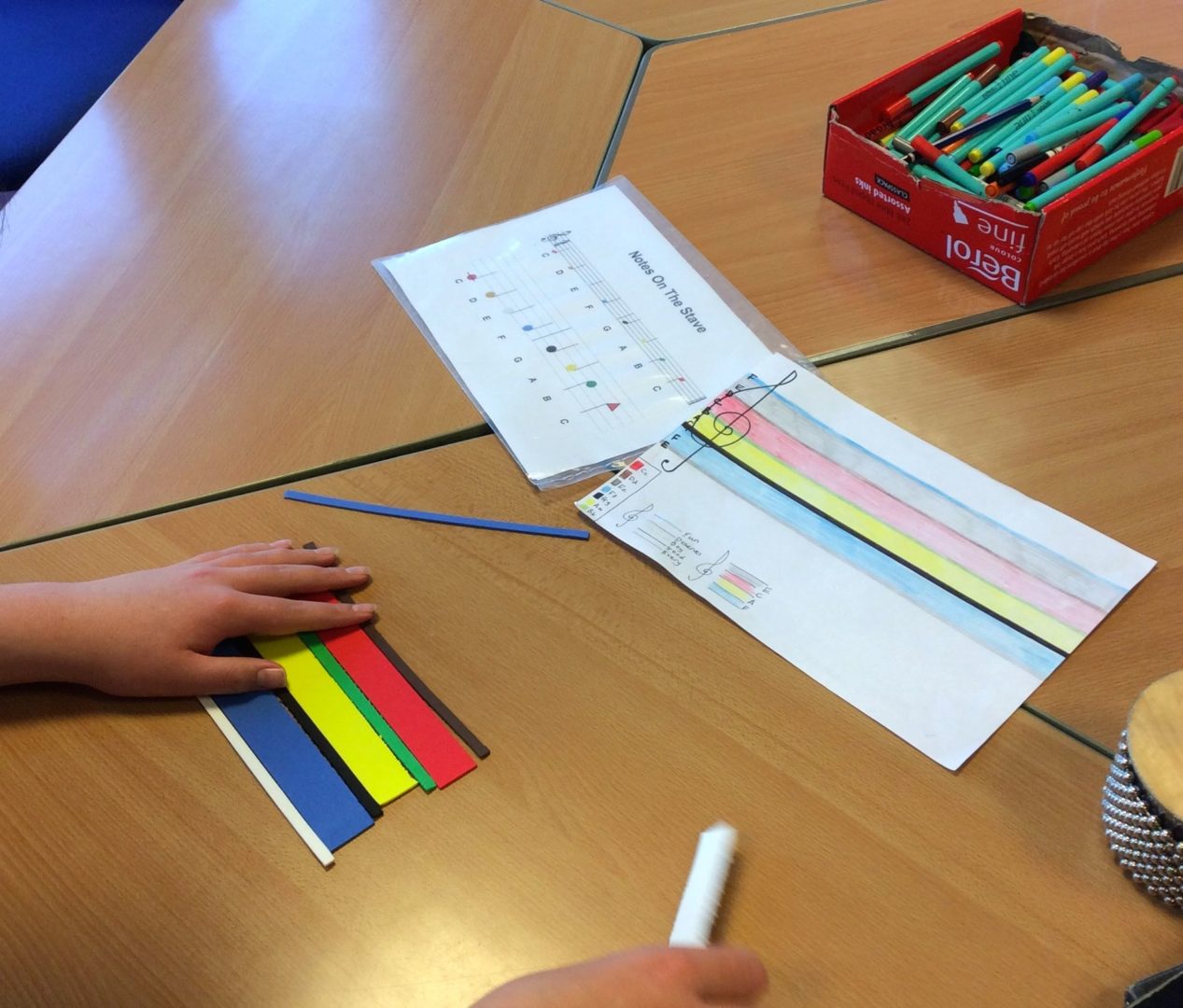
To take the progression even further, we played another game using large scale Figurenotes coloured lines and ‘spaces’, which they used to build up a stave. The students were then able to place standard notation onto the correct lines or spaces.

I feel having visual aids and games has really helped this particular group of pupils focus and engage in what they are learning, helping them visualise what standard notation looks like and where the notes are positioned. These games work well both in group and one to one settings.

Resources for these games can be found in the Resource Base section of the website.

Arbroath High School will be performing this piece on 23rd November. The project involves two ASN units, the Angus Schools’ Percussion Ensemble, and some brass players too. A brilliantly inclusive project.

If you would like a Drake Music Scotland musician to lead a project or staff training within your school or organisation, please contact info@drakemusicscotland.org.

Hands making the coloured stave using guides

The finished coloured stave with guides for that and conventional notation above

Guest BlogsInstruments

Guest Blog: But they’re the wrong colours!

Emily MacQuarrie tells us how she easily overcame the fact that the colours of tuned percussion don’t always match up with Figurenotes.

I am a music teacher at Drummond School Inverness, a school for pupils aged 3-19 who have additional support needs. All of our pupils have severe learning difficulties and many have severe and complex needs.

I first started using Figurenotes two years ago and it is now used in both the primary and secondary departments. In my experience, Figurenotes has allowed pupils to access music in new and creative ways. It enables pupils, regardless of learning disabilities, to read and play music. I have found it very successful, both on a one-to-one and a group basis, with pupils able to play pieces of music together. This would not have been possible without the use of Figurenotes. In addition, Figurenotes supports successful learning experiences and builds pupil confidence and does not lead to the frustrations and difficulties that pupils often experience when learning to read and play music.

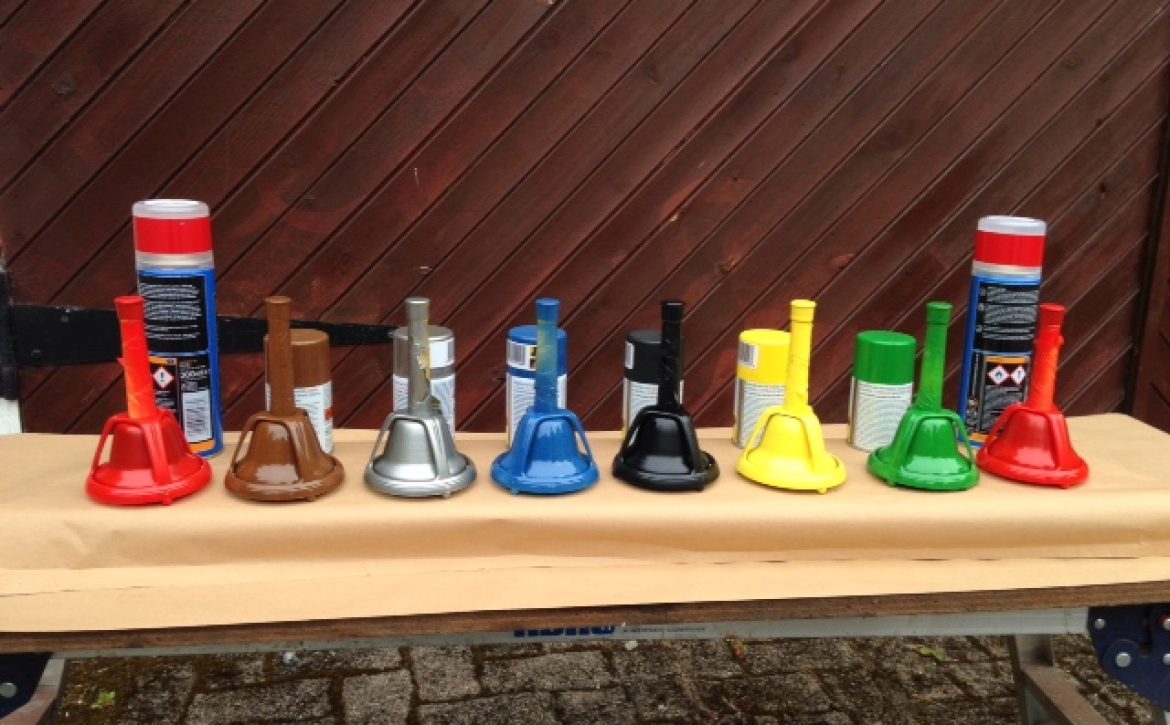
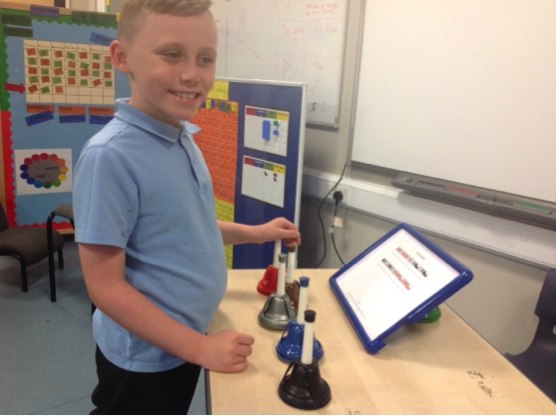
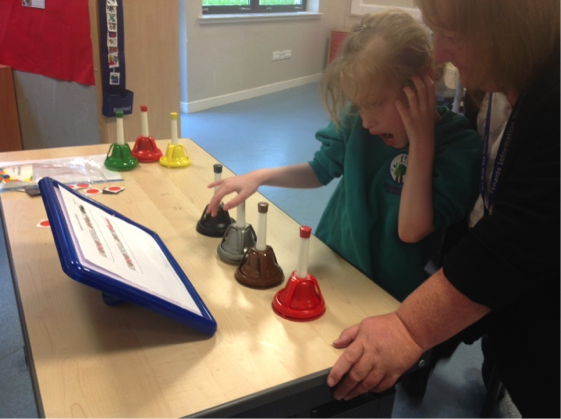
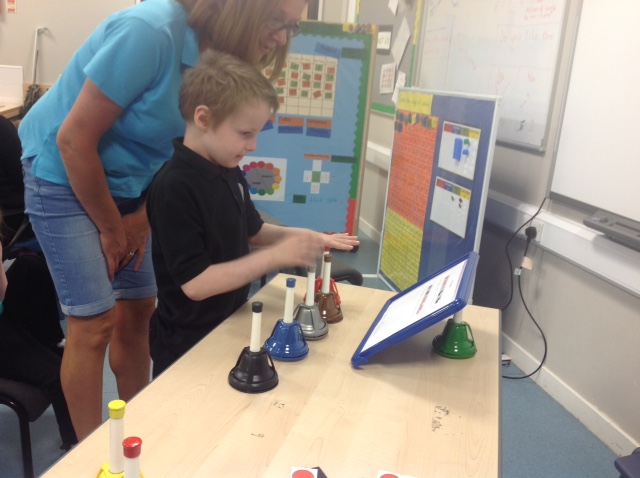
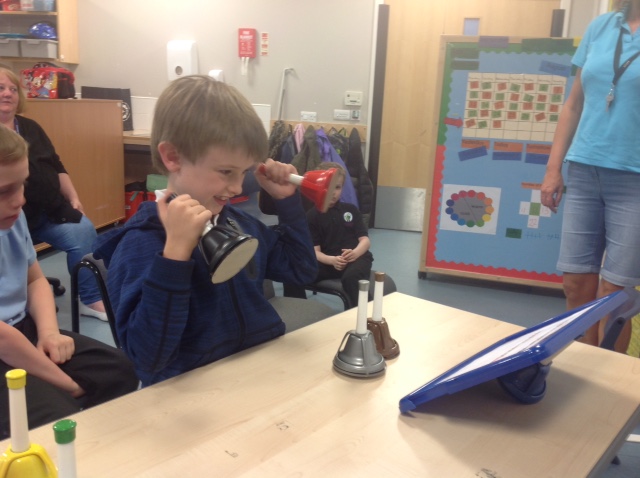
When teaching early years and lower primary I often use colourful tuned percussion, as it is much more visual and captivating for the younger children. A problem that I encountered was that the rainbow bells, boomwhackers, and chime bars are different colours to the Figurenotes colours, which can cause some confusion. Recently I have repainted my rainbow bells so I now have a Figurenotes hand bell set. This has enabled me to introduce Figurenotes into early years, which has been so beneficial. It is amazing watching the pupils’ sense of achievement when they have managed to play a melody they already know well using the hand bells or chime bars.

In order to repaint the hand bells, I bought plastikote spray paint cans in the Figurenotes colours. I taped up the white handles with decorators tape and sprayed each bell with three to four coats, leaving 40 minutes between each respray.

I also screwed plastic bottoms on the bells so that little fingers could not pull the spring mechanism. For this I used the single coffee filter cup lids fixed to the base using existing holes on the base of the bell.

Here are a few photographs of the bells being used in one of the classes at Drummond School:

1-bells

2-bells

img_3865

img_3858

Guest Blogs

Guest Blog – The Magic of Figurenotes

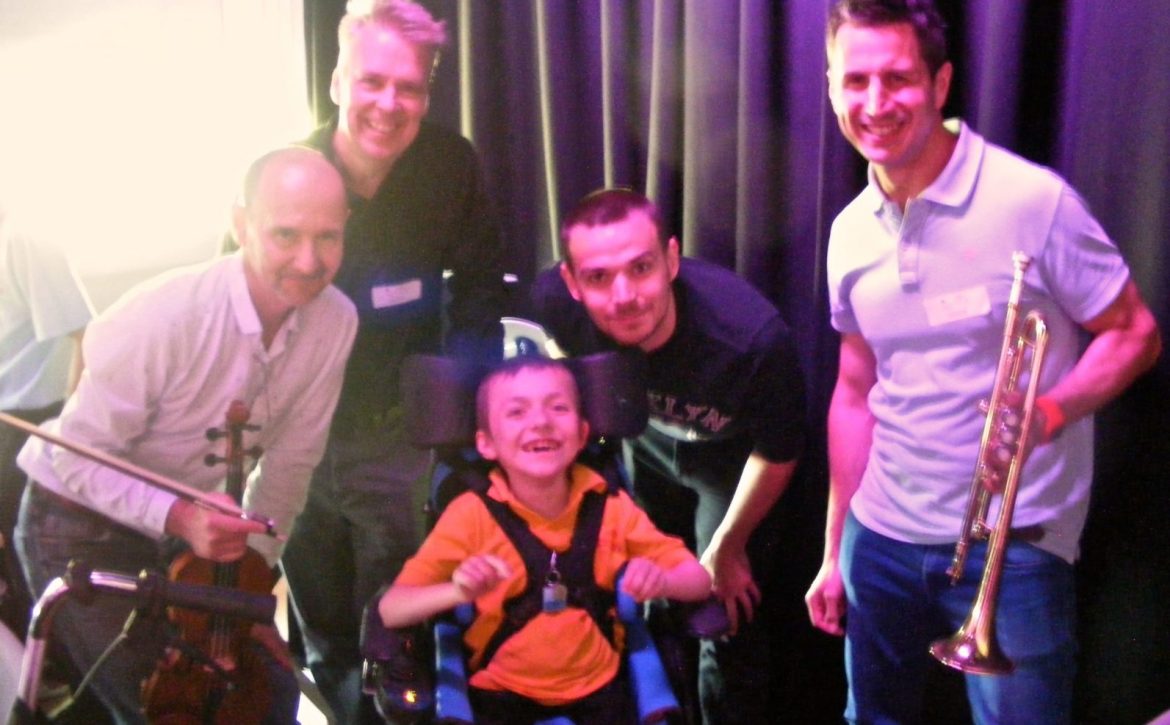
Adam Featherstone, a teacher from Middlesbrough, tells us how he used music from Harry Potter to inspire a creative project with BBC Philharmonic musicians (pictured above with a musician from Priory Woods).

I started to use Figurenotes in March of 2015 starting with whole class electronic keyboards, using single note melodies. I quickly progressed to getting the coloured shape notation sticker packs and placing them onto any instrument I could find. This ranged from chime bars to adapting some of our guitars to play open chords.

I am the music teacher in Priory Woods which is an SEN school in Middlesbrough for students with a mixture of special educational needs aged 4-19. These range from PMLD to SLD, however I feel the Figurenotes approach is suitable to both primary and secondary teachers as a good way to introduce students to practical music making. The only difference would be to change the difficulty of the material used.

We have used Figurenotes in a variety of ways. One such example has been to progress our post 16 music option students s to play rock and pop songs. I have written out songs by Green Day and The Clash, mostly chords. As a result they may take part in our end of year school show and hopefully at a battle of the bands next year. Most recently I have set up an inclusive orchestra using a mixture of hard to reach pupils using technology such as ICT, eye gaze, and traditional music instruments. This has held Figurenotes at its core.

We have recently had the pleasure of welcoming 3 musicians from the BBC Philharmonic into school for a day of workshops before a performance in the afternoon. We started the day exploring a simple melody taken from Harry Potter. I transposed this for some of the musicians quite easily using the software. The musicians took a few minutes to get to grips with the coloured notation, but settled in very quickly.

We had a student conduct our students and BBC Philharmonic musicians to create a rather beautifully layered composition. This gave us some ideas about how to progress the day, as our next steps fed into group composition using the entire ensemble, with iPads taking the lead with solos using the app ThumbJam. We also had a student on an eye gaze machine taking a solo. He was delighted to be able to take part. These students responded fantastically to whole group integrated work. One BBC Philharmonic musician conducted whilst the other 2 took solos on flute and trumpet during the piece and gave encouragement to the pupils.

Every person on that stage was valued as an equal and had an integral part to play, whatever their ability or experience. Each musician used Figurenotes. I hope to develop this ensemble at the start of the new school year, adding more ICT, samples, instrumentation and student musicians.

Adam sent us a lovely email saying “Without Figurenotes it would not have been possible. Thank you.” Thank you to Adam for sharing the ways in which he has used Figurenotes. If you’d like to share your ideas then please get in touch.

Find Adam on Twitter @eponymousdrums

#lmsmart_search_6a44495d70d11:hover { color: rgba(30,40,69,1) !important; }#lmsmart_button_6a44495d79b91 { color: rgba(7,47,96,1); }#lmsmart_button_6a44495d79b91:hover { color: rgba(7,47,96,1); }#lmsmart_button_6a44495d79b91 { border-color: rgba(30,40,69,1); background-color: rgba(249,232,20,1); }#lmsmart_button_6a44495d79b91:hover { border-color: rgba(30,40,69,1); background-color: rgba(0,166,214,1); }#lmsmart_button_6a44495d7cb17 { color: rgba(7,47,96,1); }#lmsmart_button_6a44495d7cb17:hover { color: rgba(7,47,96,1); }#lmsmart_button_6a44495d7cb17 { border-color: rgba(30,40,69,1); background-color: rgba(249,232,20,1); }#lmsmart_button_6a44495d7cb17:hover { border-color: rgba(30,40,69,1); background-color: rgba(0,166,214,1); }